
The RVer’s Ultimate Guide to Cutting Fuel Costs
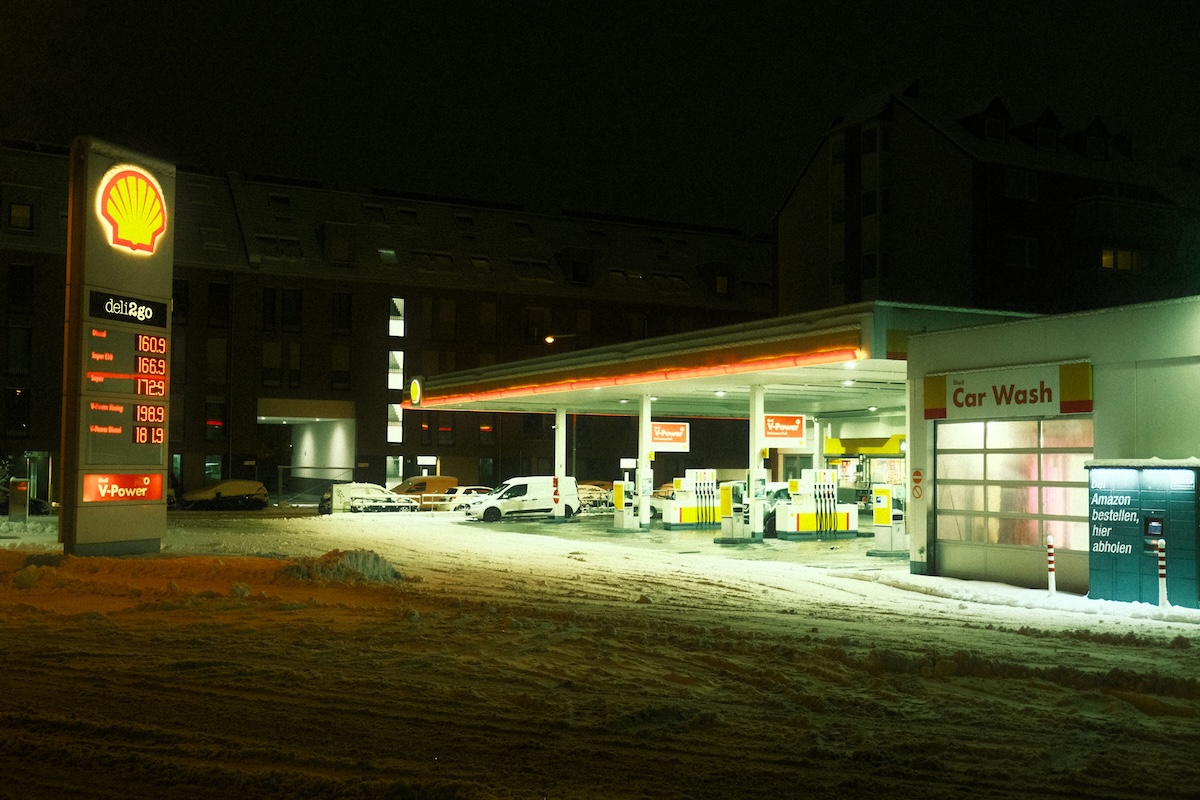
You pull up to the pump, watch the numbers spin like a slot machine—that never pays out—and do the math in your head. That can’t be right, you think, and redo the numbers. Maybe on paper to double-check. You weren’t wrong. Gas prices are never fixed, but right now, they’re going up. Fast. From this time last year, gas prices have increased around $0.86 to $1.08 per gallon. If your RV holds 50, gallons, filling up your tank just went up $43 on the low end. Ouch!
Cutting fuel costs might just become your latest obsession.
The cost of gas has a way of making even seasoned road warriors flinch—in “good” times and bad. And right now, driven by geopolitical conflicts and increased oil costs, they’re climbing with the enthusiasm of someone who just discovered CrossFit and just won’t let it rest.
But the thing is, the open road didn’t get less beautiful. It’s still calling… The campfires… The breezes through the trees… And the million-dollar views… Not to mention the time to unplug and get away from intrusive thoughts like, “Why are gas prices so *#&@ high?”
And you, my fellow RV friend, are far too resourceful to let a number on a sign determine how you’re spending your summer!
Yes, fuel costs are real. But there are some solid solutions to cut the costs. Often more than you’d expect. How fast you drive, how smoothly you brake, how you load your rig, where you fill up, the apps you use, and even which credit card you swipe can all move the needle in your favor. Some of the tips below may save you a few cents a gallon. Others could save hundreds over the season (and carry over to the next). Stack enough of them together, and you may get a bonus tank or two.
So, take a breath, grab your favorite beverage, and let’s talk about how to keep the good times rolling—without watching your budget roll away with them.
Know Your Rig’s Numbers
Before you can save money on fuel, you need to know what you’re actually dealing with. If your answer to “What’s your MPG?” is more “uh?” or “I have to think about it,” this section is for you. Because “it gets pretty good mileage” isn’t a budgeting strategy.
We all know RVs aren’t exactly known for being as fuel-efficient as, say, a Prius. But knowing where your rig falls changes how you plan and budget. And may even help you avoid gasping, if not weeping, at the pump.
First, it’s good to know what to expect with your rig type.
- Class A motorhomes—the big, majestic land yachts of the RV world—average around 8 – 13 mpg
- Class B camper vans usually lead the efficiency pack at 18 – 23 mpg
- Class C motorhomes land in the middle at roughly 10 – 15 mpg
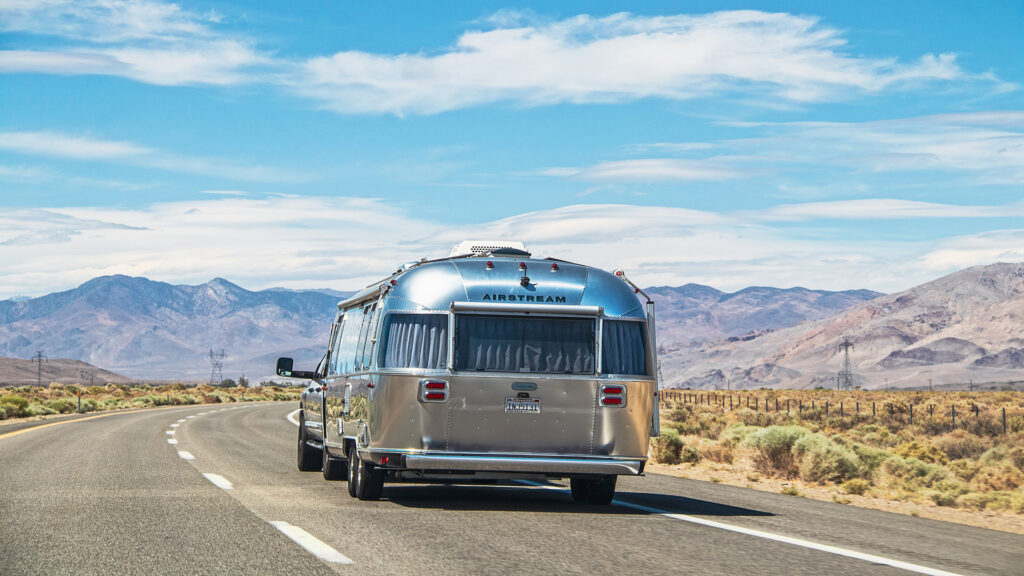
Travel trailers are, of course, a different animal since your mileage depends on both the size (and weight) of what you’re towing and the muscle of what’s towing it. A small, under-24-foot trailer with its tow vehicle can return around 16 mpg. A larger fifth-wheel or toy-hauler, on the other hand, will average closer to 12 mpg.
Towing a trailer can slash your tow vehicle’s normal fuel economy by ~30 to 40%. So, a pickup that gets 22 mpg on its own can drop into single digits once it’s hooked up to a fifth-wheel. All thanks to physics.
Gas vs. Diesel
To add to all the mathing above, another consideration is the cost vs. mpg of the fuel type. According to the U.S. Department of Energy, diesel fuel contains ~10 to 15% more energy than gasoline. That means diesel-powered vehicles can travel ~20 – 35% farther on a single gallon. In theory, that could boost fuel economy as much as 30%.
There are, however, trade-offs. Diesel is often more expensive per gallon. It can also be harder to find—particularly when you get off the beaten path and away from the interstates.
For long-haul travelers who prefer to stick to major corridors, diesel often wins on cost alone. But for those who prefer hitting the backroads, a gas rig may be more practical. Be honest about your preferred travel style before you choose one or the other if you’re in the market for a new vehicle.
More Math
Once you know your vehicle’s numbers, one of the best habits you can build is calculating your estimated fuel cost before you get on the road. Not after. The formula doesn’t have to be complicated:
Trip Miles / MPG x Average Gas Price = Trip Fuel Costs
If math isn’t your favorite thing, then you can also use apps or online calculators like GasBuddy or RV Trip Wizard, which have built-in fuel-cost calculators that will automatically do this for you. Bonus: they can also factor in price fluctuations along your route, which, as any RVer who’s driven through Nevada knows, can vary widely from one exit to the next.
Get Good at Tracking
When I was growing up, my parents tracked every single gallon of gas—starting and ending mileage, how far they drove, how much they put in the tank, and how much it cost. We had little notebooks in each car, and if you filled up, you filled it out. Period.
While I found it annoying as a kid (we were often expected to fill in the numbers) and even more as a driving teen, I now understand how important and easy it is to turn fuel awareness into a habit. You probably don’t need to be as data-driven as my dad. (I’m not.) It can be as simple as resetting your trip odometer each time and noting how it compares to previous trips.
After tracking just a few tanks, you can start to see patterns. For instance, mountain stretches do a number on your efficiency. Tailwinds can make you feel like you cheated the gas gods. Campground runs with full loads cost you an extra mpg or more.
Data is power. And in this case, money.
You can even gamify it for a little more fun. For instance, turn it into a personal challenge—or a friendly rivalry if you’re traveling with a partner who’s game. At the start of each leg, guess the mpg you’ll land on, factoring in the terrain, headwind, and how aggressively someone cough accelerated out of the last rest stop.
Whoever gets closest wins bragging rights—or if you want to up the ante, gets the hammock, picks the dinner spot, or gets out of dish duty.
Keep a running leaderboard on the dash, track it in your notes app, or even create a simple spreadsheet if you’re into that kind of thing.
If you’re traveling with kids, it’s a good way to help them learn that the math they learn in school really does have real-world uses. And it’s also a good way to get everyone on board caring a little more when someone accelerates on a hill vs. enjoying the scenery.
If you’re traveling solo, don’t count yourself out. There’s a quiet satisfaction in beating your own personal best or just running a tally in a small notebook and celebrating the little improvements.
No, it won’t make fuel any cheaper, but it could move the needle in your favor as well as make the conversations around fuel a whole lot more entertaining. That’s good for your overall efficiency, the budget, and staying connected on the trip.
Photo by Lance Gauer
Slow Your Roll
The fastest way to save money? Watch your speed. Hey, it’s not like anyone buys an RV to be in a hurry anyway.
Yet too often, we find ourselves on the interstate trying to keep up with everyone else, watching the fuel gauge drop faster than a reservation window opening at Yosemite in July. Indeed, speed is the single biggest fuel killer in your arsenal, and slowing down even a touch delivers surprising rewards.
Need a little more encouragement to make your foot a little lighter? Increasing your speed from 55 to 75 raises your speed by 35%, but the wind load increases by a staggering 250%. That means your engine is working waaay harder. And it turns into real numbers: at $3 a gallon, driving 100 miles at 55 mph costs around $30. Do that exact same stretch at 75 mph, and you’re looking at paying $54.40. That’s an increase of nearly 80% to get to the same destination a few minutes earlier. Not exactly worth it.
Not only does going fast mean you’re enjoying less of the scenery, but you’re also paying more for it.
Most RVers find 55 – 65 mph to be the sweet spot when it comes to fuel efficiency. Dropping from 70 to the low to mid 60s can make a real difference without making the drive feel endless, and your wallet will thank you.
To make it easier, on flat, open stretches, engage your copilot (i.e., cruise control) to maintain consistent speeds. Your cruise control eliminates the subtle speed creep that happens when a good song comes on, or you’re just dreaming of your destination and unconsciously rest your foot against the accelerator a little more. Set it, settle in, and let the engine do its thing. Steadily. Efficiently. Give that foot, ankle, and knee a nice rest, too.
That way, you’ll be ready when you hit heavy traffic or hilly terrain and need to take over. See, you’re more efficient than the cruise control in these situations as the system tends to overcompensate and decrease efficiency.
“Slow Is Smooth and Smooth Is Fast”
Speed gets all the attention, but how you drive matters just as much as how fast. An aggressive driver doing 60 mph can burn more fuel than a smooth driver doing 65.
If you tend to rapidly accelerate, speed, and brake hard, your gas mileage can drop by up to 33% at highway speeds. (It’s also not all that great when it comes to the stuff in the back shifting around.)
As you leave the stoplight, ease onto the gas pedal. Then maintain a nice, steady pace, anticipating the road ahead. Take your foot off the gas and roll toward the red light ahead. Resist the urge to pass the truck ahead—unless it’s truly necessary. Every unnecessary speed swing adds up to less fuel in your tank. Take opportunities to coast—they’re basically free miles. And relax. You’ll use less fuel, put less strain on your engine, and arrive at the campsite a little more Zen master than NASCAR wannabe.
Dodge the Traffic
The worst thing you can do for fuel economy (and your patience) is sit in stop-and-go traffic. Use your GPS apps with real-time traffic updates to steer clear of delays, and try to avoid traveling during peak hours if possible. Long weekend departure days can be some of the worst. Leaving even just an hour earlier or later than the crowd can be better for your mpg—and your blood pressure. It also means you’re rolling through quiet roads while everyone else is gridlocked. One of the many sweet pleasures of RV life that doesn’t get enough attention.
Avoid Being Idle
Once at the campground, you can idle away your day. But when it comes to your rig, extended idling—even for a minute or two as your partner grabs snacks—wastes fuel. If you stop even for a few minutes, turn off the engine to conserve energy.
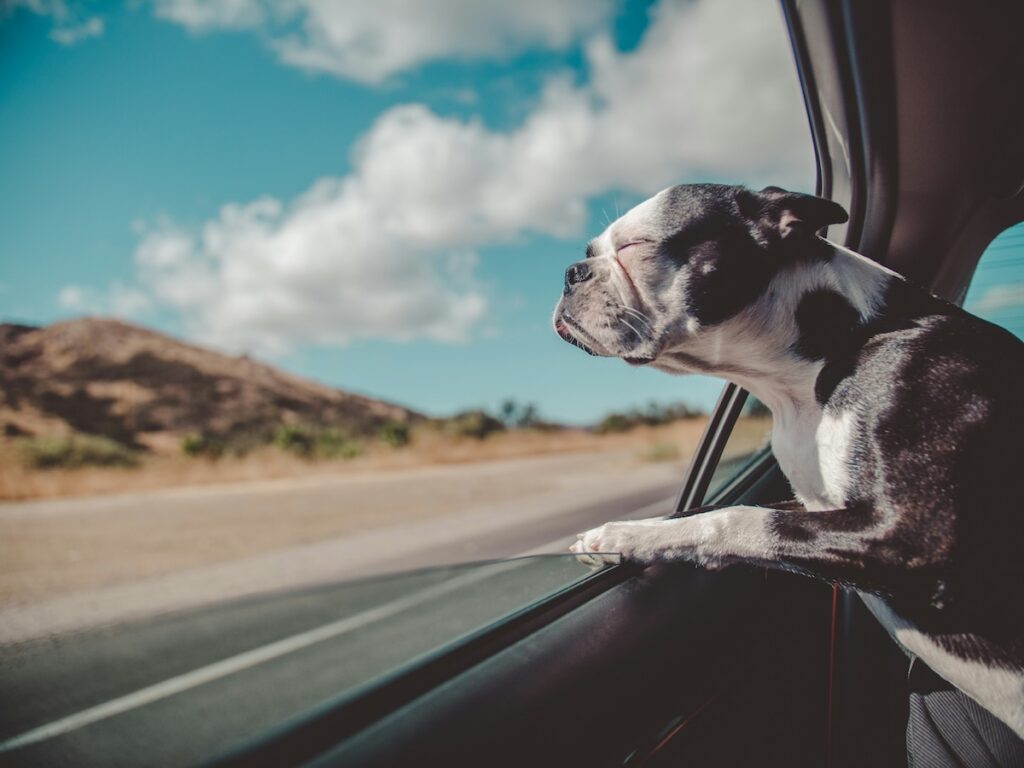
Photo by Avi Richards on Unsplash
Fight the Wind
When you’re looking for an RV, one of the last things you’ll likely think about is the aerodynamics. You’re more likely to be looking at square footage, layout, if there’s a slide-out or not, the fridge size, storage compartments, wet bath or separate shower… What you’re left with is a great space at the campsite. One that has the aerodynamic profile of a moving van. And when you hit the highway, it costs you. A lot more than you may think.
Something to consider: at highway speeds, over 60% of the engine power goes toward overcoming air resistance rather than going forward. Yep, you read that right. More than half of your fuel is being burned just to fight the air.
Aerodynamics aren’t so nerdy after all. In fact, they’re one of the most direct levers you have to improve fuel economy, second only to speed.
Teardrop and streamlined designs are, well, designed to slice through the air cleanly. Boxy Class A motorhomes and fifth-wheels with tall front caps, on the other hand, act more like flat walls, taking on every molecule of resistance thrown at them. If your rig is on the boxy side, you probably already know this. What you may not know is that there’s something you can do about it. And no, we don’t mean shopping for a new rig (unless you’re already in the market). There are more affordable options.
Wind Deflectors
The gap between your two vehicles and the front of your trailer is an aerodynamic disaster zone. Air, you see, slams into the front cap, swirls into the gaps, and creates a pressure drag. One your engine has to fight every single mile.
Wind deflectors to the rescue. These innovative solutions are designed to direct airflow up and over the trailer, eliminating the air block. They’ve been shown to help improve mileage by 3 to 5 mpg. (This is why you see them on the top of almost all semi-trucks on the highway.) This can get a significant gain over a season—paying for itself almost faster than any other upgrade you can get.
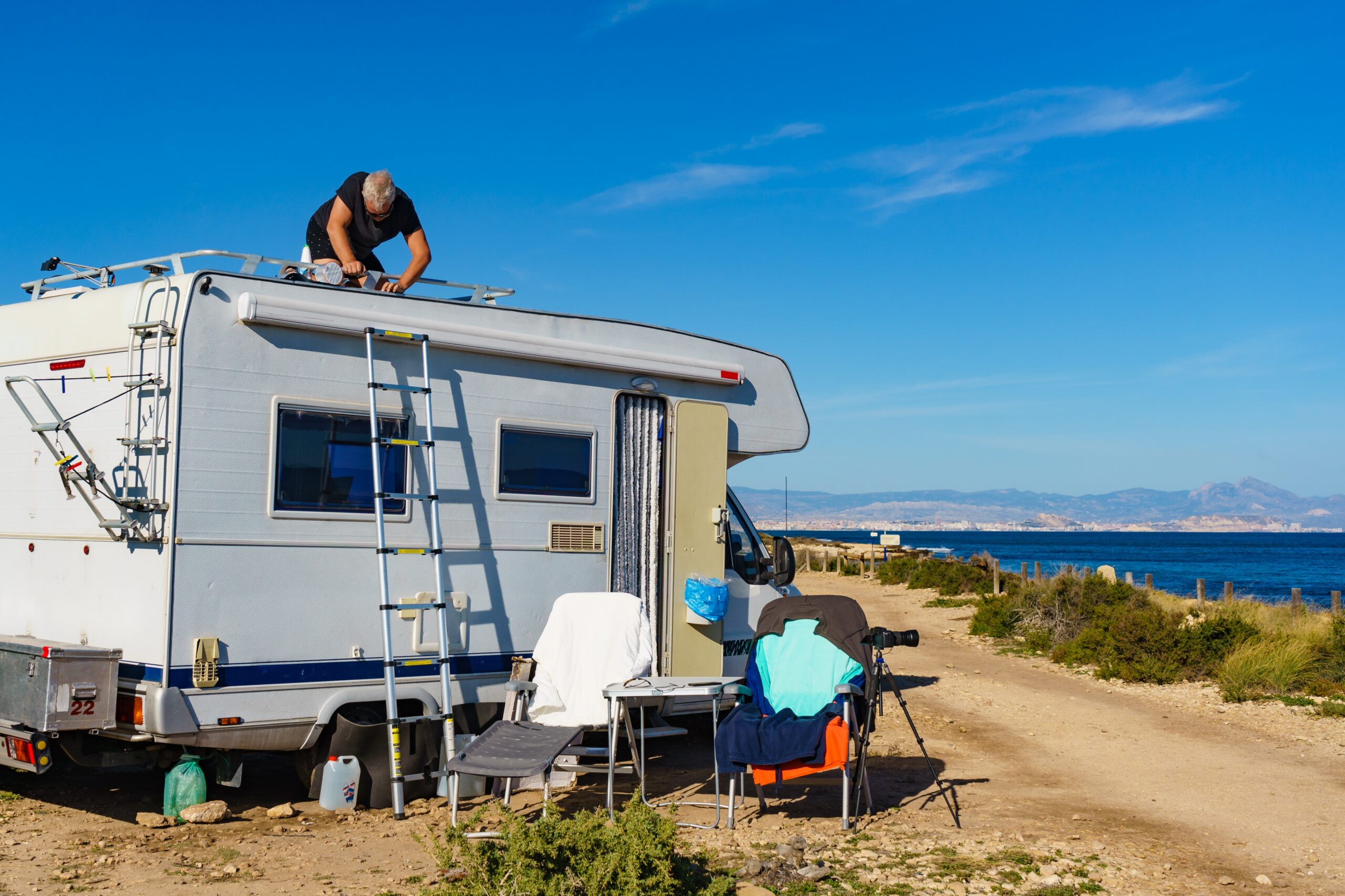
You don’t need to buy a new rig or retrofit your entire RV to make other meaningful aerodynamic improvements. Simple changes can lead to big gains:
- Remove rooftop clutter, such as unused cargo carriers, extra antennas, and bulky accessories.
- Retract your awning while driving. Yes, this should be obvious. But make sure it’s neatly tucked away and not acting as a sail flapping in the breeze as you wonder why your mileage has gone down.
- Close your windows at highway speeds—even on nice days. Open windows create a drag that noticeably reduces mileage.
- Check your tire alignment. Not only do misaligned tires wear unevenly, but they also create additional resistance as they roll, quietly draining your fuel economy.
Wind’s Double Whammy
Speed and aerodynamics multiply each other. At 65 mpg, drag dominates, which can cut fuel economy by up to 30%. So, if you’re rolling down the road at 75 mph rather than 55 mpg, fuel consumption increases even more dramatically since aerodynamic drag nearly doubles. Your adorable yet boxy rig speeding down the highway isn’t just fighting the wind; it’s losing the fight.
A 10% reduction in drag translates to ~5% better fuel economy. Slow down, clean up the aerodynamics with an appropriate wind deflector, keep your tires inflated and aligned, and you’ll enjoy compounded savings.
Lighten the Load
There are certain types of people—and we say this with love (Mom)—whose core personality trait is “just in case.” Just in case… we need the extra folding table. We have a visitor and need an extra camp chair. The lake is perfect and we want to paddleboard … Even if we haven’t pulled out any of them since the series finale of Game of Thrones.
Hey, no judgment.
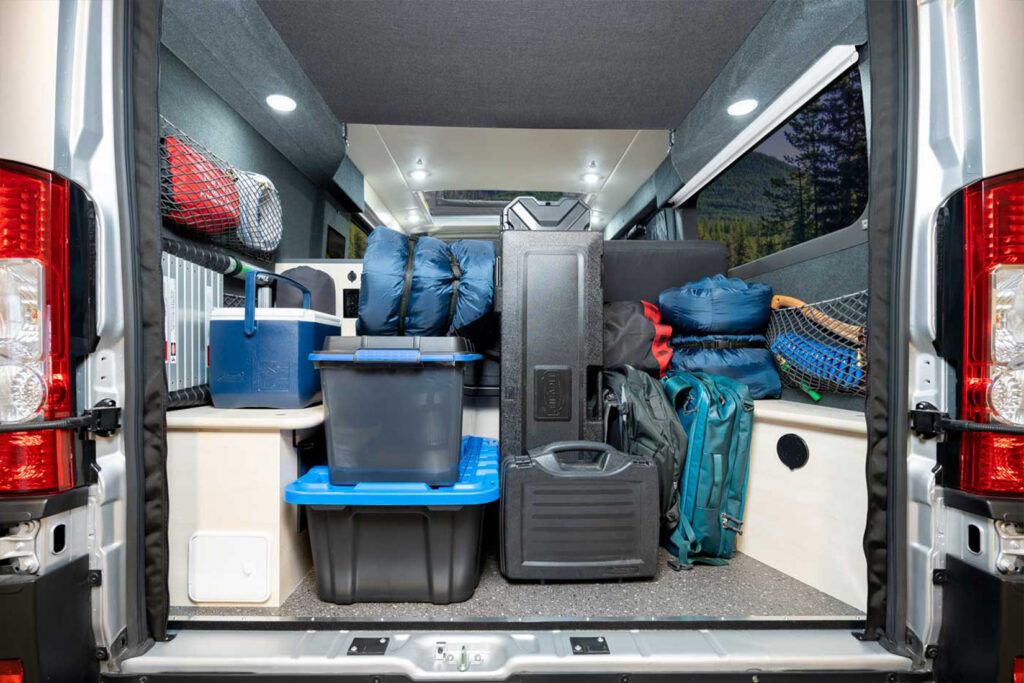
Remember, though, you are paying for every single pound you carry every time you fill up your tank. Each extra pound makes your engine work that much harder. And too many of us simply haul around more than we actually need. That extra gear—tools, old supplies, extra chairs—add up over time.
We’re not talking about leaving necessities behind. That remarkable mattress pad that lets you actually sleep comfortably on the road stays. That said, an honest, even ruthless, audit of your storage compartments is worth the effort. If something hasn’t moved since your last trip, it probably doesn’t need to come on this one.
Keep this in mind as you load up: A lighter rig is a cheaper rig. Bonus: It’s easier to find the things you do need when you need them with less clutter.
Fill Up at Your Destination
This one surprises a lot of people, but often, food and water are available at your destination. Really. That means you don’t need to load them on your rig before you leave. Water is heavy, and you don’t need a full pantry or fridge. You can save a lot of weight and cash by bringing only what you need for the drive.
Once you arrive at your destination, fill up your water tanks at the campground or on the way in. Plan a quick grocery run. This small habit shift costs nothing but saves real money. And, you may even discover some fun regional snacks you’d never find at your local grocery store.
To Slide or Not to Slide
Slide-outs are popular features in new rigs. They open up interior floor space dramatically. They also, however, add real weight to the overall rig. We’re not saying “avoid them.” The living space trade-off is valid. But it’s worth understanding that every slide-out comes with an added fuel charge, even when it’s safely tucked away and rolling down the highway. Free square footage doesn’t exist in the RV world.
Living Lighter Intentionally
Lightening the load isn’t about living with less or depriving yourself. It’s about knowing yourself and setting your intentions. The gear you use on every trip? The prepared meals that bring greater joy to the campsite? Bring them.
The stuff that might, theoretically, come in handy under very specific circumstances? You can leave those behind. Your engine, budget, and (likely) back will appreciate the lighter load.
Maintenance Matters
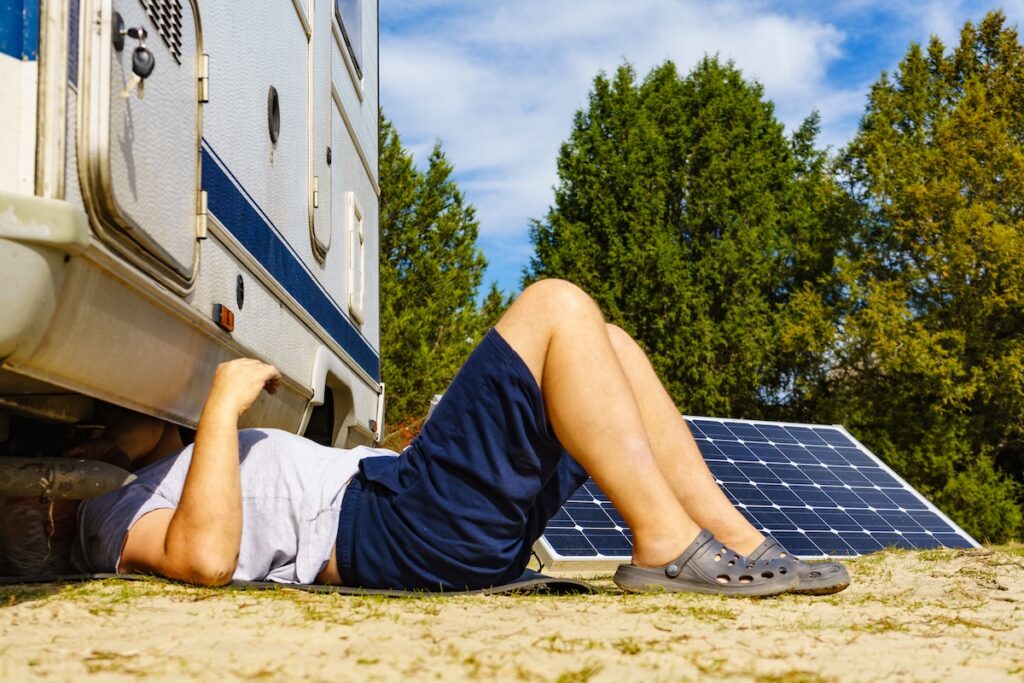
Neglected maintenance doesn’t just cost you in repairs. It costs at the pump. Every time you fill up.
Nope, you probably didn’t get into RVing because you love to tinker and like the feel of grease under your fingernails. (Well, maybe you did?) More likely, you got into it for the freedom, sunsets, fresh air, and s’mores. The adventure of waking up somewhere new. The siren call of exploration.
Sadly, a poorly maintained rig is one that gobbles up fuel—and potentially leaves you stranded, but that’s a conversation for another day.
Fortunately, most of the following maintenance habits are cheap, quick, and easy enough to avoid the excuse of not doing them.
Tires Top the List
Yes, we’ve mentioned this before. That’s because underinflated tires are one of the most overlooked and common causes of decreased fuel economy. Especially in heavier vehicles. When tires are even slightly underinflated, they create more resistance as they roll. This forces your engine to work harder, which burns more fuel. It also causes uneven wear, which can shorten the lifespan of said tires, potentially creating safety concerns. Something you do not want to deal with on a long drive.
The fix is so simple: check your tire pressure at least monthly and before every big trip. Use a reliable gauge, and inflate to the manufacturer’s recommended PSI, typically listed inside the driver’s side door. Avoid the max pressure stamped on the tire sidewall. (The two numbers aren’t the same, and mixing them up is a common mistake.)
A good digital tire gauge will run you about $20 and could pay for itself in the first tank.
Breathe in the Air
Your engine needs two things to run efficiently: fuel and air. A clogged air filter restricts that airflow, which again forces your engine to work harder. Checking and replacing air filters is a cheap fix that offers a real payoff. Indeed, it’s one of the lowest-cost, highest-return maintenance tasks you can perform. In a mere 10 minutes, for under $40, you can meaningfully improve performance and fuel economy.
If you can’t remember the last time you changed yours, you’re probably due.
Tune ‘er Up
With our overly scheduled RV mechanics, this one can be challenging. Yet scheduling regular checkups ensures your RV runs smoothly all season long. These check-ups can address big and small issues, from worn-out components to clogged filters that slowly drain fuel efficiency.
A tune-up is an investment that pays dividends every time you fill up. So if and when you do find a good RV mechanic who knows their way around your rig, treat them like the perfect campsite on a holiday weekend. Bring them coffee. Remember their birthday. Do not leave their services without a forwarding plan. A trustworthy RV mechanic is rarer than a level campsite in the Rockies and worth every bit as much.
If you think skipping an oil change, ignoring tire pressure, or running on a dirty filter will save you time or money on maintenance, you’re expensively mistaken. You’re borrowing against your fuel budget, repair budget, and perhaps even your sanity—or ability to take off. Just a little more attention before the trip means fewer unpleasant surprises.
A well-maintained rig not only lasts longer, but it also operates more efficiently every single day. That means it costs less to run.
Fuel Smarter—Apps, Programs, and Timing
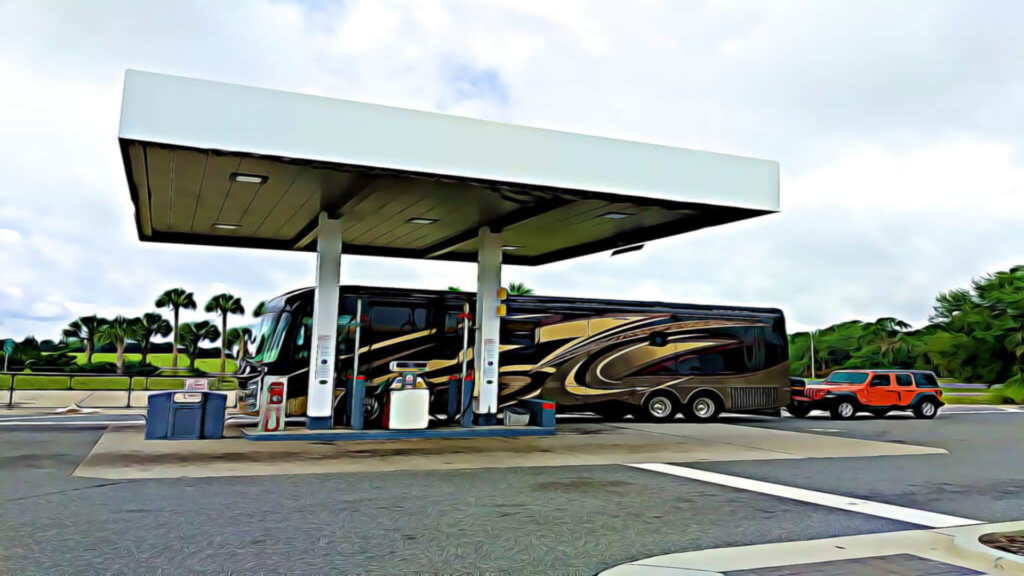
Most people pull into the most convenient gas station, swipe a card, and wince. And sometimes, it is what it is. But if you’re filling a 50, 80, or 100-gallon tank, a 20-cent-per-gallon can make a big difference. That’s real money.
We’re not alone in wanting to save what we can. Fortunately, there are free tools available that can help us find savings and take seconds to use.
Apps That Earn Their Space
GasBuddy is the undisputed starting point. You can search by zip code, city, state, and the massive user base keeps prices updated near real-time. The Gas Price Map shows prices across the U.S. and Canada at a glance. This can be enormously helpful when you’re planning a long routing day and want to know whether it’s smarter to fill up now or wait until the next state. The app is free, and the Pay with GasBuddy card is worth a look. It may save you up to 33 cents per gallon at participating stations and is accepted at over 150,000 fuel stations across the country.
For interstate travel, GasBuddy’s IExit could become your new best friend. It identifies which highway you’re on and the direction you’re traveling and then displays the available stations and current prices for upcoming exits. That way you know what’s coming before you hit the off-ramp. It’s nice not having to live on faith, hoping gas prices will be less (or at least the same), only to find the station is charging 40 cents above average. In a pinch, you do what you’ve gotta do. But it’s nice to know you don’t have to.
While you may think you’ll just figure out where to pull in when you need gas, the smartest RVers plan their fuel stops the same way they plan their campsites—intentionally and in advance. GasBuddy’s route tool or RV Trip Wizard are both advanced tools that can show you where the cheapest fuel falls along your path. That means you avoid having to stop at a remote interstate exit and the desperation surcharges that come with it.
Become a Joiner
Some membership programs really aren’t worth having. Others are truly legit. No gimmicks. Just stackable savings that add up fast when you’re filling large tanks.
- Costco: A crowd favorite for good reason. Costco gas stations consistently offer prices that are up to 20 to 30 cents per gallon below nearby competitors. Most locations carry regular gas, and select stations carry diesel. Intentionally factoring in Costco stops into your route planning can be a surprising cost-saver.
- Good Sam Club: Members shouldn’t overlook the fuel benefit. Good Sam has partnered with Pilot Flying J for 10 cents off per gallon of gas and diesel. If you’re one of the many RVers already paying for a Good Sam membership for the campground discounts, this is free money just waiting for you to pick it up.
- Walmart+: While this membership is less well-known among RVers, it also offers noteworthy perks, including up to 10 cents off per gallon at Walmart and at Murphy USA, Exxon, and Mobil stations. Just enter a simple six-digit code or scan the QR code. With other benefits, such as free grocery and pharmacy delivery, many members find it pays for itself pretty quickly.
- TSD Logistics Open Roads: While these are specifically for diesel drivers, they deliver serious discounts—40 to 50 cents per gallon—at participating truck stops, including Love’s, Petro, and Kwik Trip.
- Mudflap: Another option for diesel drivers. While it’s marketed more toward truck owner-operators, it offers significant discounts on diesel and is popular for diesel motorhomes.
Prioritize Fuel Quality
Cheapest, of course, is not always best—especially for diesel. Choose reputable fuel brands like Chevron, Shell, and Texaco, which meet higher quality standards than some other brand stations.
If you drive a diesel rig, you’ll also want to avoid stations that don’t appear to get a lot of diesel traffic. Fuel that sits too long can become contaminated, which isn’t good for your engine. When in doubt, look for truck stops frequented by commercial drivers. Professional truckers depend on their engines for their livelihood. So, if they’re filling up there, it’s a good sign that you’ll be fine too. If the station looks like it hasn’t seen a diesel customer since the Barbenheimer summer, move on.
How Full Can You Go?
While it can be tempting to fill your tank all the way up before a long stretch, it’s not a good idea. Overfilling triggers vapor recovery systems, wastes fuel, and can damage your vehicle’s emissions equipment. When the pump clicks off, stop. The few extra cents of fuel you may be tempted to squeeze in aren’t worth it. This is another area where restraint is rewarded.
Consider Your Payment Method
Credit cards are certainly convenient, and many offer rewards, but many gas stations prefer cash. Because they avoid credit card fees, retailers sometimes offer cash discounts that can exceed what your credit card rewards deliver. Do some quick math at the pump and compare the cash price against your card’s percentage back. You may be able to leave real dollars in your pocket.
If there’s no cash discount, the right credit card can also provide noticeable rewards. The Costco Anywhere Visa, for example, earns 5% back at Costco gas stations and 4% back at other gas stations and EV charging, plus 3% back at restaurants and travel. That’s a pretty nice perk for Costco members. Check with your bank or credit card service to see what types of rewards you can expect, if any.
The key caveat: Cash or debit cards are always the smarter choice if you tend to carry a credit card balance. Given the average APRs are north of 22%, reward points are null—or even costly—if you don’t pay your card off before interest accrues. Earning 4% back while paying 22% interest isn’t a smart savings strategy—it’s a bad math problem with an answer nobody (except the banks) likes.
Route Planning Like a Pro
The fastest route and the smartest RV route are often very, very different. Plus, the typical GPS does not know you’re towing 10,000 pounds or that your rig is well over 10 feet tall. It doesn’t know that a mountain pass will cost you 4 extra mpg in each direction. It does not realize that the interstate route cuts through a city during rush hour, or that the Costco 8 miles off your suggested route could save you over $20.
GPS is an amazing invention. One most of us are pretty thrilled to have. But it does need some supervision.
Going Up and Down Again
One of the most expensive things an RV can encounter is changing elevation. It goes without saying that climbing a long, steep mountain grade with a heavy rig burns fuel at a rate that can make you and your wallet recoil.
If you have the choice, it’s often better to choose a flatter, slightly longer road than a shorter but hillier one, views notwithstanding. It’s worth taking a few minutes to run the numbers before defaulting to one or the other. You’ll often find driving a few extra miles on more level terrain quietly beats out the shorter route. Your transmission will also thank you.
Know Your Route
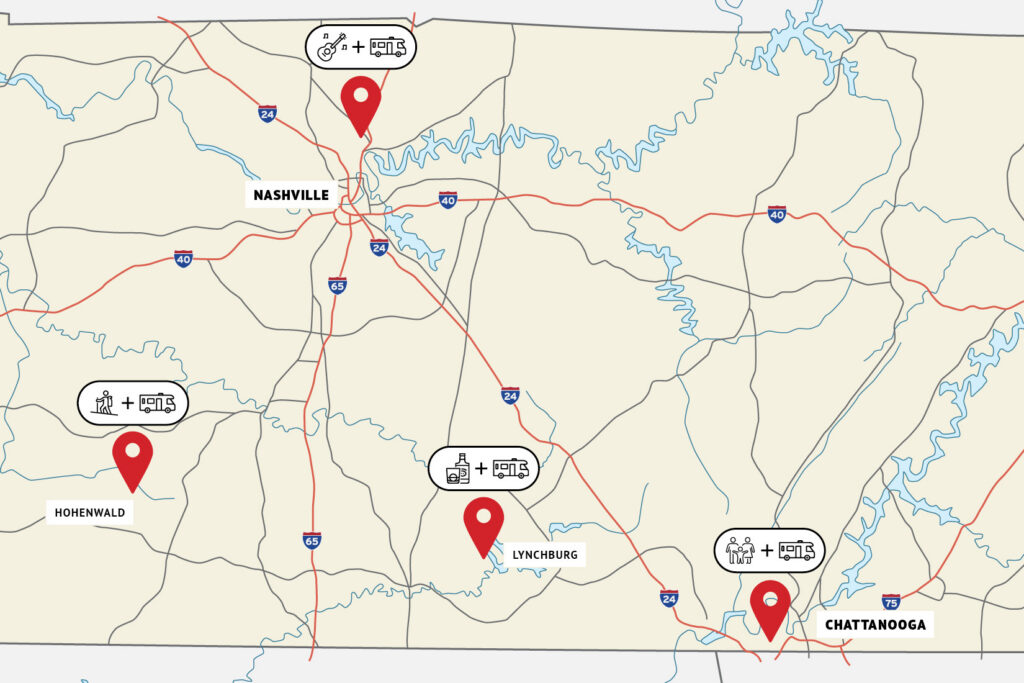
Another great way to burn extra fuel and thus cash is backtracking. Take the time to plan your route to help minimize driving time and avoid backtracking wherever possible. A missed exit feels innocent enough—hey, we all do it—but it can be a silent budget killer. As you plan your trip, look at a logical loop or progression rather than scattering from one area to the next, crisscrossing your route because you missed a stop.
Rethink the Trip—without Canceling It
A lot of us are all-or-nothing thinkers. Go big or go home and all that. But when gas prices climb, it can really pay to get creative and tweak what your trip looks like. Can you choose a closer destination to RV to? It still feels like a real escape—you’re still camping, disconnecting, and exploring somewhere new. You just don’t have to burn as many tanks to get there.
Another efficient yet underrated strategy is to use the hub-and-spoke method. That is, you travel to your destination and park your rig in a well-positioned base camp. Then you can make day trips from there rather than having to move the entire operation every day or three.
Set up once, level once, connect utilities once—then explore the surrounding area in your tow vehicle or dinghy car or, depending on the location, your two-wheeled transportation. These all get better fuel economy than your fully loaded rig, and it’s easier to find parking spots. So, you not only save costs but also have greater flexibility to see what you want to see.
Likewise, you can also choose fewer destinations and spend more time camping than driving. You’ll enjoy more time to relax, you’ll have smoother inputs, and thus better fuel economy. After all, it’s often the moments in between that make trips most memorable.
The Road Is Still Calling…
Rising gas prices are, unfortunately, real. And that sting at the pump isn’t pleasant. You may look at your rig and wonder if this summer just isn’t your season. Fortunately, you do have more control over your fuel costs than the big sign at the gas station suggests.
Slow down a bit; smooth out your driving; check your tire pressure before you take off; download some helpful apps; and search out the most affordable stations along your route before you leave.
None of these tips individually solves the problem. But as you stack enough of them together, you’ll soon be actively outsmarting rising costs. Ultimately, you won’t just save some of your hard-earned cash, you’ll enjoy better, more intentional trips.
Finally, don’t let a number on a sign take away your summer. The road is still yours.