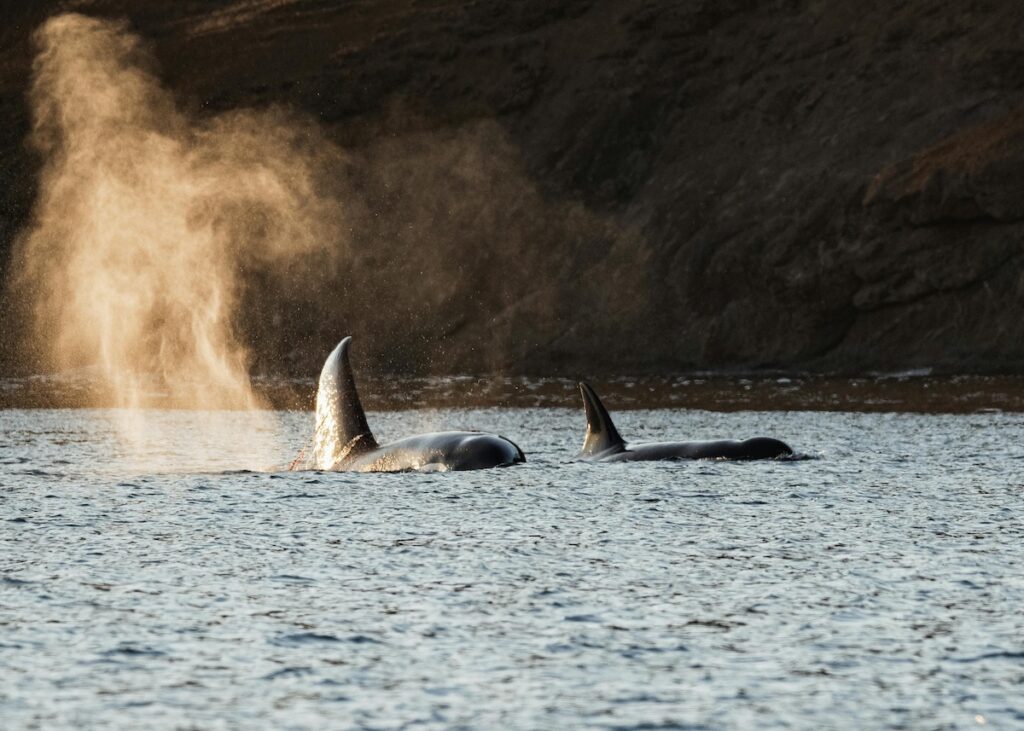
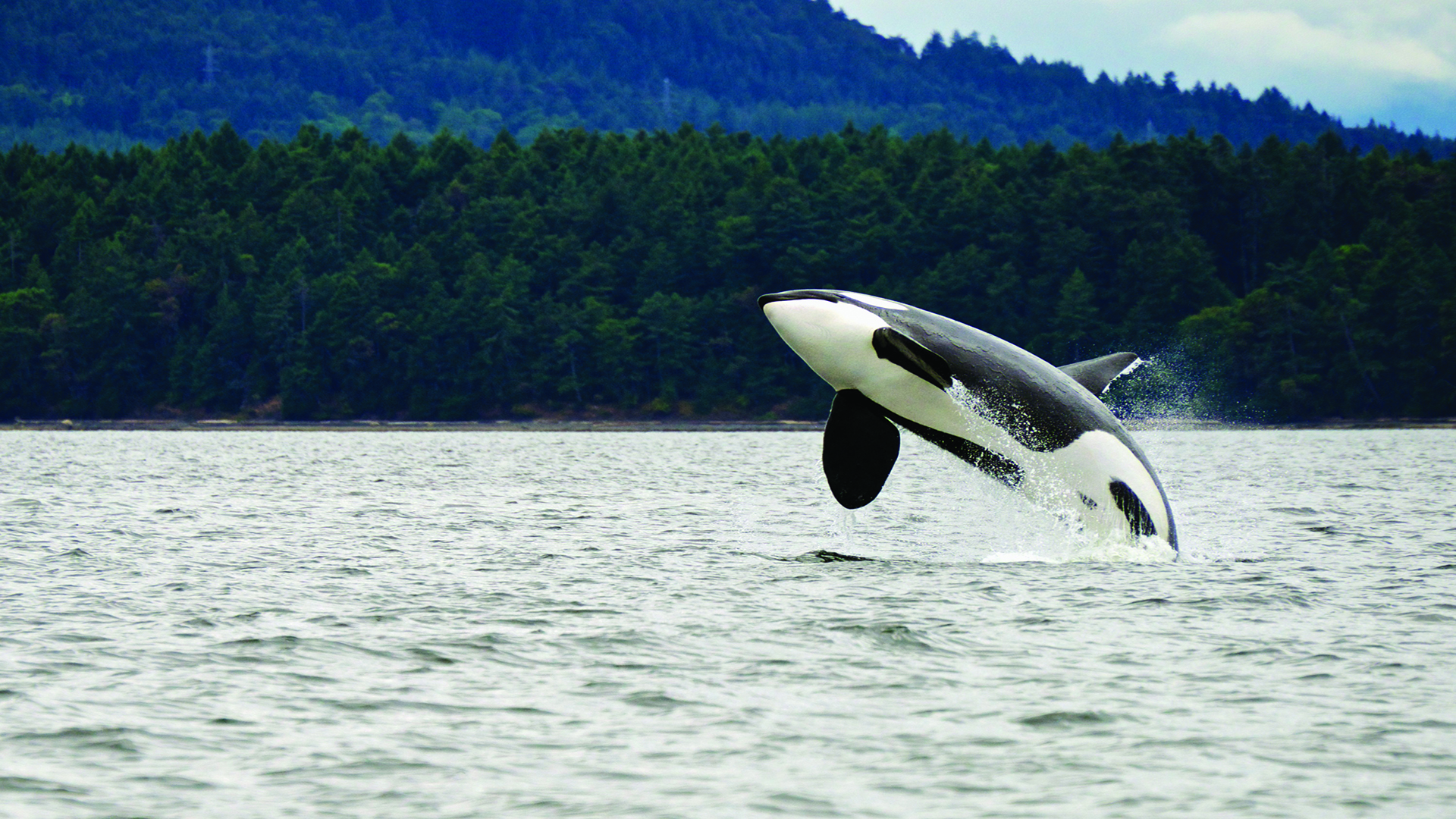
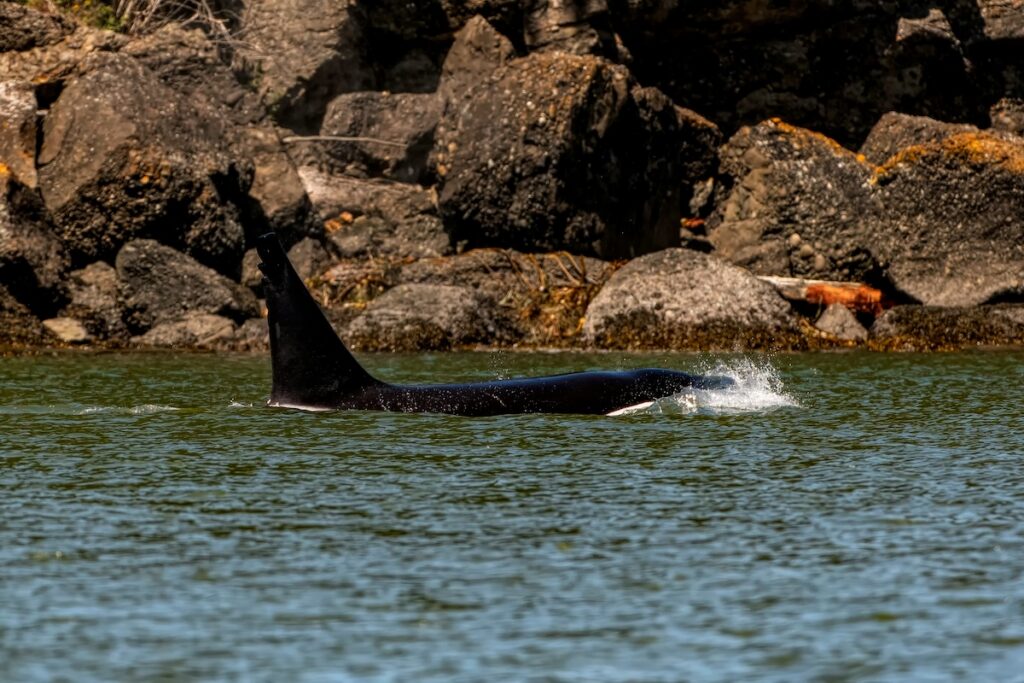
ONCE YOU SEE THAT TALL BLACKFIN cut through the waves in front of you, no doubt will remain: This was the best idea EVER. Till then, it’s OK if you are skeptical about the wisdom and hassle of taking your RV to an island—so long as you still go.
Nature has its ways of still flooring us as adults. And your trip to San Juan Island, just off the Washington State Coast, is an opportunity for the whole family to feel like kids.
 WHY GO?
Quite frankly, unless you live in or have already visited Washington State, you’ve probably never done anything like this—ferrying your RV into the Pacific to reach an island circled by killer whales. On the island, there are boat tours with captains who know where to find the pods, but you don’t have to go offshore to see the black fins of orcas cruising around the shorelines. Heck, there are even listening stations where you can hear the whales talk!
 WHEN TO GO
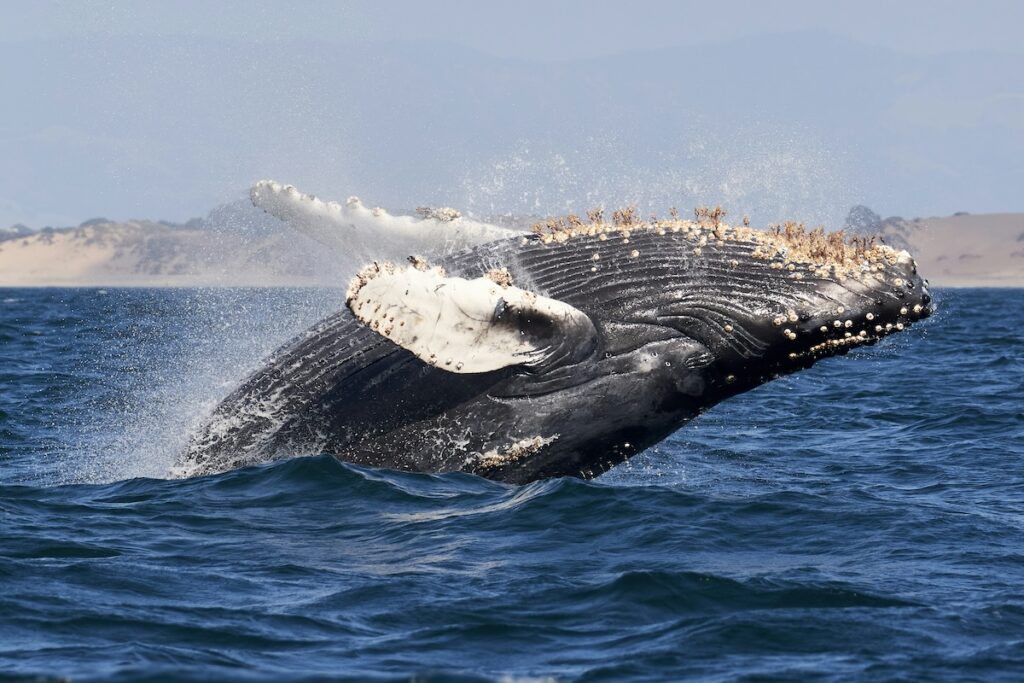
The whale-watching season runs April through October with the sweet spot running mid-May through mid-September, when salmon runs are strong and whale activity peaks. Humpback whales are most commonly seen from August through October, so if you want the full mix of species, late summer is often the best bet. For those who want to avoid the summer crowds, though, fall is still a good option.
 THE FERRY
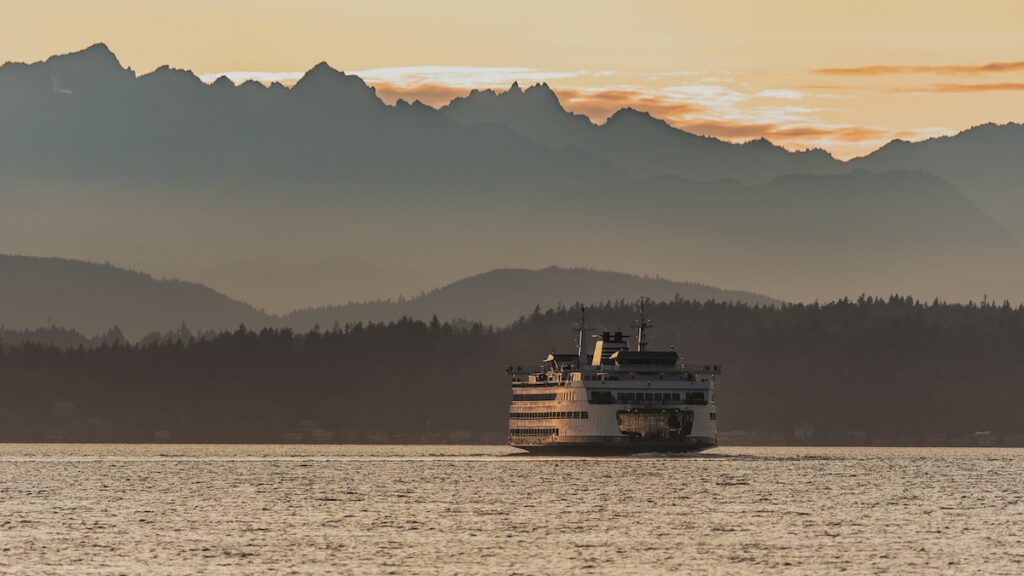
Getting your RV onto the island is part of the adventure—and part of the planning. The
Washington State Ferry departs from Anacortes, about an hour and a half drive from Seattle. Reservations for vehicles over 30 feet are only released in the first reservation tier, so book as early as possible. Spots fill fast in peak season! Arrive at the Anacortes terminal at least 45 minutes before your reserved sailing, and don’t forget: fares are calculated by vehicle length, so your rig’s size will affect the ticket price.
 WHERE TO GO
Lime Kiln Point State Park on San Juan Island
WHERE TO GO
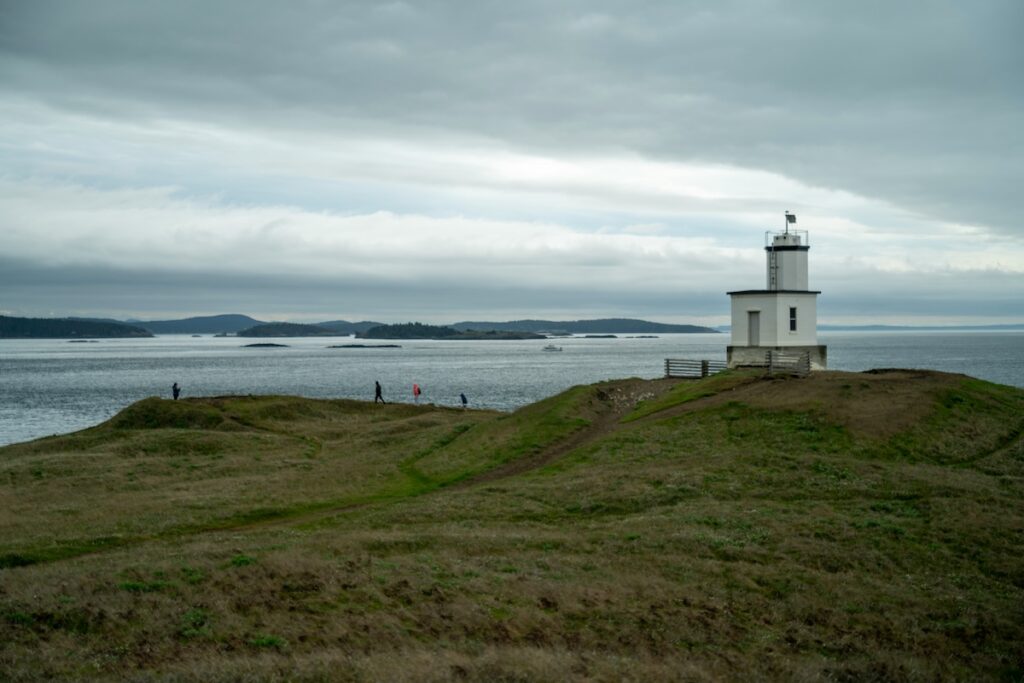
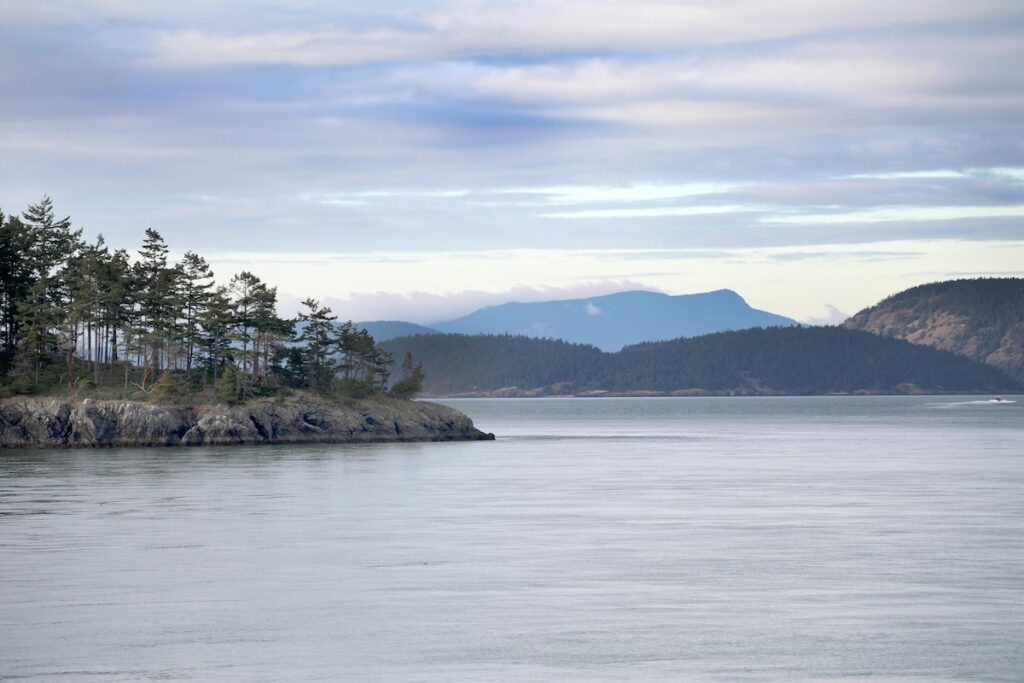
Lime Kiln Point State Park on San Juan Island is one of the top whale-watching spots in the world. (And killer whales are not the only whales you can expect to see.) Southern Resident killer whales frequently travel close to shore here, especially in spring and summer, thanks to the geography of the Haro Strait and the whales’ feeding habits. The park also features the historic Lime Kiln Lighthouse, first lit in 1919, along with a hydrophone system that lets visitors listen in when orcas are vocalizing nearby.
WHERE TO CAMP—ON THE ISLAND
Lakedale Resort on San Juan Island offers RV sites with hookups. Open seasonally from April to the end of September, they have a limited number of campsites, including some that can fit rigs up to 40 feet long. It’s conveniently located 5 miles north of the ferry landing in Friday Harbor. One important heads-up: Lakedale does not have on-site septic or gray water dumping, and the Town of Friday Harbor has permanently closed its public dump station. The closest public dump station is in Anacortes—so plan your tanks accordingly before you board the ferry. For smaller rigs under 25 feet,
San Juan County Park on the west side of the island is another option with beautiful water views and a boat launch.
 WHERE TO CAMP—OFF THE ISLAND
If you’d rather use the island as a day trip,
Orcas Island’s West Beach Resort offers spacious RV sites just a short walk from the beach. It makes a comfortable base for exploring multiple islands. On the mainland side, Anacortes has several full-hookup RV parks that put you minutes from the ferry terminal—a smart choice if you want to skip the hassle of ferrying your rig altogether and explore the island by tow vehicle, rental car, or bike.
I Tip: Watch the
Blackfish documentary before you go—or for a different perspective,
Free Willy—to get properly hyped for seeing live orcas.