
If you’ve been around the RV scene for even a little while, you probably have at least one story. The campground that looked great online, but once you pulled in, was wedged between a highway and a loud, smelly truck stop. Or that time you went on a wild goose chase down dirt roads—clearly not suited for your rig—due to hidden or missing signage. Maybe you found a beautiful campground clearly advertised as “lake front,” but once you got there, discovered you’d need to stand on top of your rig with a pair of binoculars to actually see any water. Or a park with loads of glowing reviews that, as one regular RVer put it, made her wonder if the owners had written every one themselves.
Thanks to the internet, finding and booking campgrounds has never been easier. Yay!
Yet somehow, it’s also never been easier to get it wrong. How is that possible with hundreds of review sites, booking platforms, and campground apps at our fingertips? The information—that’s all there. But to get what you came for, you need to know what to look for, what you can look past, and what should send you scrolling to the next option entirely.
From full-time or at least all-season RVers to the weekenders who hit the road on repeat to the folks who have stayed everywhere from state parks to luxury resorts, experienced RVers of all types eventually develop a sharp eye for the signals that separate a great stay from a seriously regrettable one. (Hey, at least you usually come away with a good story!)
They can spot the campground red flags that keep them looking, the yellow flags that tell them to slow down and pick up the phone, and the green flags that tell them to book immediately—before someone else takes their spot.
We leaned on these pros to help us better understand what to look for—so you spend less time recovering from a bad stay and more time exploring the sights, enjoying the adventure, and taking time to truly relax.
Campground Red Flags: Signs to Look Elsewhere
The most reliable red flag isn’t a single bad review. It’s a pattern. One camper complaining about rude staff or noisy neighbors could just be an off day. And in reality, you can actually get a lot of good information from negative reviews. For instance, if someone complains about scheduled activities but you love to participate, their negative could be a positive for you. Or at least not a deal-breaker. If they complain about a lack of Wi-Fi at the sites, but you use your RV to unplug, what’s negative for them is a positive for you.
On the other hand, if multiple people across multiple platforms keep mentioning the same issue over the past few months, that’s a strong sign that the campground has an issue.
When looking at reviews, always filter them by “most recent” first. Then look for consistency across sites—The Dyrt, Compendium, Google, Recreation.gov, RV Life, and Good Sam often surface different feedback for the same park. (As an aside, I’ve seen similar patterns when purchasing a car—the Google reviews were overwhelmingly positive. The Yelp reviews, on the other hand, were dismal at best. Wish I had seen those Yelp reviews…)
Photos—or the lack of them—tell their own story. A campground that advertises a pool, updated bathhouses, or spacious sites but doesn’t have recent photos of any of them is a big red flag. We know one RVer who was looking forward to visiting a Washington state campground that touted its great beachfront sites, only to find their actual campsite feet from a busy highway. Had they taken a look at the satellite view of the campground before they booked, they would have seen what the listing wasn’t saying.
Picking up the phone for a quick call before you book is another good way to suss out the campground. Pay attention to how the staff treats you when you ask about site dimensions or hookup availability. Evasive answers, impatience, or flat-out rudeness when making a reservation is often a preview of what happens when something goes wrong on-site or even if you’re just looking for some simple information.
Other patterns to watch for include:
- Reviewers flagging cramped campsites with little to no room to open slides or awnings.
- Fees that only appear at checkout, such as resort charges, lock-in fees, extra vehicle costs, and cancellation policies so strict they suggest the campground is more interested in your deposit than your experience.
- Any listings where the electrical infrastructure looks visibly unmaintained in photos. Faulty hookups aren’t just inconvenient; they’re a fire risk.
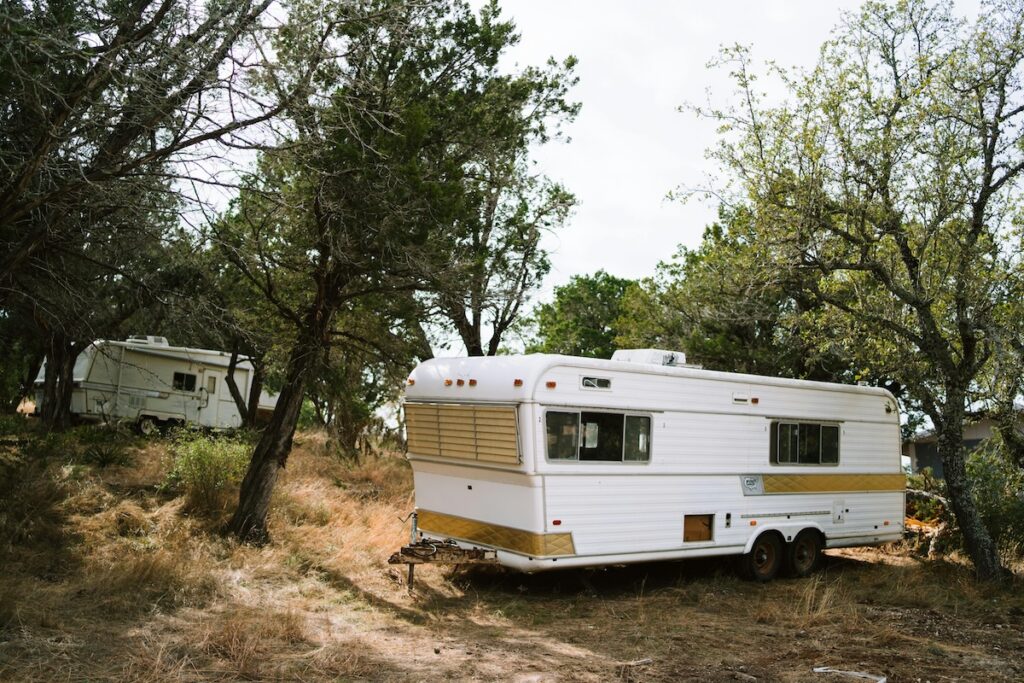
Photo by Jeff Stapleton
Campground Yellow Flags: Get More Info Before You Commit
Yellow flags aren’t necessarily dealbreakers. They’re invitations to ask better questions—of yourself and the campground—before you make a deposit. A thin or outdated review history, for example, can be resolved with a simple phone call. A campground with just a few reviews isn’t necessarily bad. It may just be new or simply off the beaten path. Yet it does mean you’re going up against a lack of community intelligence.
If you simply call with specific questions about site sizes, hookups, or Wi-Fi, and gauge not only the answers but also how the staff responds, you’ll be able to fill in many of the details.
Amenities listed on the website deserve to be confirmed, too. I don’t know if I’m just unlucky, but the number of times I’ve arrived only to discover the pool and hot tub featured on the website were “temporarily closed” or “under renovation” seems excessive. Especially since the unavailability never seems to make it to the booking page. The same goes for laundry facilities.
If a specific amenity is part of why you’re choosing this park, verify it’s open and working before you commit. Closed laundry facilities aren’t a big deal if this is just a one-night stop on your way to your big destination. But if you’re planning on making it your basecamp, that’s not good.
You know what amenities are most important to make the most of your stay.
Another one worth noting is the campground map—i.e., is there one? Even the best parks can have a mediocre site. But without a map, you’re leaving your spot entirely to chance. A good reservationist will help steer you through the layout over the phone—revealing the quieter sections, which sites get the most morning or afternoon shade, which ones back up to a road, etc. And if they can’t or won’t answer your questions, that’s useful to know too. Again, it’s worth confirming by looking at the satellite view before you call or at least before you book.
Other flags to watch for:
- An unusually great rate for the area (does it sound too good to be true?)
- A high ratio of long-term residents, which can shift the atmosphere considerably.
- Road access situations that might not play well with your rig. GPS directions to smaller or rural campgrounds are notoriously unreliable. Take this time to ask for the best RV-friendly route before you pull out of your driveway, and keep your notes with you before you arrive—service can be spotty in some areas.
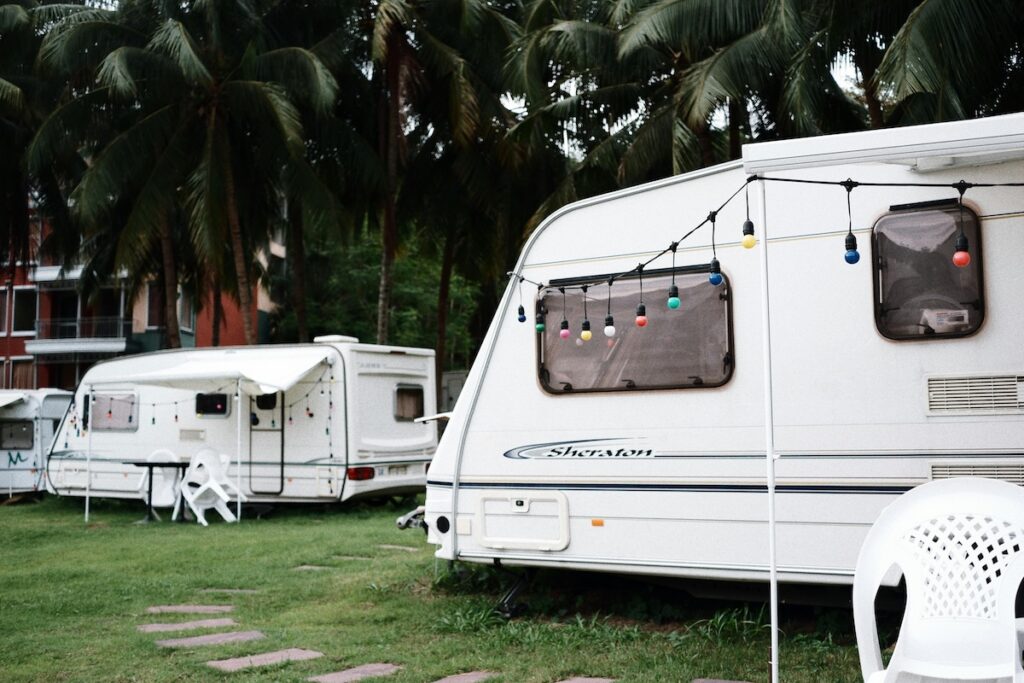
Photo by Mew wy
Campground Green Flags: Book with Confidence
Red flags tell you to walk away, yellow to dig deeper. Green flags, on the other hand, say stop deliberating and book before someone else does! Experienced RVers get a feel for these pretty quickly as a campground that does one thing really well usually does several things well.
When it comes to reviews, again, look for specificity and consistency across platforms. When campers with different rig types, travel styles, and expectations are all willing to share their praise for the clean facilities, well-spaced sites, and reliable hookups, you know you’ve likely found a winner. Bonus points when you find reviewers who mention they return year after year. Repeat customers are a campground’s most honest endorsement.
Look for positive endorsements, such as:
- Pads in good shape
- Good leveling
- Easy pull-through or back-in access
- Clean, well-maintained facilities (especially bathhouses, which matter even if you don’t plan to use them as they indicate attention to detail. A campground that keeps shared spaces spotless is one that pays attention to the whole property.)
Also watch to see how management responds to any negative feedback. A gracious, constructive public response to criticism can say a lot more than a wall of five stars.
The biggest green flag is a great phone call. Friendly staff who answer questions easily, are enthusiastic about your stay, and volunteer information you didn’t even think to ask for—who seem genuinely interested in helping you find the right site—are a strong sign that the whole operation is well-managed. Good campground staff know their parks inside and out. And they want you to feel comfortable around camp, too.
Speaking of campground specifics: spacious, well-separated spots with trees or other natural buffers between neighbors is a strong signal that the park prioritizes camper comfort over squeezing in a few extra rigs.
Even if you’ve stayed at the park before, it’s worth checking the site and map to see if there have been changes to the management and layout since your last visit. I’ve visited campgrounds I’ve loved, only to discover the next time I visited that new management doubled the number of sites without doubling the size of the campground. Let’s just say the camp felt cozier than in the past.
Finally, the right location—that’s close to trails, water, and local attractions—provides a genuine launching pad for your adventures rather than just a place to park. The best stays tend to be the ones where the campground itself is worth returning to, but it’s everything else in the area that gives you reason to.
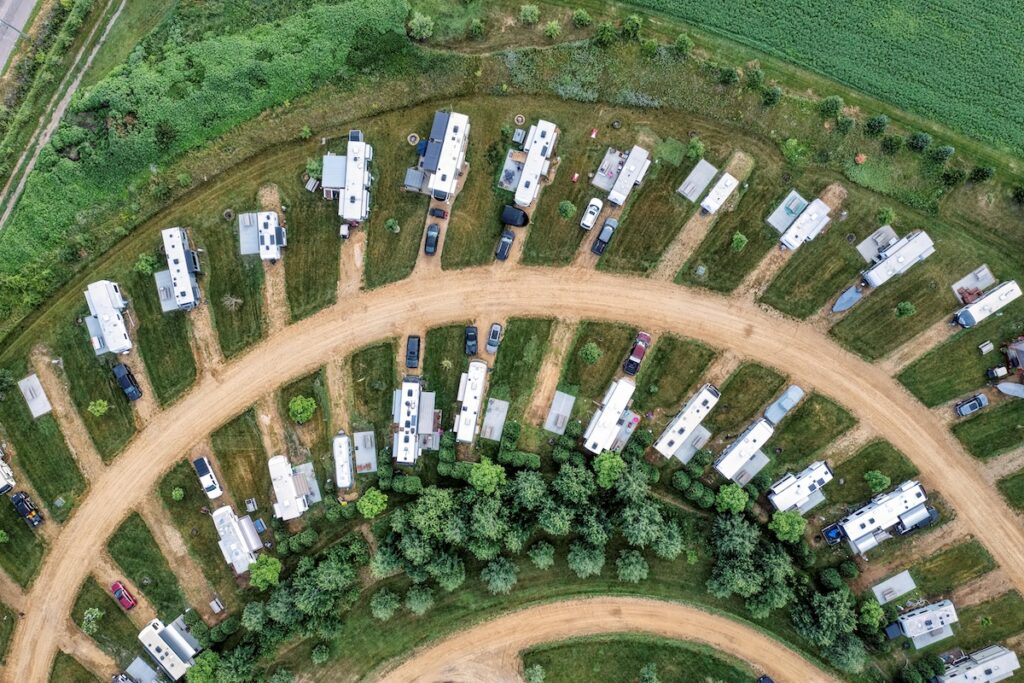
Photo by Tom Fisk
Making the Most of a Not-So-Great Campground
Even if you’ve done your research, read the reviews, and perhaps even stayed at the campground before, you can still end up at a disappointing park. It happens. Maybe you needed to book your trip last-minute, your previous campground closed due to severe weather or an unforeseen event, or the campground just looked better online than in reality. (We’ve all been there.) Rest assured, a subpar campground doesn’t necessarily mean a subpar trip.
Before you unhitch, take a moment to inspect the site fully. Walk around the pad, look at the hookups, and check for anything else that gives you pause. Say, uneven ground, questionable electrical connections, standing water, or trash left from the previous camper. If something looks off, don’t hesitate to let the office know immediately. Most campgrounds do their best to address legitimate concerns. Taking care of those concerns before you’re fully set up gives you the most options, including requesting a different site.
If the park genuinely falls short of what was advertised, go to the manager rather than a front desk attendant. Remain calm and be specific. For example, “The site we’ve been assigned has exposed wiring at the pedestal” lands better than “Do you bother with maintenance? This is the crappiest park we’ve been to.” Management may simply be unaware that there’s exposed wiring.
Before you begin the conversation, know the cancellation and early departure policy, so you know your options if the issue(s) can’t be resolved.
For other annoyances, say noise, close neighbors, and lackluster amenities, the most reliable fix is to see the campground as your base rather than the destination. Get out early, explore the area, and come back to camp tired. Some of the best RV trips happen at forgettable or even unfortunate parks in remarkable locations. Camp is just where you sleep. The trip is everything else you explore.
Don’t forget: your neighbors are often the best resources. Fellow RVers tend to be generous with their knowledge of the area. The quiet hot springs that aren’t on the app, the local restaurant that serves the best tamales, or the back road that takes you to an unforgettable overlook. Even a not-so-great campground can feel so much better when you’re laughing and learning with the people parked next to you.
And as a baseline for any stay: travel with your own surge protector and an inline water filter. Sure, they can’t fix a bad campground, but they can protect your rig and your peace of mind while you’re there.
The Bottom Line
No campground is perfect. No review system is foolproof. Not all reviews are honest. Not all websites are up to date.
That said, the RVers who consistently have the best trips aren’t just lucky. They’ve learned to read the signs, ask the right questions, and make the best of whatever they find when they arrive.
A little research before you pull in goes a long way. Remember to cross-reference reviews across platforms, study the campground maps and satellite view, and never underestimate what you can discover from a single, short phone call to the reservation desk. A campground that handles that call well—knowledgeably, enthusiastically, and without making you feel like a nuisance—is almost always one worth staying at.
Happy trails.