For RV enthusiasts, clean and safe drinking water is essential to enjoying a worry-free outdoor adventure. Whether you’re traveling cross-country or camping in the wilderness, your RV’s water supply is a vital part of the experience. While many campgrounds offer hookups, the quality of that water can vary widely. That’s where a camper water filter comes in.
Installing a reliable water filtration system ensures you have access to clean, purified water wherever you go. However, with so many options available, it can be overwhelming to choose the right one for your needs.
Introduction to Camper Water Filters
A camper water filter is a device designed to purify the water that flows through your RV’s plumbing system. Whether you’re drawing water from a campground hookup or an on-the-road source, these filters are essential for removing contaminants like chlorine, sediment and bacteria that could compromise the quality of your water.
With a good filter, you can ensure that the water you drink, cook with and use for daily needs is clean and safe. These filters come in various types, from simple inline versions to more complex systems, each designed to meet different needs and water quality concerns. Investing in a reliable RV water filter can make a world of difference in the comfort and safety of your travels.
Why You Need a Water Filter for Your RV
When you’re on the road, the water you consume becomes a vital part of your daily routine. Unfortunately, not all sources are safe for drinking or even cleaning with. Whether you’re connecting to a campground’s hookup or using water from an unknown source, you may be exposed to contaminants, chemicals or bacteria that could affect your health and the taste of your water.
A water filter for your RV ensures that you have access to clean, safe water no matter where you are. Campground water can contain high levels of chlorine, rust or even harmful microbes, making filtration essential. Without a filter, you risk ingesting impurities that could lead to stomach issues or worse. Even the best-looking water hookups could be contaminated with dirt or other particles, so investing in a reliable filtration system is a simple yet effective way to safeguard your health.
Additionally, RV water systems are designed to carry water through various pipes, which can sometimes contribute to unpleasant tastes or odors. Access to safe drinking water is crucial for RV travelers, especially when camping off the grid. Just as bottled water companies rely on methods like reverse osmosis (RO) to remove harmful contaminants, an RV water filter ensures that you’re avoiding impurities.
Many bottled water brands use RO to eliminate contaminants like lead, pesticides and heavy metals, which can often find their way into municipal water supplies. Having a reliable filter for your RV ensures you’re getting clean, fresh water no matter where your travels take you.
Types of Camper Water Filters
When it comes to camper water filters, there’s no one-size-fits-all solution. Depending on your needs, travel habits and the water quality in the areas you frequent, you may want to choose from a variety of filtering systems. Understanding the different types of RV water filters can help you make an informed decision.
Inline Water Filters
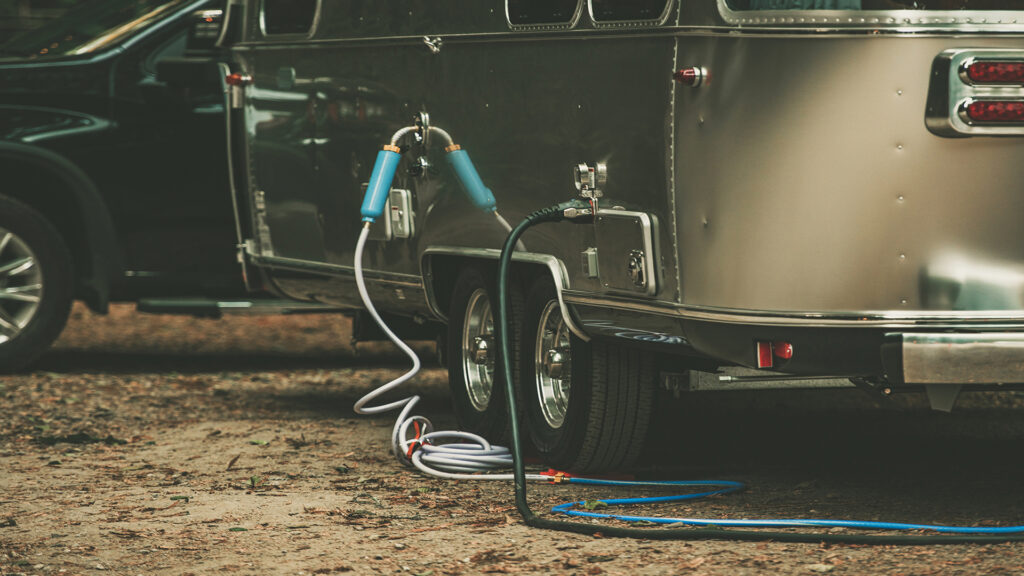
Inline filters are the most common and affordable option for RV owners. They attach directly to the hose, allowing you to filter water as it flows into your RV. They are typically designed to remove chlorine, sediment and bad taste, making your drinking water cleaner and more refreshing.
Canister Water Filters
Canister filters offer a more robust system that uses a cartridge inside a large canister. They can remove a wider range of contaminants, like lead, bacteria and pesticides. They’re often used for drinking water and the RV’s entire water system, providing comprehensive purification.
Reverse Osmosis Systems
A reverse osmosis (RO) system is ideal for those who want the highest level of water purification. This involves a multistage filtration process to remove a wide range of contaminants, including dissolved solids and harmful chemicals. While they are expensive and require more maintenance, they provide some of the cleanest water available.
UV Water Purifiers
UV purifiers use ultraviolet light to disinfect water by killing harmful bacteria and viruses. These systems are a great option for travelers who are concerned about biological contaminants but don’t want to deal with the chemical taste or residue that some other filters leave behind.
Sediment Filters
Sediment filters focus on removing larger particles, such as dirt, rust and sand, that can clog up your system and make your water look cloudy. While these filters won’t improve taste or remove chemicals, they are a helpful first stage of filtration, often used in combination with other types of filters.
Each type of RV water filter comes with its benefits and limitations, so understanding the specific needs of your travels will guide you toward the best solution.

How to Choose the Best RV Water Filter
Choosing the right RV water filter is essential for clean water on your travels. Here are the key factors to consider.
- Water quality: If you’re traveling to areas with poor water quality or bacterial risks, consider a reverse osmosis or UV purifier. For well-maintained campgrounds, a simple inline filter might be enough.
- Filter life span and maintenance: Inline filters require frequent replacement, while canister and reverse osmosis systems last longer. Choose based on how much maintenance you’re willing to handle. Generally, water filters need to be replaced every four months or after filtering 100 gallons of water.
- Flow rate: If you use a lot of water, choose a filter with a higher flow rate. Reverse osmosis systems may slow down water flow, which might be inconvenient if multiple people are using the RV at once.
- Portability and installation: Inline water filters are easy to install and portable, while more complex systems may need additional installation time or space in your RV. Consider your space and how much effort you want to invest.
- Cost: Filters range in price from budget-friendly inline models to pricier reverse osmosis or UV systems. Balance your budget with long-term maintenance costs.
- Purpose: Decide if you want a filter for just drinking water or for purifying all water in your RV system. Some filters, like canisters, can handle the entire system, while inline filters are typically for drinking water.
By considering these factors, you can choose the best RV water filter that suits your needs for a clean and safe supply on the road.

Top Picks for Best RV Inline Water Filters
When it comes to finding the best RV inline water filter, durability, filtration quality and ease of use are key. Here are a few top-rated options RV enthusiasts rely on for clean, great-tasting water.
- Camco 40043 TastePURE Inline Water Filter: The Camco stands out as an affordable and easy-to-install option. This filter reduces chlorine, sediment and bad taste. It’s best for short-term trips or occasional campers.
- Clearsource Premier RV Water Filter System: Clearsource is an excellent option for full-time RVers seeking advanced filtration due to the two-stage filtration system that removes sediment, chlorine and bacteria for high water quality.
- Culligan RVF-10 External Water Filter: The Culligan is known for its robust build and effective sediment and chemical filtration. It’s ideal for RVers needing long-lasting, reliable performance.
- Waterdrop Inline RV Water Filter: The Waterdrop uses advanced filtration media to reduce lead, chlorine and heavy metals. Travelers should prioritize water purity and safety.
- Beech Lane External RV Dual Water Filter System: Beech Lane offers a dual canister system with carbon and sediment filters for thorough purification. Frequent campers in areas with poor water quality will find this system most useful.
Understanding RV Water Filtration Systems
An RV water filtration system is designed to keep the water flowing through your RV clean and safe from the source to your faucet. Understanding how they work can help you choose the best setup for your travels. Here’s a breakdown of the components and their roles.
- Pre-filter: This is typically the first stage of the filtration process. The pre-filter removes larger particles like dirt, rust and sand from your water before it reaches the main filter. It’s an essential step for preventing clogs and protecting your RV’s plumbing.
- Main filter: The main filter often uses activated carbon to remove chlorine, volatile organic compounds (VOCs), and bad taste or odors from the water. It’s effective at improving the overall taste and quality, particularly for drinking and cooking.
- Post-filter: Some systems include a post-filter to remove any remaining contaminants after the main filtration stage. This is especially useful for high-end systems like reverse osmosis, which may require an additional stage of filtration for complete purification.
- UV purification: UV water purifiers use ultraviolet light to kill bacteria, viruses and pathogens. This is an additional layer of protection that’s especially helpful for those traveling to areas where water sources may be contaminated with harmful microorganisms.
- Reverse osmosis systems: Reverse osmosis (RO) systems offer the highest level of filtration. They use a semi-permeable membrane to filter out contaminants like heavy metals, dissolved solids and chemicals. These systems are expensive and require more maintenance, but they provide some of the purest water available.
Benefits of Using a Water Filter for RV Hookup
Using a water filter for your RV hookup offers several key benefits that go beyond just ensuring the water is safe to drink. Here’s why it’s a smart investment.
- Improved water quality: Many campground water sources contain chlorine or chemicals that can affect taste and odor. A water filter removes these, giving you clean, fresh water for drinking and cooking with, which can be made better with the use of a few key ingredients in the pantry of your RV.
- Protection for plumbing: Sediment and rust in campground water can clog pipes and damage fixtures over time. A filter helps protect your RV’s plumbing by removing these particles.
- Health and safety: While most water is treated, harmful bacteria or pathogens can still pose a risk. A filter ensures your water is free from biological contaminants, especially in areas with less reliable sources.
- Better taste and odor: Water from hookups can have a metallic or chemical taste. A filter improves the flavor and removes any unpleasant odors, making it more enjoyable to drink and use.
- Convenient and cost-effective: A filter eliminates the need for bottled water, saving you money and reducing plastic waste while ensuring fresh, clean water on the go.
Installing a water filter for your RV hookup ensures clean, safe water wherever you travel, keeping your body and RV in great shape.

Comparing Travel Trailer Water Filter Options
When it comes to filtering water in your travel trailer, you have several options to consider, depending on your needs and the water quality at your destinations. Here’s a breakdown of the most popular types of filters for travel trailers and how they compare.
- Inline water filters: Inline filters are affordable and easy to install. They attach to your water hose and remove chlorine, sediment and bad taste. They’re a great option for basic filtration but don’t offer advanced purification.
- Canister filters: Canister filters provide multistage filtration, removing chemicals, chlorine, lead and VOCs. They’re larger and require more installation but are ideal for whole-house filtration in RVs.
- Reverse osmosis systems: Reverse osmosis filters out heavy metals, dissolved solids and chemicals to provide the purest water. Though more expensive and requiring maintenance, they’re the best option for travelers needing top-tier purification.
- UV water purifiers: UV purifiers eliminate bacteria and viruses using ultraviolet light. While they don’t remove chemicals or sediment, they’re excellent for ensuring pathogen-free water and are often combined with other filters for full protection.
Your choice depends on your water quality needs, space and how much maintenance you’re comfortable with. Inline filters are easy and cost-effective, while canister filters are RO systems that offer more advanced purification for higher water quality.
Reviewing Popular RV Water Filtration System Brands
Several trusted brands dominate the RV water filtration market, and they are known for their reliability and performance. Here are some of the most popular.
- Camco: Camco specializes in affordable, easy-to-use inline filters that reduce sediment, chlorine and odors. This brand is ideal for casual campers or those on a budget.
- Clearsource: Clearsource offers premium multistage filtration systems that tackle bacteria, heavy metals and chemicals. This brand is best for full-time RVers who prioritize water purity.
- Culligan: Culligan is known for durable external filters with effective sediment and chemical reduction. This brand is great for long trips or extended stays.
- Waterdrop: Waterdrop focuses on advanced filtration technology for safer, better-tasting water. It’s suitable for those who want a balance of performance and affordability.
- Beech Lane: Beech Lane provides dual-filter systems for heavy-duty purification that are ideal for poor water conditions. This brand is great for frequent travelers or remote campers.
Expert Reviews: Best RV Water Filters
Access to clean water is essential for RV enthusiasts. Experts have evaluated various filters based on filtration efficiency, durability and user-friendliness. Consider these RV water filtration system reviews.
- Camco EVO Premium Water Filter: This is an inline, self-contained filtration system featuring a granulated active carbon filter. One expert review described this system as “impressive” and “easy to install.”
- Clearsource Premium RV Water Filter System: One expert shared that this is a two-stage filtration system with powder-coated chassis and stainless steel fittings that utilize 5-micron sediment and 0.5-micron carbon filters.
- Beech Lane External RV Dual Water Filter System: An expert shared that this is an external dual-filter system that features 5-micron sediment and 0.5-micron carbon filters and is known for its heavy-duty construction.
- Camc0 40639-A RV TastePURE Dual Canister Water Filter: Expert insight into this system shared that it is a dual-stage filtration system featuring a 4-foot fresh water hose, a built-in stand with rubber feet, a replaceable premium spun 5-micron sediment and 0.5-micron carbon block filters.
- AQUACREST RV Inline Water Filter: One expert described this design as “a slim profile” with a fluoride removal function and food-grade plastic housing.
Installing a Camping World Water Filter
Installing a Camping World water filter is a straightforward process that ensures your RV has clean, safe water. Whether you’re using an inline filter or a more advanced system, here’s a general step-by-step guide to get you started.
- Gather your supplies: You’ll need your water filter, a clean hose, Teflon tape and a water pressure regulator to prevent damage to your system.
- Turn off the water supply: Before installation, make sure the water supply is turned off to avoid pressure buildup.
- Connect the filter to the hose: For inline filters, attach one end to your hose and the other to the water source. Wrap Teflon tape around the connections if needed to ensure a tight, leak-free seal.
- Attach to your RV water inlet: Once the hose to your RV’s water inlet. Use a water pressure regulator to protect your system from high-pressure damage.
- Flush the system: Before using the water, flush the system for a few minutes to clear out any loose carbon particles or debris from the new filter.
- Check for leaks: Once the water is running, check all connections for leaks and tighten them if necessary.
- Replace or maintain as recommended: Most Camping World water filters come with guidelines on how often to replace or clean them. Regular maintenance ensures optimal performance and longevity.
Maintenance Tips for Your RV Camper Water Filter
Proper maintenance is essential to keep your RV camper water filter working efficiently and prolong its life span. Here are some key tips to ensure clean water on every trip.
- Follow replacement guidelines: Most filters need replacing every three to six months, depending on usage and water quality. Check the manufacturer’s guidelines to avoid reduced filtration or clogs.
- Flush the filter regularly: Flushing your filter after installation or periods of disuse clears out trapped sediment and improves water flow. Run clear water through it for a few minutes before reconnecting.
- Store filters properly: If you’re not using your RV for a while, remove and dry the filter to prevent mold and bacteria growth. Store it in a cool, dry place.
- Check for cracks or damage: Inspect your filter housing and connections regularly. Cracks or leaks can compromise water quality and system performance.
- Use a pre-filter: A pre-filter can help catch larger particles in areas with high sediment levels, reducing strain on your main filter and extending its life.
- Sanitize the system: Periodically sanitize your entire RV water system with a diluted bleach solution or another RV-safe cleaner to prevent bacteria buildup.
Routine maintenance ensures safe, great-tasting water and protects your RV’s plumbing system from unnecessary wear and tear.
Enhancing Water Purification for Campers
Having access to clean, safe water is crucial for campers. However, a basic filter isn’t always enough. Enhancing your water purification system can give you added peace of mind, especially when traveling to remote locations with uncertain water quality. Here are a few ways to improve your camper’s water purification system.
- Combine filtration methods: Pairing different filtration types, such as an inline filter with a UV purifier or reverse osmosis system, provides more comprehensive protection against chemicals, sediments and pathogens.
- Use a water softener: If you frequently camp in areas with hard water, a portable water softener can minimize mineral buildup in your plumbing and improve taste.
- Install a pre-filter: A sediment pre-filter captures large particles like sand and rust before they reach your main system, prolonging filter life and maintaining water pressure.
- Consider portable purifiers: For off-grid camping or emergencies, portable water purifiers, like gravity-fed systems or pump filters, ensure you have drinkable water even without hookups.
- Test your water regularly: Regular water testing helps you understand what contaminants you’re dealing with, allowing you to choose the right filtration enhancements for your needs.
By upgrading your water purification system, you can ensure safer, better-tasting water wherever your travels take you. You should also ensure that you keep your freshwater tank well-maintained when you’re not using it to ensure it stays safe.
Choosing the Right Water Filter for Your RV
Investing in a reliable camper water filter is essential for safe, great-tasting water on the road. With opinions ranging from simple inline filters to advanced reverse osmosis systems, the best choice depends on your needs, budget and travel style. Regular maintenance and combining filtration methods can enhance water quality, ensuring peace of mind no matter where you camp.