
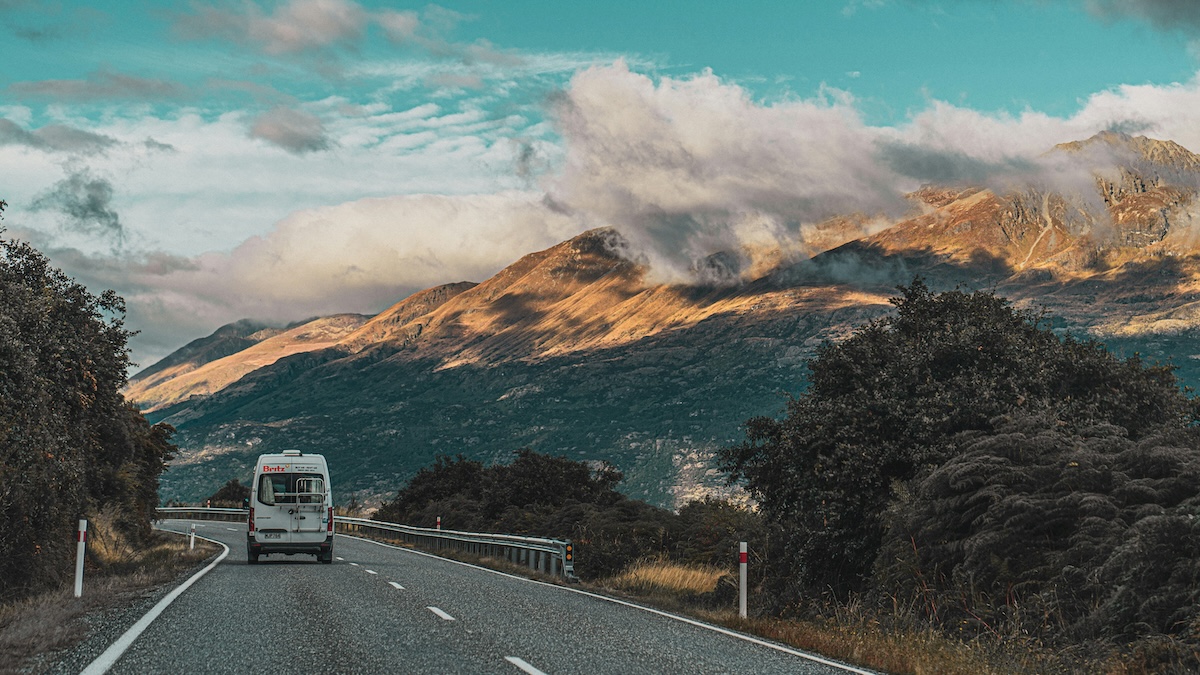
If you’ve caught the travel bug, there may be times when you realize there’s a particular kind of itch that RVing isn’t quite able to scratch. Sure, it’s the ultimate way to explore when you’re close-ish to home. Say a weekend in the mountains or the beach. A summer run up the coast. Or perhaps an ambitious cross-country haul, connecting as many state and national parks as possible while sleeping in the same bed night after night.
But sometimes, your travel bucket list wants to push beyond “close to home” destinations—into distant lands. Maybe images of Iceland’s winding roads past steaming lakes are calling you. Or sipping wine in the French countryside. Perhaps it’s a more exotic location, like seeing the sun rise over the Serengeti. Or all of the above. Sadly, though, it’s not like you can just grab the keys and go.
You can, however, still make these dreams come true. And you don’t even have to leave the RV lifestyle behind—as long as you’re willing to borrow (or more accurately, rent) someone else’s RV.
Indeed, international RV rental means you get all of the aspects of RV travel you’ve come to love. The freedom to change plans. The slow travel pace. Waking up somewhere new—without sleeping in a different bed in a different hotel every night. And best of all, you don’t have to figure out all the logistics of towing your rig across an ocean.
Fly in, pick up a rental, explore the country (or countries), and fly home. If you’ve been putting off certain locations because they’re “impossible” to RV, it turns out, you have options after all.
Ahead, we’ll cover five international destinations that truly welcome foreign RVers. With easy-to-navigate roads and established rental networks.
A quick heads-up as you start planning… much like the U.S. (especially recently), just about everywhere now requires advanced reservations for campsites and rentals alike. So, a “let’s just wing it” approach won’t travel as well as past dreams of backpacking through Europe. Planning well ahead just makes everything much easier.
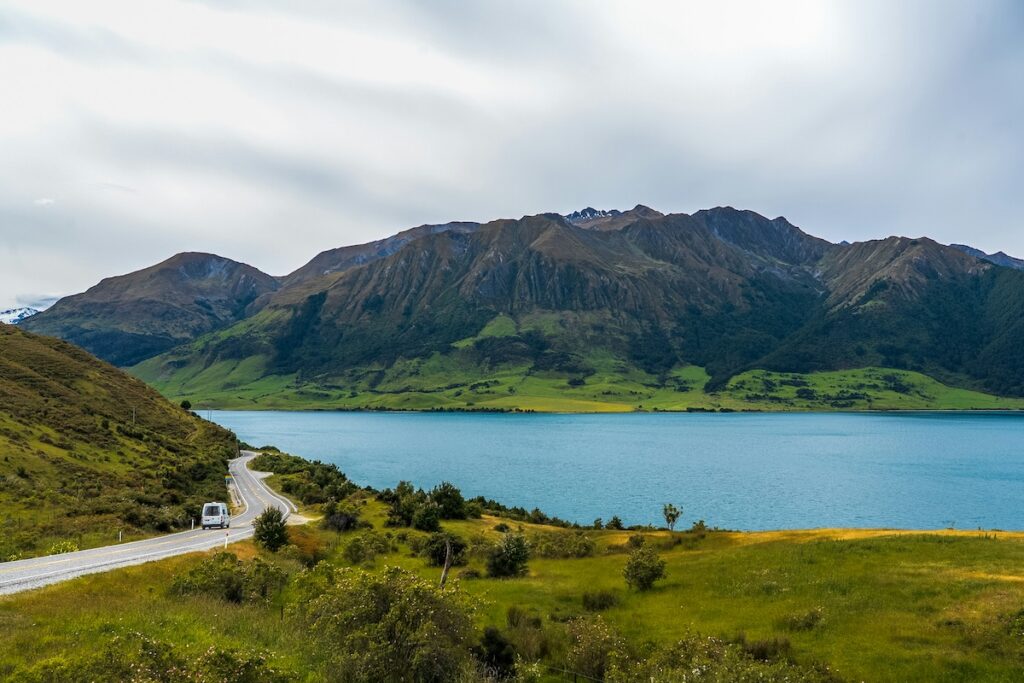
Why Rent Abroad Instead of Hotel Hopping?
Beyond RVing just being in our blood, when you stay in a hotel, you’re always the visitor. With someone else to change the bedding. Provide clean towels. And treat you as a guest.
With RVing, you can truly live in a place for a while—even if it’s just a week or two. You can cook your own breakfast with a view of a fjord rather than ordering from a menu. You can relax and take in the view from your camp chair every evening without being shown where to sit. You can stroll through nature whenever the mood strikes you (in most places). In other words, your time and your choices are your own—at least until it’s time to drive to the next campground (or back to the airport).
That said, a few preparations will make your road trip as smooth as possible. Booking abroad is different from booking domestically. After all, most of the time, you’re trusting a company you’ve never used in a country you don’t live in, sight unseen. (This is often the case whether you’re RVing or staying in hotels.)
Before you commit, you’ll want to make sure you check out:
- An International Driving Permit (IDP), which is either required or strongly recommended in most countries. Fortunately, it’s typically inexpensive (~$30 + shipping) and easy to get through AAA before you leave. It’s often worth having—even when it’s not mandatory.
- Insurance. Rental companies often offer their own coverage. As with many things, though, don’t just sign and go. Read through the fine print to understand deductibles and coverage limits. They don’t just differ from your insurance here, but also from country to country and even from company to company. Make sure you’re clear on exactly what’s covered and what your deductible looks like.
- Driving differences. Before you start driving, get familiar with different signage, norms, speed and units, infrastructure layout, and, of course, which side of the road you’ll drive on. It can take a few days to stop feeling weird, so give yourself a low-stakes day or two to get used to driving in such a different place before taking off for, say, a five-hour haul over a mountain pass.
- One-way rental options. It’s not always possible to start in one city (or country) and leave from another, and the companies that do offer these options often charge extra fees to reposition the RV.
- What’s included. Bedding, kitchen gear, camp chairs, and other “comforts” are sometimes included and other times cost extra. Make sure you read all of the details before you arrive, so you don’t have to buy everything once you’re there or pack extra supplies that are already on board.
- Read reviews. Not just general reviews. Look for ones from foreign tourists, especially American tourists. Take a close look at how the company handles someone who’s unfamiliar with local roads and norms as well as how it treats locals.
If you’re new to renting in general, you may want to consider renting an RV here in the U.S. first. Many of the fundamentals carry over, and it’s good practice before you make the leap to another continent.
For most RVers, all of this is doable.
And on the positive side, you may notice that the road infrastructure in many EU countries is quite a bit smoother. Did you know, for instance, that the road base in Germany is significantly thicker than in the U.S.? And rather than patch potholes, crews there tend to replace entire sections for a smoother, safer driving experience.
International Destinations for Renting an RV
Your dream destination may or may not be on the list below. The world, after all, is a big one. If you’re not quite ready to cross an ocean, one of our favorite international drives is the Trans-Canadian Highway. It’s a good way to dip your toes into international RVing without leaving the continent. It’s so close, in fact, that you can often just cross the border in your own RV.
If, however, you’re ready to fly, here are 5 more international destinations that are especially welcoming to RVers, with easy-to-navigate roads, established rental networks, and quality infrastructure for drivers (even those less familiar with the road rules).
New Zealand
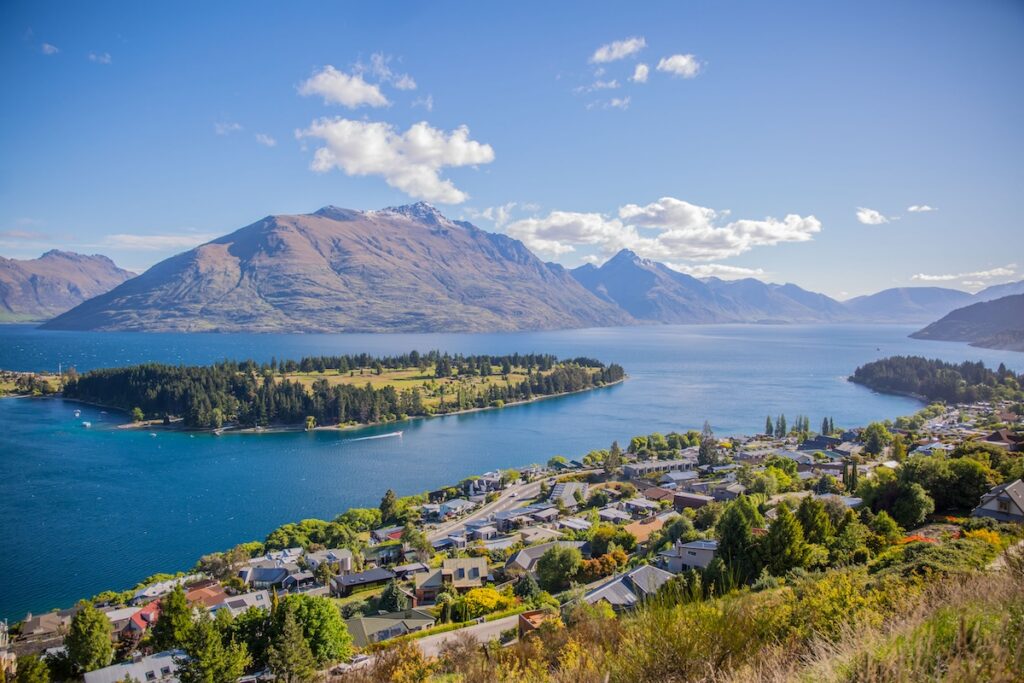
If you can start anywhere, New Zealand is a really good choice. It’s quietly become the top pick for first-time international RVers. Why? Because nearly every major rental company—from Brizt to Maui to Jucy—is built specifically around foreign tourists. That includes English-language, well, everything, well-marked roads, and a pickup process that feels like it’s designed for folks who are renting their first RV.
The country may be small (covering only 2.7% of U.S. landmass), yet the scenery is grand. And the small size makes it easy to see more and spend more days in your favorite locations. You can circle the North Island or South Island in a week or two without feeling rushed. And because the scenery is ever-changing, every day can feel like a whole new world. You’ll find geothermal valleys, glacier-fed lakes, and a coastline you may never want to look away from.
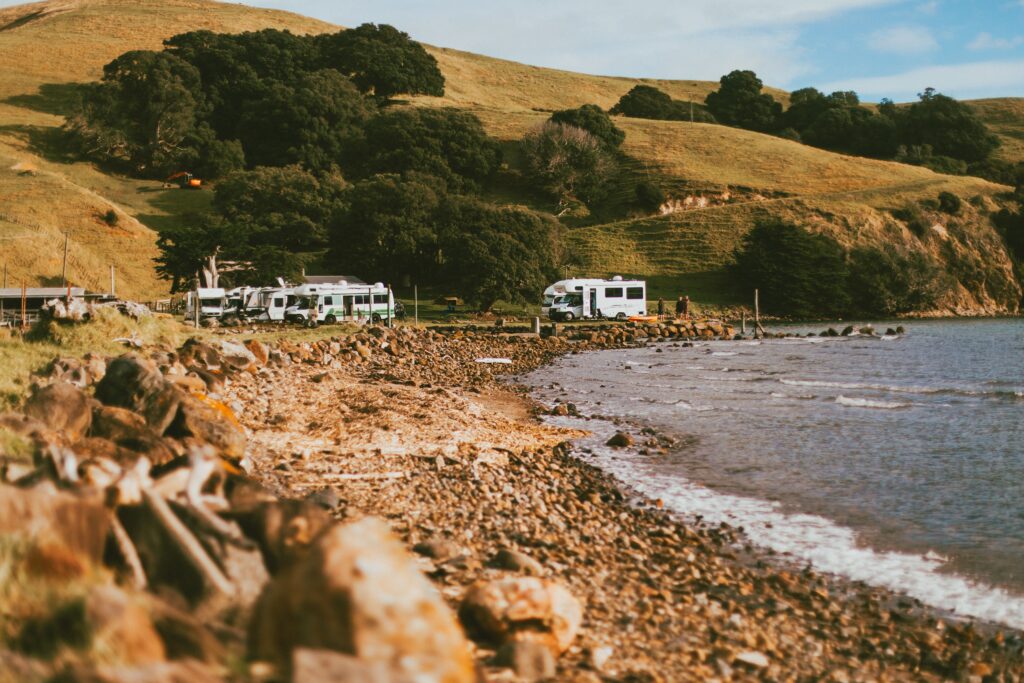
New Zealand’s freedom camping culture (that is, designated spots where self-contained RVs can park overnight—often for free!) is also one of the most generous in the world. It is, however, tightening up in popular areas. Spots require a self-contained vehicle with a toilet, wastewater, and a sink. “Leave no trace” is not only the motto here, it’s the rule. You also must park in approved zones (watch for signs). Again, route planning is a big part of a successful trip.
Suggested routes: South Island loop from Christchurch to Queenstown to Milford Sound and back, taking roughly 7 to 10 days.
Travel tip: Booking through one of the major NZ-based operators directly—rather than using a third-party aggregator—will typically provide better pricing. Plus, you’ll have local support directly if something comes up on the trip.
Iceland
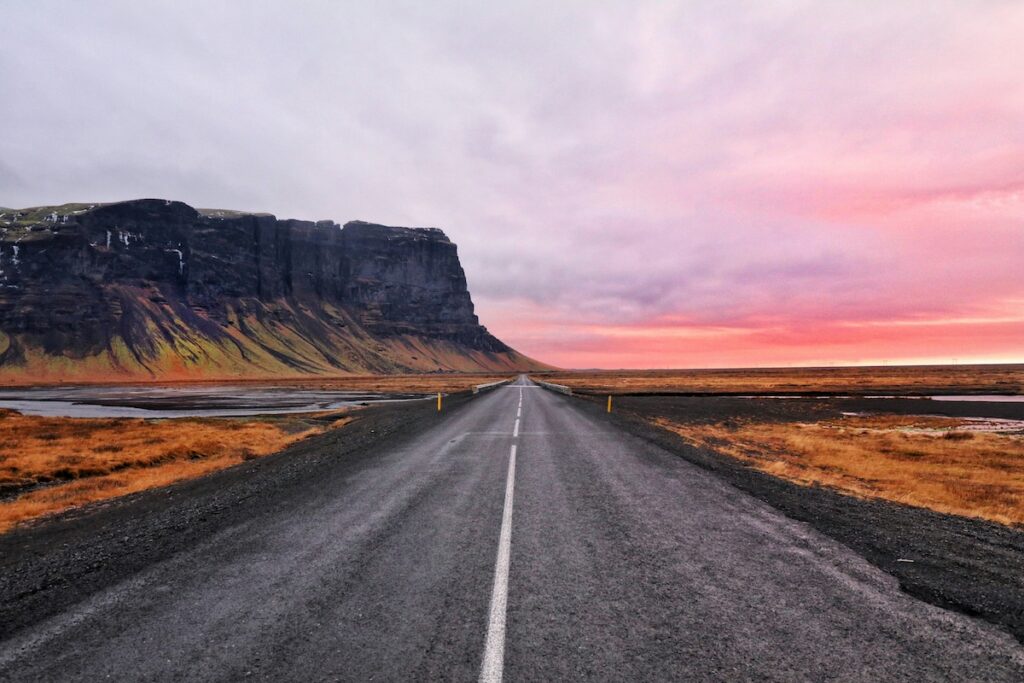
Iceland hands you something few destinations can: a built-in itinerary. The Ring Road (Route 1) circles the entire country. That means you can’t get lost. All you have to do is keep the ocean on one side, and you’ll drive past everything worth seeing: waterfalls, glaciers, black sand beaches, and geothermal pools. Plus, IcelandicAir is well known for affordable flights to get you there.
Before you book, there are a few things worth noting: Iceland is small, and the weather moves fast. Roads can close with little warning if you’re not visiting in the summer (June through August). So, shoulder-season trips require flexibility.
In addition, most camper rentals are compact—more camper van than full-sized RV—and many do not include an onboard toilet. That means you’ll need to be comfortable relying on Iceland’s public facilities and campgrounds more than you might elsewhere. Fortunately, they have a reputation for being generally well-maintained.
Suggested route: Full Ring Road loop, taking 7 – 10 day minimum to really take in this unique country.
Travel tips: Book early, especially if you’re aiming for a summer trip. Iceland’s camper fleet is smaller than you may expect—especially considering how popular the trip has become. The best vehicles sell out months in advance.
France
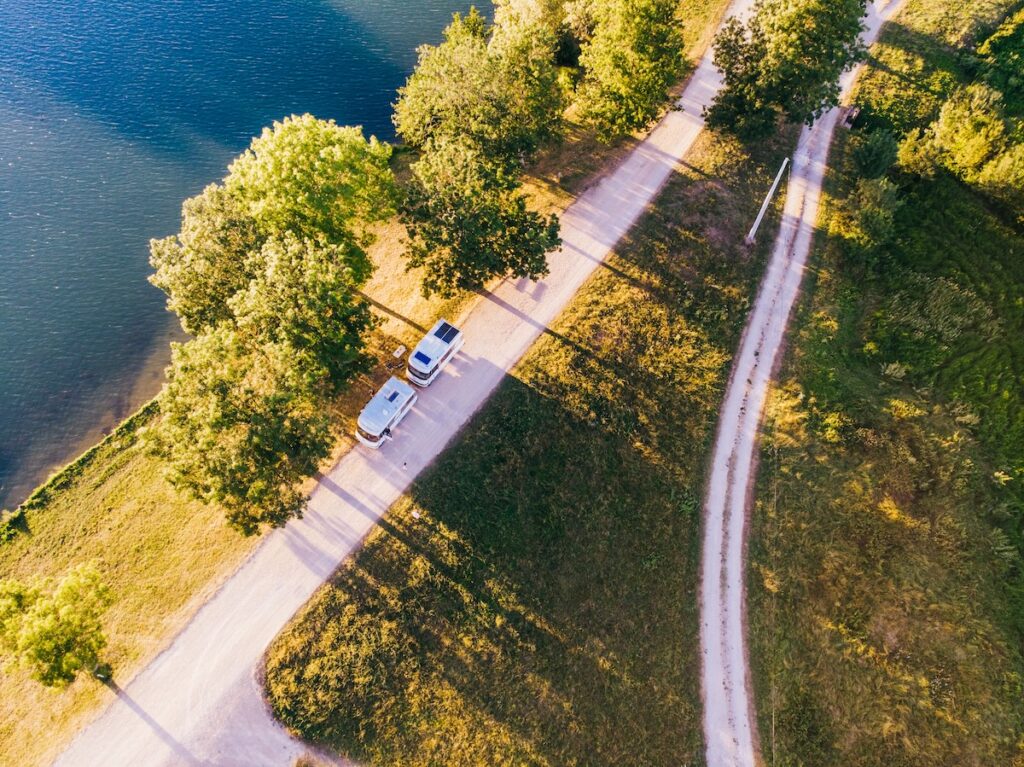
If you’ve dreamed of a European vacation but are worried the roads will feel a little too international, France may be the country for you. The roads are excellent—fast, smooth, and safe—signage is clear (even if your French leaves a lot to be desired), and the country’s aire de service network makes it one of the easier countries to RV in. That’s all due to the designated overnight parking spots, which are often free or low cost, even those with basic hookups. Some find it’s easier to have plans that are a bit looser in this countryside.
Another option is France Passion—a membership program that partners with wineries, farms, and small producers, allowing RVers to park overnight on their properties. Again, the fees are usually low or even free—you are, however, encouraged (if not required) to buy something local. Many of us would choose to do so anyway. It’s a nice change from a standard campground or resort-style RV park, allowing you to be totally immersed in the local life.
France is also a wonderful launch point for neighboring countries. The driving culture, road quality, and infrastructure carry over reasonably well into Belgium, Switzerland, and beyond for those who want to experience more of Europe.
Suggested route: Loire Valley to Provence—around 370 – 430 miles (600 to 700 km) of chateau-and-vineyard country by way of the countryside in 10 – 14 days.
Travel tip: Yescapa is a peer-to-peer option for Europe generally. Or you can book through a France-based operator directly for more dedicated local support.
Australia
If you’re looking for something BIG before you go home, Australia is vast, dramatic, and built for RVers who want a longer trip and are ready to take on a larger scale.
The country has a mature, tourist-friendly rental industry, well-maintained highways connecting major regions, and a generally welcoming attitude toward foreign drivers.
Free and low-cost camping is widespread outside of cities, especially along the coast and in the Outback. And the distances between destinations mean a longer trip is worth it. You don’t want to rush through this vast country.
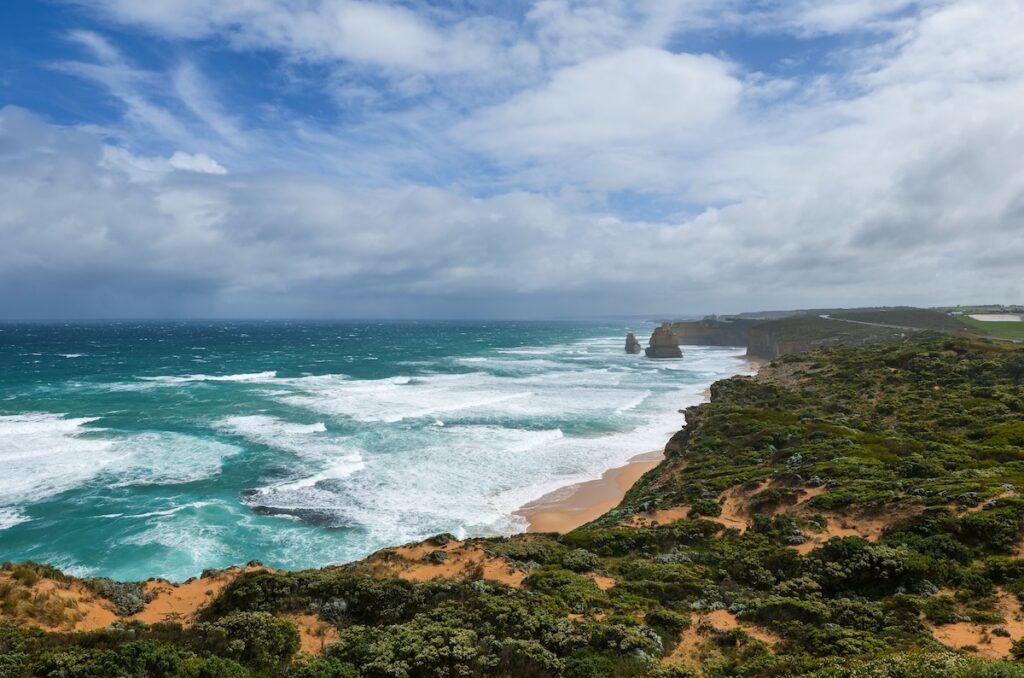
Suggested route: Great Ocean Road, Melbourne to Adelaide, taking roughly 7 – 10 days, and covering around 1,000 km. (Save the Outback crossing for when you’re a more experienced visitor.)
Travel tip: Book well in advance for the peak season (the Australian summer). Remember, we’re on opposite sides of the equator, so our winter is their summer, and their rental fleets often sell out early.
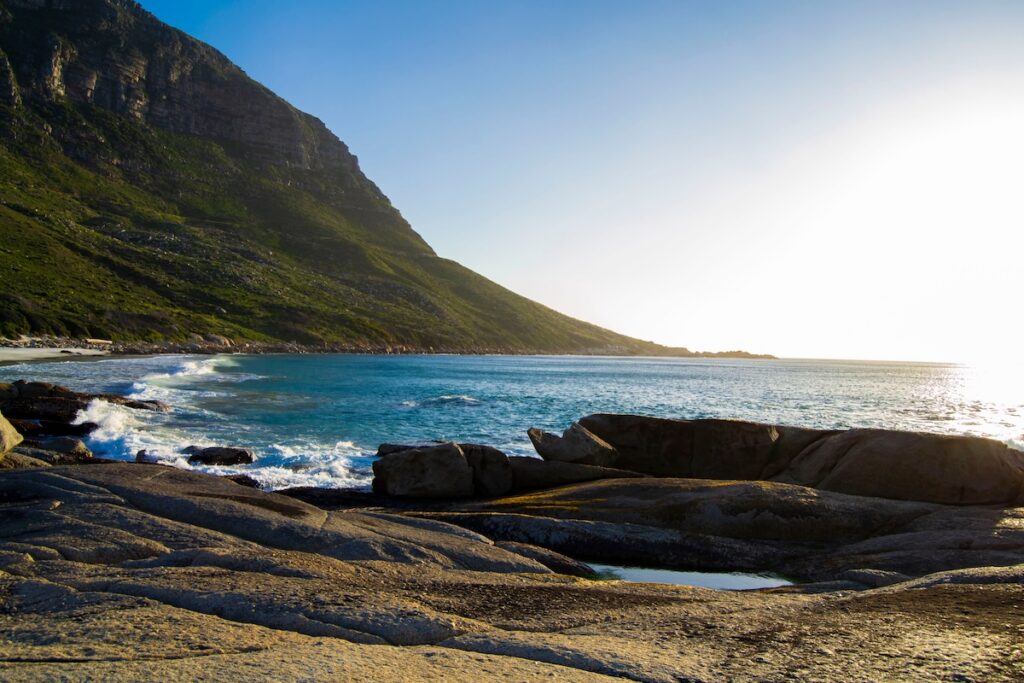
South Africa
If you’ve always wanted to see the Big Five, South Africa is where you want to go. Plus, self-drive safaris are a real, well-established category. In fact, many reserves, such as Kruger, are set up specifically for visitors to explore in their own vehicles at their own pace.
Roads connecting major destinations (Cape Town, the Garden Route, Kruger-area getaway towns) are typically well-maintained and easy for foreign drivers to navigate, as the rental industry caters heavily to international tourists. That said, visiting South Africa does take a bit more route research than some of the other countries on the list. Sticking to well-traveled roads and tourist corridors and arriving at camps well before dark is standard advice.
Suggested route: The classic Cape Town to Port Elizabeth along the Garden Route hits coastlines, mountains, and wildlife reserves. Plan for roughly 7 to 10 days.
Travel tip: Book through a South African-based operator with strong reviews from foreign tourists especially. Support and vehicle condition matter more here than in some of the other destinations on this list.

Rent, Drive, Love—The International RV Trip Your Bucket List Is Ready for
Traveling abroad doesn’t mean you have to give up all the parts of RVing you love: the freedom, flexibility, and slow travel pace that allows you to immerse yourself in the countryside. All of that can come with you—even if your rig doesn’t.
All it takes is some planning (a bit more than usual), a quality, trusted rental company, and a truly adventurous spirit. Bon voyage!