No matter where your travels take you, one of the great things about an RV is that you can take some (or even most) of the comforts of home with you. But there are limits.
Though some RVs have more room than others, space in any RV is at a premium. Even with a luxurious rig, you can’t bring it all with you. You’ll have to make intentional choices about what deserves a coveted spot in your RV. And then use smart storage strategies to make the most of everything that makes the list.
Space: Your Most Valuable Resource
Storage in an RV is all about space management. Unlike your home closet and pantry (if you have a larger home), RVs challenge you to think carefully about what you can take and how you store it. Understanding your RV’s unique spatial dynamics and limits is the first step. But whether you’re in a compact camper, a camper van, or a large, luxury RV, one thing remains true: every inch counts.
Creating Space Where There Is None
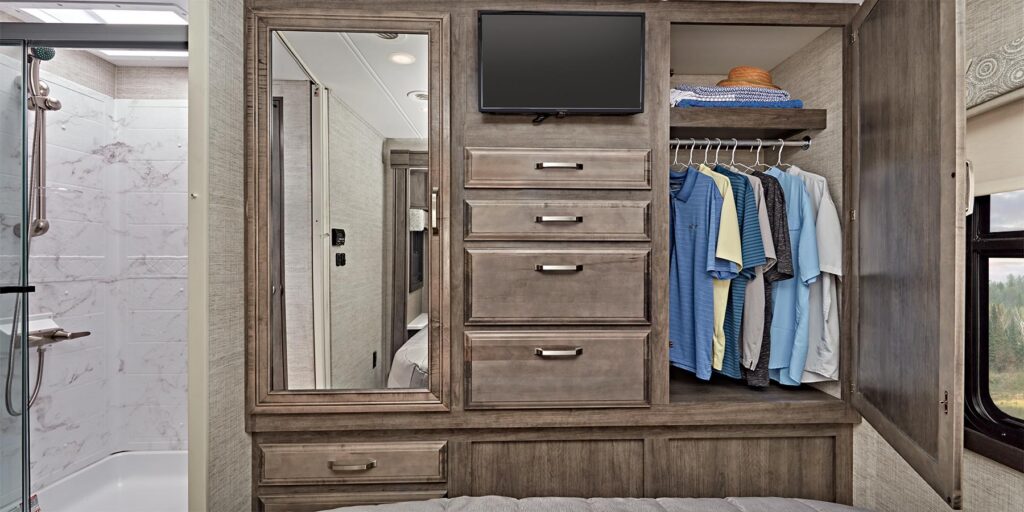
With a little creativity, you can find innovative storage solutions even for places where there is none now. Take a spin around your RV and see how you can:
- Use vertical storage, such as wall space or behind doors, to hang organizers, shelves, pockets, or hooks for clothing, utensils, toiletries, and more.
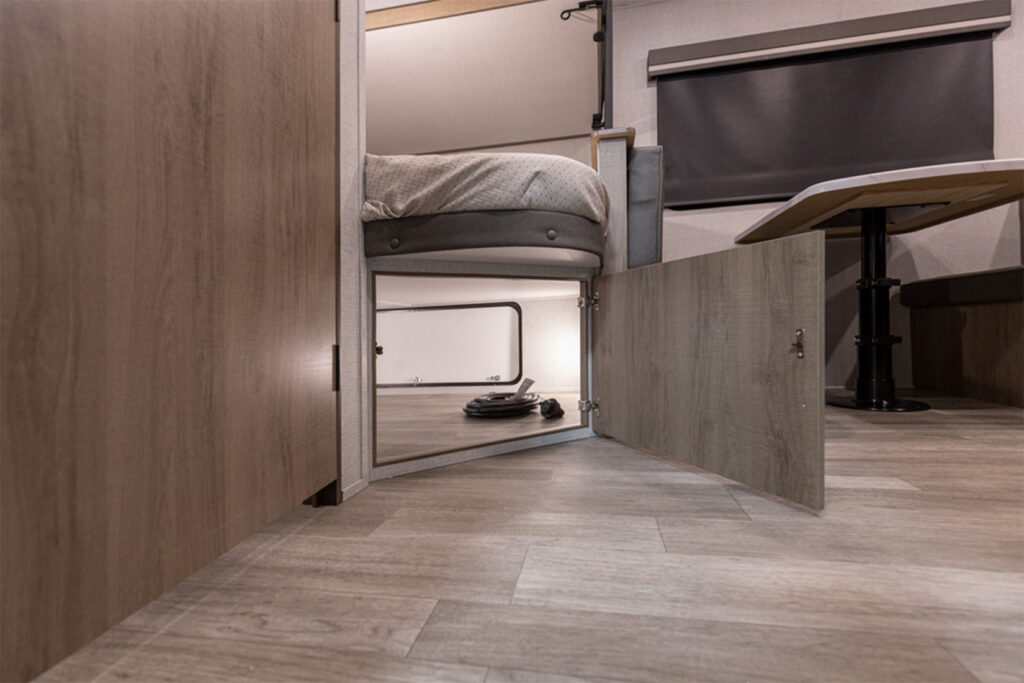
- Dig down under to store gear or clothing under beds, tables, or couches. Use slim, compact containers that can keep everything organized and are easy to pull out and access.
- Think outside the box and repurpose other storage solutions. Back-of-door shoe organizers can be used for all sorts of gear. Pantry shelves can become space-saving shelves for other locations. Vertical pegboards with rollouts can fit between cabinets or in narrow spaces to store tools, kitchen gadgets, or spices. Stackable or collapsible containers can help maximize space, while magnetic strips can safely store kitchen knives or tools, freeing up drawers or counterspace.
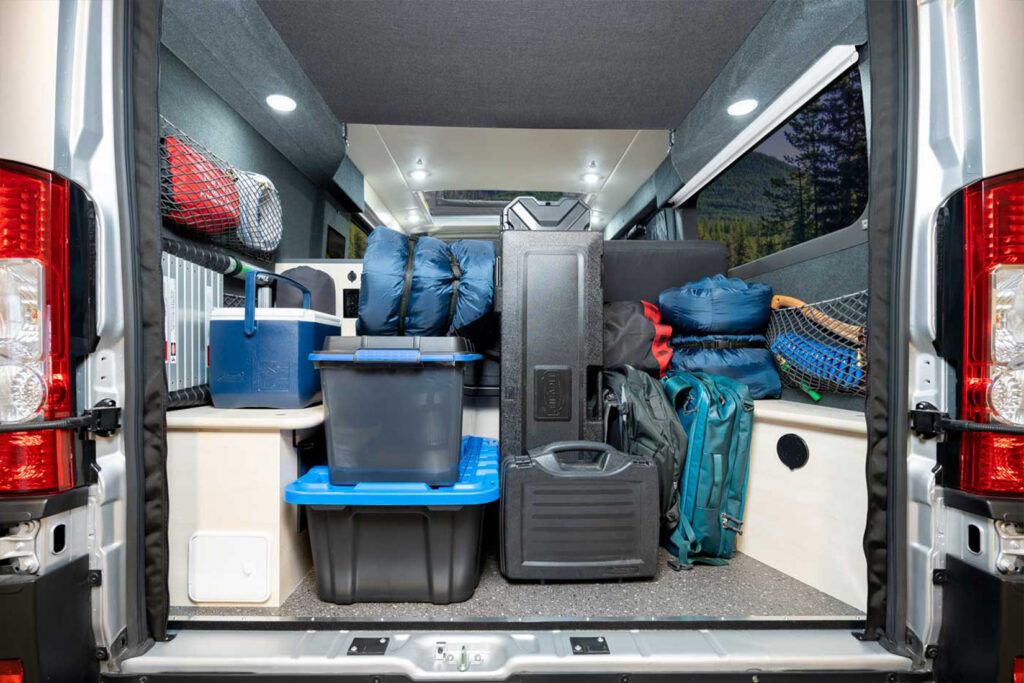
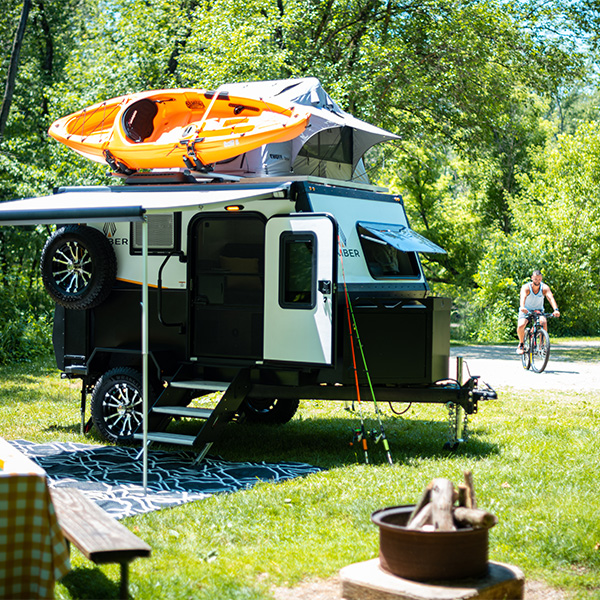
- Look up and store lightweight items in ceiling-mounted netting or racks. Cargo nets add function to otherwise wasted space and are ideal for extra clothing, gear, supplies, pillows, pet supplies, toys, games, jackets, small electronics, or even your fishing rods.
When deciding where everything should live, take time to consider how often you’ll need it. Store items by frequency, not category. For example, place high-use items at eye level, near the point of use, and in containers that are easy to open (even with just one hand).
Lower-use items, on the other hand, can be stored deeper, higher, or further away. The goal is to reduce daily friction, which will help make your smaller space feel larger.
Prioritize the Essentials
Even if you’re able to create some extra space in your RV, you’ll still likely need to pare down and prioritize. Focus on the gear that’s most important for your enjoyment, safety, and comfort.
Essentials include safety items like a first-aid kit and fire extinguishers, multi-functional tools, space-saving kitchen gear, compact bedding, outdoor gear, and versatile clothing.
Don’t forget to take the season into account. Your gear may differ for a rainy mountain trip than it will for sunny beach days or scorching desert drifts.
You can maximize the space by packing efficiently and effectively. That includes:
- Thinking in “zones,” rather than storage compartments. For instance, have a morning zone that contains your coffee gear, mugs, and even vitamins. An outdoor quick-grab zone might hold bug spray, dog leashes, headlamps, etc. A quick weather response zone is where you can find all of your rain gear, gloves, and quick-dry towels. Not only can zoning help prevent overpacking (and duplicate items), it can also make setup and teardown easier.
- Using organizers such as drawer dividers, cabinet organizers, and stackable bins to keep things neat and accessible. When possible, opt for soft storage over hard bins, which often lead to dead space. Packing cubes work well in cabinets and drawers, while zippered fabric bins are ideal for under-bed storage.
- Practicing the “less is more” mindset and ruthlessly paring down. If the item isn’t essential, consider leaving it at home. Keep in mind, though, that your essentials may not be the same as your travel partner’s. You may need your favorite fly rod. Your partner may need the book they’re reading. That said, you probably don’t need all of your fishing gear—and a library is best left at home or stored digitally.
- Reevaluating backup items: Ask yourself, If this broke, could I buy or borrow one within 24 hours for less than $20 (or whatever amount is comfortable for you)? If the answer is yes, you likely don’t need to store it in your RV. This single mindset shift can free up surprising amounts of space!
- Planning your meals to limit both food and kitchen supplies. Use overlapping ingredients across meals. Or pre-prep items into smaller containers, so you only bring what you’ll use.
- Choosing space-saving gadgets that have multiple purposes. The right kettle can make both tea and coffee. Silicone trivets can double as potholders as well as jar openers. A single versatile knife can handle most kitchen prep. Reusable storage bags work in the pantry, fridge, or freezer and can be washed and used again and again to minimize waste. Reusable compression bags can make it easier to store seasonal clothing or extra bedding.
- Rolling rather than folding clothing saves space and reduces wrinkles.
- Using multi-purpose containers whenever possible
- Going digital—aggressively. Store manuals as PDFs, read books on an e-reader, replace DVDs with streaming downloads, and use offline map apps. Just be sure you have digital backups in case a device fails.
- Rotating gear seasonally if you have storage space at home, in a storage unit, or a family member’s garage. Carrying everything all the time usually isn’t necessary.
In addition to creating a packing list, create a do NOT pack list. Knowing what not to bring is just as important as knowing what to bring. Your list may include bulky items that don’t collapse, excess clothing that can only be worn once (or not worn at all), redundant gadgets (especially those that are rarely used or have only one function), heavy books or magazines (when you have digital alternatives).
And remember, not every surface or crevice needs to be filled! Leaving some space empty makes daily life feel calmer, prevents clutter creep (a real problem if you’re always digging into your storage compartments and pulling everything out), and creates greater flexibility. After all, you may still need to bring in additional groceries, discover a must-have souvenir, or have other short-term needs.
We’ve heard it time and again: the biggest RV upgrade isn’t more storage: it’s less stuff.
Advanced Organization Solutions
Make the Most of External Storage
Exterior storage can be another RV black hole. These spaces can be large but awkward, making it hard to access what you need when you need it. You can make this space more usable by installing adjustable garage track systems, using modular bins (milk-crate style), and color-coding containers by zone and activity. For example, one for tools, another for outdoor cooking, and another for recreation.
Having a storage system prevents you from unloading half your bay to find that one thing you just know you packed but can’t find. (Hopefully!)
Try it First
RVers know that life on the road evolves, and so do storage needs. So, before committing to permanent solutions, test things out. Choose command hooks instead of screws, tension rods over built-ins, and removable adhesive mounts when possible. That way, you’ll avoid poking unnecessary holes in your rig, and it’s easier to adapt as your travel style changes.
Schedule a “Space Audit”
At least once a year (or once per season if you travel more frequently), go through the entire rig one cabinet or bay at a time. Ruthlessly remove anything you haven’t used in the past year, and replace any broken or bulky items with smaller, multi-use versions.
At some point, most RVers realize that carrying less often makes the road feel lighter—physically and mentally. Think of this task as preventative maintenance—for your peace of mind.
Storage Ideas for Small Spaces: Takeaways
Making the most of limited storage in your RV doesn’t have to be daunting. With a bit of creative thinking, thoughtful planning, strategic packing, and a few clever solutions, you can make even the smallest space work beautifully—without sacrificing comfort, personality, or fun.
The goal is to enjoy the journey as much as the destination. And a well-packed RV is one of the best ways to start your next adventure. You may soon discover how true the saying, “Less is more,” really is.