Last fall, Ohio State Parks took home the Gold Medal Award from the American Academy for Parks and Recreation Administration and the National Recreation and Park Association. This is the highest recognition a state park system can receive. And we have to admit, we weren’t surprised. Many of our RVer friends felt the same, saying, “Yeah, sounds about right.”
If you haven’t been, though, you may wonder why Ohio might deserve a spot on your most-go destinations list.
But here are the facts: Ohio State Parks are appealing to RVers, campers, and outdoors people of every kind. All 75 parks offer free (yes, really) admission, well-maintained campgrounds (9,300+) and trails, and plenty of places to park your rig without feeling like you’re all up in your neighbor’s business. In addition, there’s so much ecological variety—from the Lake Erie shoreline to Appalachian hollows.
So, here’s to the Ohio State Park system and an honor well deserved!
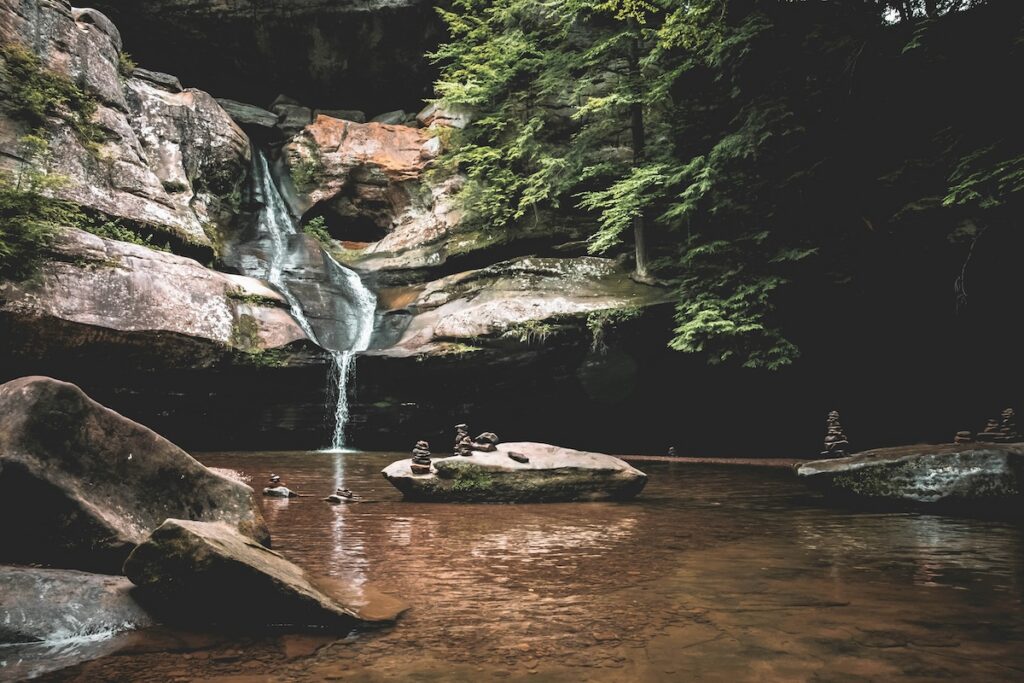
Hocking Hills State Park – Photo: Lance Anderson on Unsplash
The Recognition Is Real
Please don’t think the Gold Medal Award is just a popularity contest—it’s a rigorous evaluation of how well a state manages its parks across multiple criteria. From programming and facilities to accessibility and community engagement to conservation (keeping our wild land wild).
Ohio didn’t just edge out the competition. By demonstrating excellence across the board, their state parks came out well ahead.
It’s been a long time coming. Ohio State Parks have quietly built a strong reputation over the years, consistently ranking among the top state park systems in the country for campsite availability, trail quality, and accessibility initiatives.
What’s most relevant to RVers, of course, is how much better these initiatives can make your trip. Well-maintained infrastructure, responsive management, and engaging programs all have a positive effect. And sadly, that combination is rarer than it ought to be.
What Makes Ohio State Parks Different?
Let’s start with one of our favorites: free admission. Yep, all 76 parks are free to enter. For those of us who are already budgeting for fuel (ouch!), campsite fees, and the inevitable roadside snack (that’s before even considering if something goes wrong), this price is pretty attractive. Campground fees still apply. Of course. But they’re truly reasonable. And honestly, given all you’re getting, well worth it.
But free doesn’t really mean much if the parks themselves aren’t worth the drive. In this way, too, Ohio quietly overdelivers. Let’s look at the ecological range to start. Within one single state, you can go from the Lake Erie shoreline to glacial lakes to river gorges to forested hills in the Appalachian foothills. All completely different landscapes, with distinct wildlife and trail experiences. A weekend at East Harbor feels far removed from one at Hocking Hills.
Now add in that there are more than 9,300 campsites spread across the entire system, so you’re not left fighting over a single reservation with hundreds of other campers. The 1,000 miles of trails mean you can scale your hiking trips depending on how long you plan to stay.
Plus, because of the wide variety, you can string together weeks of travel without feeling like you’re just experiencing more of the same.
Shawnee State Park – Photo: Tiffany Lane
More Than a Place to Park Your Rig
Another thing Ohio State Parks administrators have done well is really think about what happens to campers once they’re ready to unhitch. Naturalist-led programs, including wildflower walks, bird counts, and night sky talks, are a low-key, interesting way to learn about the area. Often, these too are free or low-cost, which attracts a wealth of fellow visitors eager to talk about what they just saw on the trail. We’re all for getting out and getting to know this unique community.
For those traveling with kids, Ohio has invested heavily in inclusive playgrounds, designed so kids of all abilities can play together. It’s a small thing that can really make a big difference for families.
We’d be remiss if we didn’t mention the creative extras. You can find parks with disc golf courses, geocatching trails, as well as yurts and cabins if you want to vacation with friends or family members who don’t have their own rigs.
Finally, because many Ohio State Parks are four-season destinations, a late fall or early spring trip is still possible. Best of all, you’ll often enjoy the trails and campgrounds with fewer neighbors—and may even have them all to yourselves at least part of the time.
The Parks: A Sampler
With so many amazing state parks, it’s hard to choose which ones to highlight. So below are just some of the favorites:
Hocking Hills State Park: The caves, cliffs, and waterfalls around Old Man’s Cave are truly stunning. Get away from your rig and enjoy well-maintained trails (no need to scramble). A few caveats: you’ll need to book early as this park fills up fast. Roads—even those for the main attractions—can be winding and narrow.
Mohican State Park: The Gorge Overlook and Lyons Falls deliver big scenery, and you don’t even need to work for it. Stick around for a few days to soak in the views of covered bridges and the Clear Fork Gorge.
Salt Fork State Park: Ohio’s largest state park is close to ideal for most RVers. You’ll find full hookups, an inviting lodge, a lake, and enough space that you don’t feel like you’re in a parking lot.
East Harbor State Park: Sitting on Lake Erie, this area calls to birders, anglers, and those looking to simply wake up to views of the open water. (Stay here only if you enjoy magical sunsets.)
Hueston Woods State Park: With good fishing, a nature center, and a cozy lodge, this park has developed a loyal following among those who prefer a quieter pace.
John Bryan State Park: Running along a limestone gorge carved by the Little Miami River, this park pairs naturally with a stop in Yellow Springs—one of Ohio’s most interesting small towns where you can find good food, independent shops, and a fun, quirky atmosphere. Access roads to this state park, however, can be tight, especially for bigger rigs.
Blackhand Gorge State Nature Preserve: This sandstone gorge along the Licking River with an easy rail-trail is perfect for a morning (or evening) bike ride or walk, and it doesn’t get nearly as much attention as it deserves. This, however, is a day-trip detour as there’s no camping in the preserve.
Burr Oak State Park: Deep within the Wayne National Forest, this park feels like it’s not even part of Ohio. It’s forested, quiet, and relaxed. Add this to the list if you want the Appalachian experience without driving to it.
Lake Hope State Park: Tucked into Zaleski State Forest, the land provides visible traces of 19th-century iron ore mining. Bring your curiosity and sense of adventure.
Shawnee State Park: Sometimes called Ohio’s Little Smokies, you’ll find ridgeline views, dense forests, and a remote feeling all tucked into southern Ohio.
Beaver Creek State Park: Following Little Beaver Creek through a steep forested valley (2,722 acres!), this park invites you to slow down and enjoy a true wilderness experience with historic canal remnants and covered bridges nearby. Because it’s more rugged, it’s best for smaller rigs.
Malabar Farm State Park: A bit of a wildcard, you’ll find Louis Bromfield’s working farm and estate—where Humphrey Bogart and Lauren Bacall got married. If you enjoy your nature experiences with a side of history, it’s worth an afternoon. Keep in mind, this is a historical working farm. Camping is primitive at best, so stop for an afternoon before making your way back to base camp.
East Fork State Park: This little sleeper outside of Cincinnati offers one of the largest campgrounds in the system. It’s practical, spacious, and a great launchpad to enjoy the surrounding area.
Congrats to the Ohio State Park System
By now, I think it’s clear why Ohio State Parks won the Gold Medal. Not by accident but because they haven’t lost sight of why we state parks.
For those considering a visit, make sure to make reservations early—especially for the most popular parks—and verify the road and site dimensions before you go. Finally, don’t miss out on the southeast corner of the state. The Appalachian parks down there are some of the best-kept secrets in the whole system.