
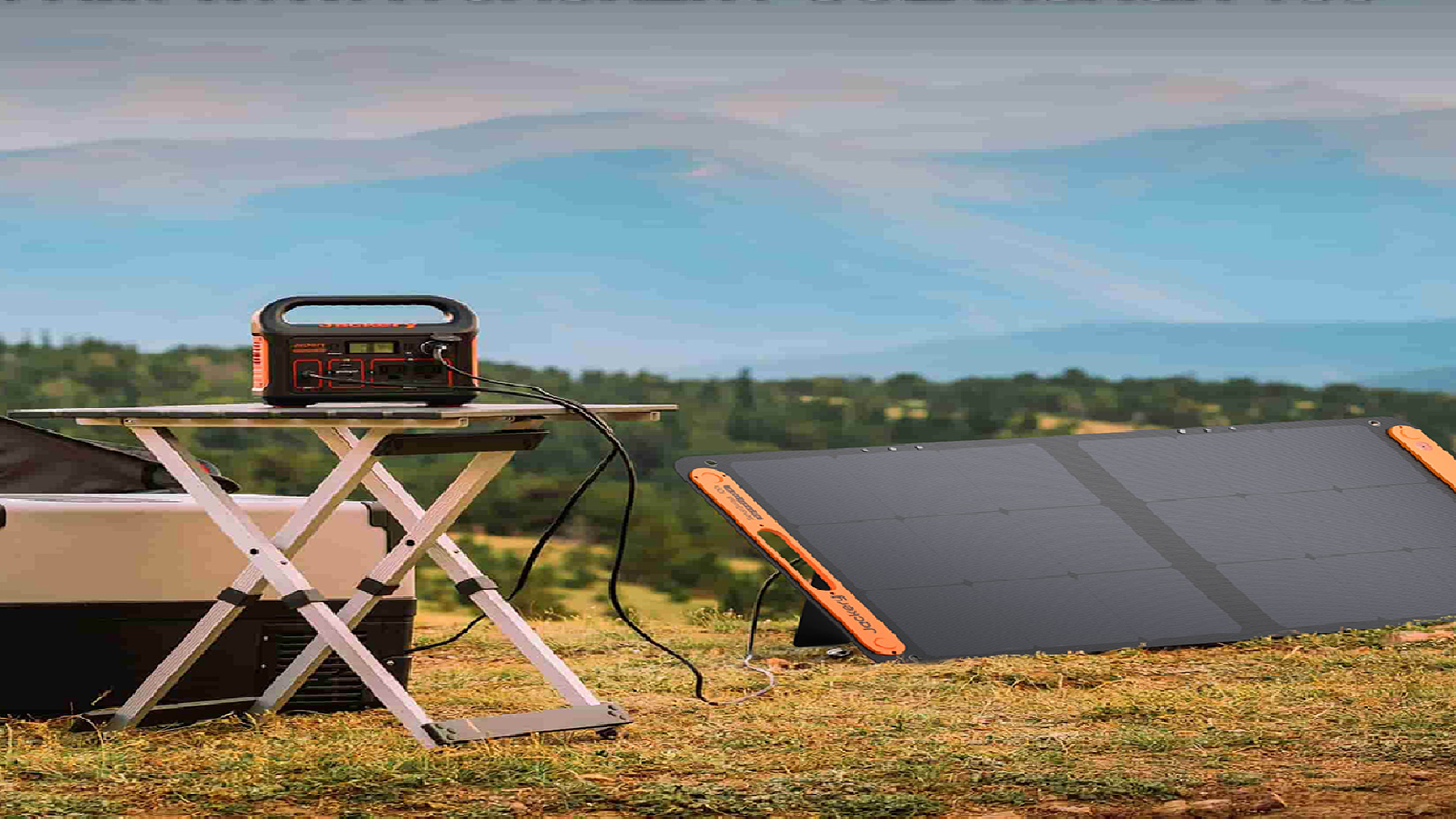
Updated September 2026 from the Original “Solar-Powered Energy Hubs” published October 10, 2024
More RVers than ever before are trading the rumble of a gas generator for the quiet hum of a portable power station. It’s easy to see why. When we first explored solar-ready power for RVing, we figured it would eventually replace the noisy, fume-spewing generators at the campsite (at least much of the time). What we didn’t expect was how fast and far the technology would evolve.
Today’s solar-powered energy hubs last longer (years longer!), recharge in a fraction of the time, and pack enough capacity to actually run your fridge, coffee maker, and even a rooftop AC.
Much of that evolution comes from switching to LiFePO4 (lithium iron phosphate batteries), which are not only longer-lived than earlier lithium-ion cells but safer. Better yet, prices on even the large units have come down—often drastically—whereas the cost of the fuel, on the other hand…
As more RVers embrace time off-grid, portable power stations have become the next best smart buy. They offer reliable, eco-friendly, cost-effective power for your adventures. Whether you’re looking for a budget-friendly solution to keep the lights on for a long weekend or aiming for longer-term energy independence, there’s a solar-ready portable power station for you.
Before You Buy: Three Numbers That Truly Matter
- Watt-hours (Wh) tell you how long the unit can run.
- Watts (W) tell you what it can run—a 300W unit will charge a laptop all day but won’t run your coffee maker
- Solar input tells you how quickly you can refill from the sun
When looking at solar hubs, keep in mind that panels are often sold separately. In addition, output in the real world is often lower than what’s listed on the label.
Flat-laying panels (such as those on the rooftop) may reach only 60 to 70% efficiency.
Weight is also a concern (isn’t it always?). Finally, a built-in TT30 lets you plug your shore power into the unit without the need for an adapter.
Best Portable Power Station for Weekend Trips: Goal Zero Yeti 300
Price: $$
If all you really need is something to keep phones, laptops, lights, or a fan going for a night or two, you really only need a small unit. Goal Zero’s Yeti 300 has a 297Wh LiFePO4 battery, 350W AC output with a 600W surge, a 4,000+ cycle lifespan, and an IPX4 rating for water, weather, and dust resistance. It’s light enough that you can carry it where needed, and it’s easy to top off with a single solar panel.
Note: At this size, you’re powering electronics. No appliances. Forget the hair dryer, microwave, or even electric kettle.
Best Value Portable Power Station: Jackery Explorer 1000 v2
Price: $$$
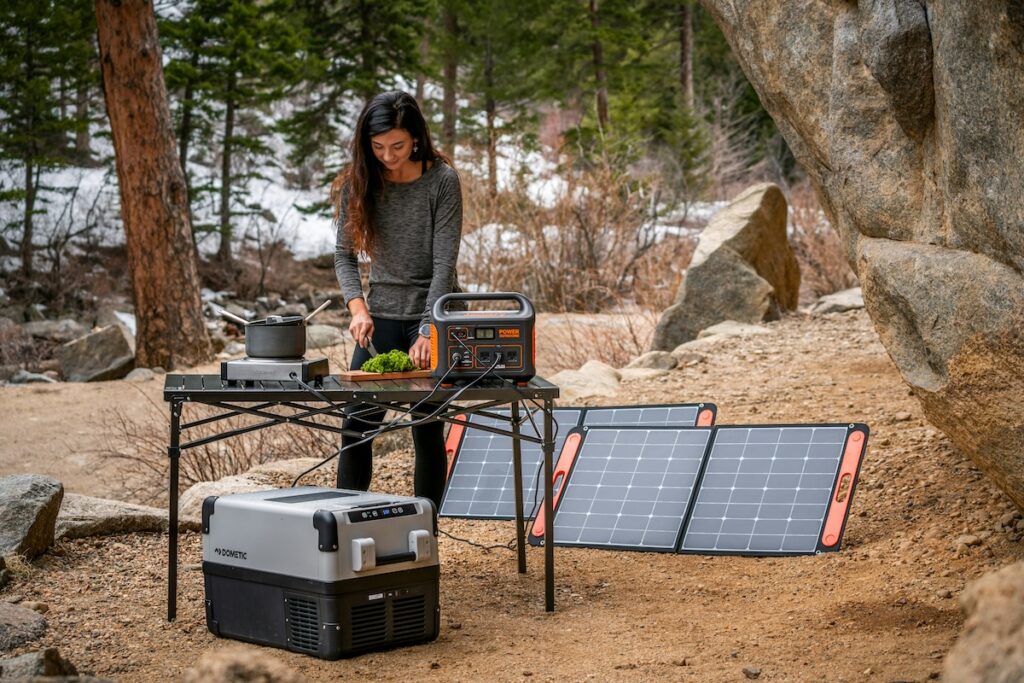
Jackery is one of the best-known names in portable power, and the Explorer 1000 v2 is a big step up from the original models. The compact unit pairs a 1,070Wh LiFePO4 battery with 1,500 W of output (3,000 W starting). To put that into perspective, that’s enough to run a mini fridge, TV, coffee maker, small kitchen appliances, and even a CPAP if you need one.
Plus, at around 24 pounds, it’s noticeably lighter than many competing units, and with the emergency mode (in the app), it can fully recharge in right around an hour. It is, however, recommended to use the normal charge time for longer battery life.
Note: Watch for sales—discounts can be found. One reader found one marked down nearly $300.
Also note, you can’t add extra battery packs. 1,070Wh is what you get.
Best Mid-Range Solar Portable Power Station: Goal Zero Yeti 1500 (6th Gen)
Price: $$$$
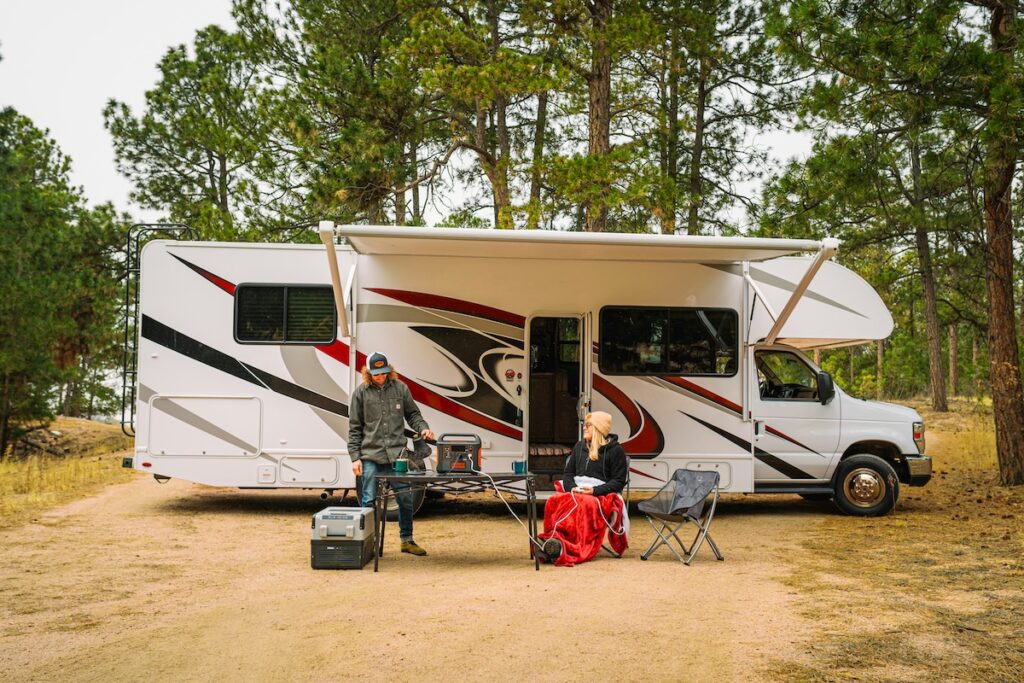
Goal Zero’s new Yeti 1500 replaced the popular Yeti 1500X, and it is a nice upgrade. It has double the AC outlets, a high-speed USB-C port, and ultrafast recharging from 0 to 80% in under an hour. The 2,000W inverter with a 3,600W surge can run fridges, power tools, blenders, and more. The aluminum case and IPX4 rating mean it can handle rainy weather and bumpy roads. With solar, it can take up to 900W and recharge in about three hours.
Note: This is an investment, and it’s heavy enough that you’ll need to factor it into your cargo weight.
Best Solar-Powered Energy Hub for Serious Boondockers: EcoFlow Delta Pro 3
Price: $$$$$
For those RVers who prefer to live their lives off-grid but still want the comforts of home, the Delta Pro 3 has the power to back you up. This heavy hitter offers 4,096Wh of LiFePo4 capacity that’s rated to 4,000+ cycles, up to 2,600W of solar input, and 4,000W of output across 7 AC outlets, and a built-in RV 30A TT-30R outlet. You can also expand the base up to 12.2kWh with their add-on batteries.
These aren’t an inexpensive option, but prices have dropped quite a bit since it launched, and deals can be had if you have some patience.
Notes: It weighs 115 pounds, so this needs a permanent home in your rig—you won’t be carrying it around the campsite.
While it technically can run a rooftop AC, it can drain the battery quickly. Adding a soft-start device to your AC unit can help start it without overloading the unit.
Other portable power stations worth a look include:
- EcoFlow Delta 3 Plus—a 1,024Wh all-around unit for home, RV, and job sites.
- Bluettie Elite 300—a compact unit with 3,014.4Wh in a 58-pound unit with built-in TT-30 port and 12V/30A DC output.
- Anker SOLIX C1000 Gen 2—Named the best-value power station by OutdoorGearLab.
Portable Power Station or Built-In System?
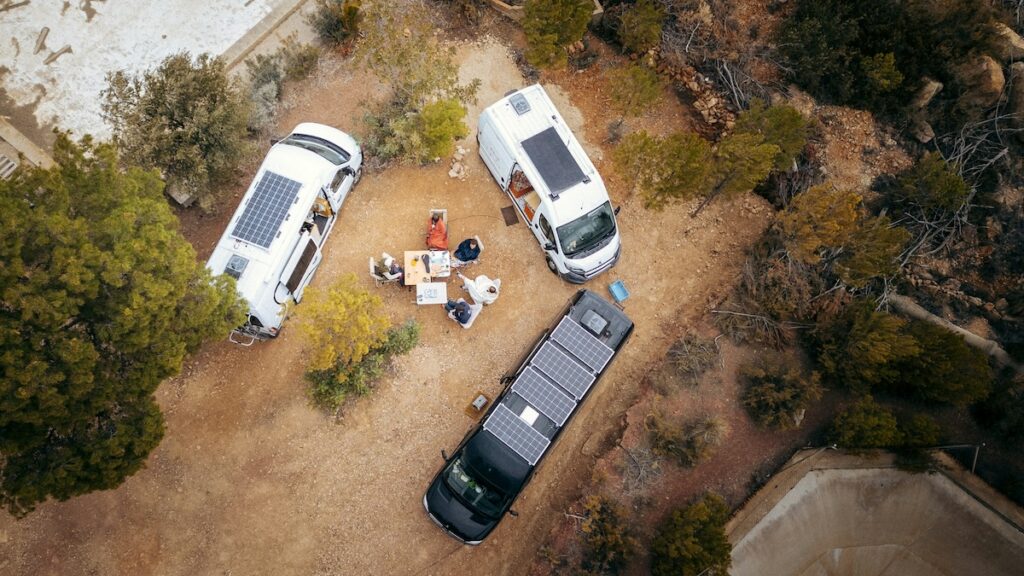
A portable power station is only one way to go solar. Many RVers choose to skip all-in-one units and upgrade their rigs with roof-mounted or portable panels feeding a bank of lithium house batteries. While it’s more of an installation project than the options above, the power is always with you.
Renogy is one go-to brand for the solar side of that setup, including panels, charge controllers, and complete kits. The panels also pair well with just about any power station. The Renogy 200W portable is a strong all-around folding panel with 200 watts. That’s enough to recharge most portable power stations as long as it’s a sunny day.
Vatrer is a popular choice on the battery side. Its LiFePO4 RV batteries include self-heating for cold climates, Bluetooth monitoring, and a 5,000+ cycle lifespan.
Portable Power Station Takeaways
The right setup for your rig depends on how you camp. Weekenders, for instance, may be happy with a compact unit and a single panel. If you travel more often and want to make sure you have enough power to run your fridge and coffee maker, a Jackery unit may be the sweet spot. And for boondoockers who want to stay off-grid as long as possible may appreciate the extra capacity of the 1,500Wh range. Finally, full-timers seeking energy independence should look at 3,000Wh and up—ideally with a TT-30 outlet—or consider building solar and lithium batteries right into the rig.
No matter how you camp, solar is becoming the power of choice. After all, one of the reasons many of us camp is to enjoy the peace and quiet of nature—not the always-on rumbling sounds and fumes of an old-school gas generator.