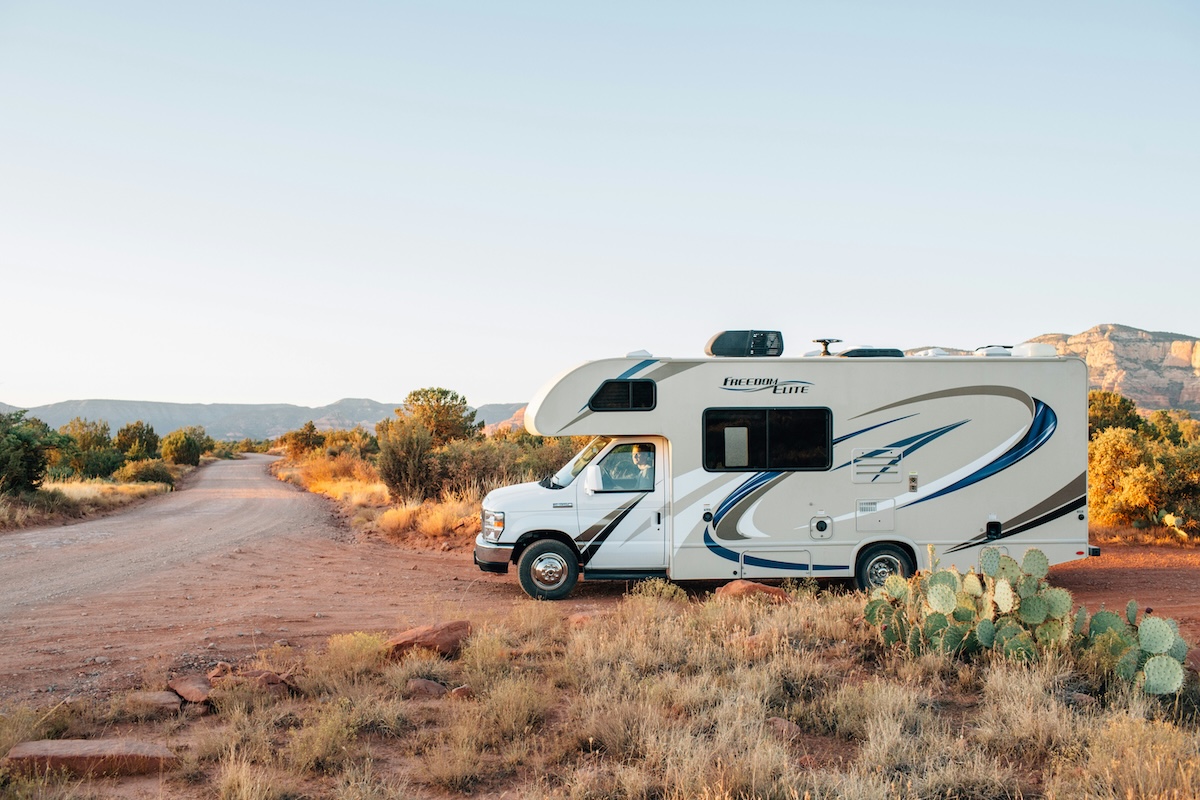
There’s a particular type of despair when you stand under your RV ceiling vent during a heat wave, only to feel warm air blasting when it’s supposed to be cool. And this summer, that despair is that much more intense as so much of the planet is experiencing record-breaking heat. Those of us in travel trailers, campers, 5th wheels, and motorhomes know that when the AC is struggling, it’s not just uncomfortable. It feels like a toaster on wheels. And that can be dangerous when the temps are closing in on or even topping 100° F.
Before that despair takes over, we have some good news. In a large number of cases, your AC isn’t actually broken.
No, that’s not wishful thinking. It comes straight from experienced RV AC techs who tell us a shocking number of “AC problems” can trace back to one small, overlooked part inside the unit: the duct divider. That is, the little internal wall that separates the filter side of your AC from the discharge side. If that little part comes loose or falls, your AC can end up recirculating air instead of pushing cold air into your living space. That, unfortunately, looks and feels exactly like a failing unit. Yet the AC unit itself is actually just fine.
It’s such a common issue that techs advise pulling the shroud, checking that divider, and then cleaning and securing it with proper HVAC foil tape. Even if your AC is currently working just fine. Consider it part of your yearly maintenance check before you hit the road—so it never becomes a problem. It’s a five-minute fix that can save you an expensive repair bill.
Before you pick up the phone and call in a professional, we have a solid list of more DIY checks worth running through. Most of them take less time than it took your AC to convince you it was dying.
It’s time to get cool again, my friend!

Give It a Fair Shot
Before you troubleshoot further, do a quick reality check on the weather. Rooftop RV ACs are generally rated to cool the inside of your rig to about 20°F below the outside temperature rather than down to a specific number no matter what. So, if it’s 105°F outside, your AC blowing 78 – 80°F air isn’t a malfunction. It’s just physics working against you. It’s not going to drop down to the perfect 72° F (or whatever temperature you find most comfortable in the summer).
That said, you can shift the odds in your favor. Without touching a single wire.
The simplest way is to park in the shade—even partial shade. That single move can knock several degrees off your rig’s interior temperature before the AC even kicks on. That also means there’s less strain on your unit.
Unfortunately, we don’t always have that option. In fact, some RV parks have surprisingly little actual shade. That’s when you have to create your own.
- Your awning. If you’ve got one, use it. It’s the simplest built-in shade you own.
- Reflective window covers or windshield sunshades. The inexpensive foldable ones made for car windshields work for RV windows too.
- A portable canopy or dining fly. Even a basic 10×10 tarp angled to block afternoon sun on your AC-facing side helps.
- RV-specific roof vent covers or an AC shade/cover. Some campers add a simple shade cover over the rooftop unit itself, which can meaningfully cut down how hard the compressor has to work in direct sun.
- Orientation matters. If you have any choice in how you back into a site, positioning your rig so the broad side (not the windshield or biggest window area) faces west can spare you the worst of the afternoon sun.
None of these replace a working AC, of course, but they all mean your AC has less heat to fight in the first place. Ultimately, that adds up to a cooler rig and a happier compressor.
More Easy Fixes to Try
- Clean or replace the air filters. A clogged filter is the single most common cause of weak airflow, and it’s usually a five-minute job with no tools required.
- Clear the condenser coils and shroud. Leaves, bugs, and road grime build up on the outside coils and block airflow. A gentle rinse or soft brush (AC off, of course) can make a big difference.
- Check your power source. Undersized generators, long or thin extension cords, and low voltage at a campground pedestal can all starve your AC of the power it needs. And that low voltage is a common way ACs not only underperform but get damaged. Two tools worth having on board: a plug-in voltage monitor/surge protector (Progressive Industries and Power Watchdog both make well-reviewed 30-amp versions that show real-time voltage before you ever plug in your rig) and a proper heavy-gauge extension cord—the Camco PowerGrip 30-Amp, 10-gauge cord is a popular, reliable choice if yours is thin, old, or too short for the site.
- Let the compressor rest. If you’ve been flipping between heat and cool, or the unit just shut off, give it a full five minutes before restarting. Compressors (like all of us) often need a beat to reset.
- Check your thermostat. Dead batteries, a stuck touchscreen, or a setting that quietly got bumped up by a guest who seems to always run cold can all look like a “broken” AC.
- Make sure you haven’t accidentally blocked any vents. Furniture inadvertently pushed over a floor vent or a closed roof vent can choke off airflow, so it never has a chance to reach your sweaty forehead.
- Straighten bent condenser fins. A fin comb (or a careful butter knife) can restore airflow through fins that got bent in transit or storage.
When Is It Time to Call a Pro?
Okay, you’ve worked your way through the list above, and you’re still sweating it out. Bummer. That’s a good indication that it’s time to bring in a certified RV AC tech.
Some issues simply go beyond the skills of even the most adept DIYers. Refrigerant issues, a failed capacitor, a seized compressor, or anything involving a burning smell or a breaker that keeps tripping are sealed-system or electrical problems that typically require more trained hands.
Look specifically for a tech who has experience with RV rooftop units (they operate differently than home HVAC systems).
RV AC Not Blowing Cold Air Takeaways
For whatever reason, RV air conditioners (like many appliances) seem to run for two weeks or two decades—with not much in between. But as it turns out, a lot of that “two weeks” heartbreak comes down to a loose duct divider or a dirty filter rather than a dying unit.
Most RVers eventually discover that taking a few minutes of maintenance now can be the difference between a comfortable rig and a toaster on wheels. Especially with this current heat wave. While you’re thinking about it, why not check your AC unit before you hit the road—even if everything seems fine today—to keep your body and your temper cool?