Take the whole family on a shamelessly American summer road trip they’ll always remember.
THE ROAD IS AN UNRIVALLED TEACHER. As street-wise students ourselves, we can attest to that. And we know that our kids—in their pre-driving years—will only learn what we show them. So, why not show them the very best?
Imagine a trip where they could walk into the unadulterated wilderness of Glacier and Yellowstone National Parks.
Where they could stand in the place where history happened and hear the stories that define us.
Where they could explore our nation—body and soul. From the Pacific Northwest’s shining sea to the rock monument at Mount Rushmore, you can do just that this Summer. Not only will you make memories that will last a lifetime, but you’ll also give your kids a clearer picture of who they are as Americans—and a sense of gratitude for the natural treasures they’ve inherited.
Washington State to Washington’s Face
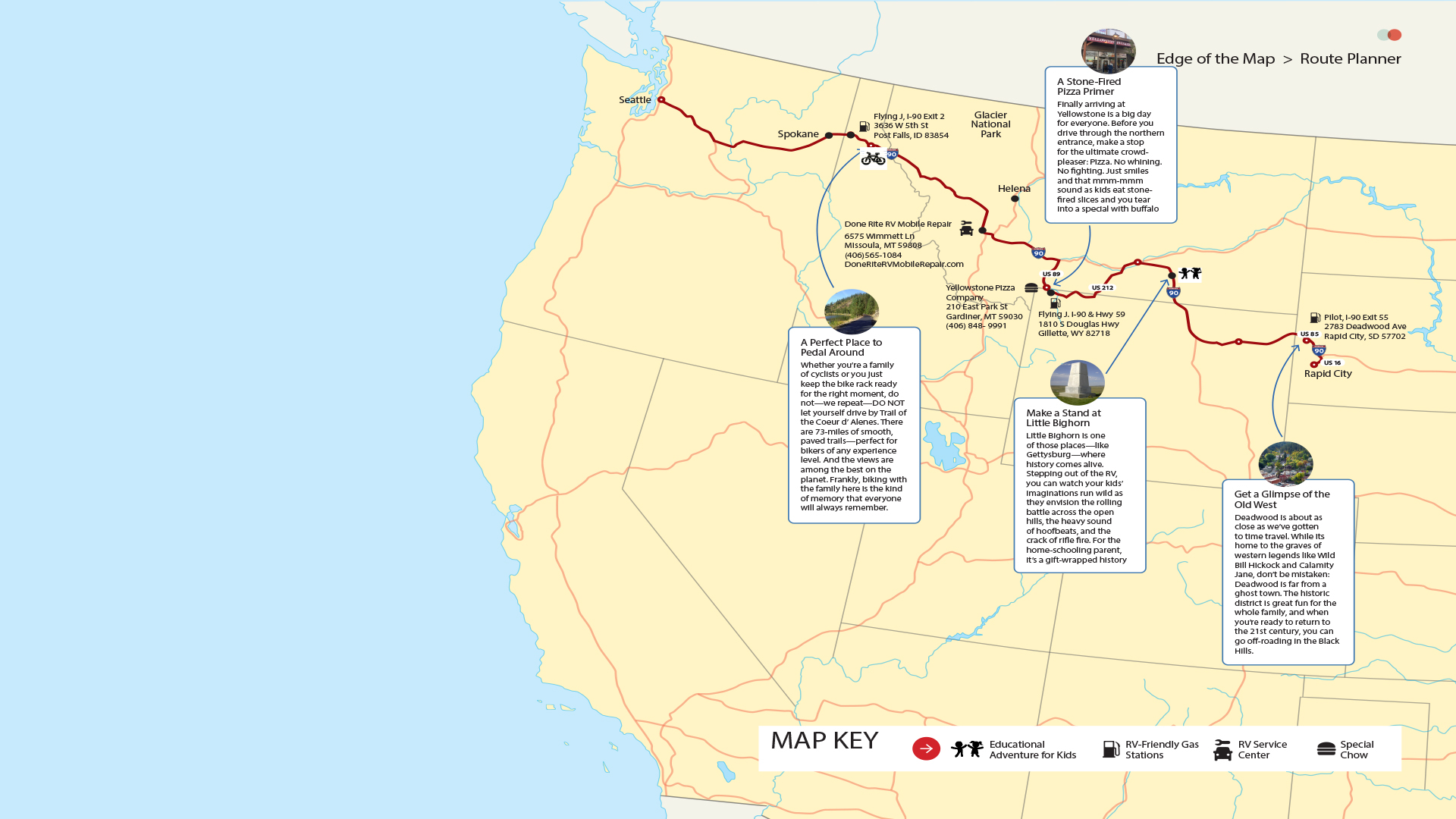
Starting your journey in Seattle, you’ll begin a straight shot east toward the heart of the American wild. Before you go, spend a morning at Pike Place Market to watch the fishmongers throw salmon over the counter and give the kids a peek at the infamous Gum Wall. Seattle is a send-off city that deserves a proper goodbye.
Then take I-90 East over 300 miles through Spokane and across the Idaho border for yet another 90 miles or so till you break into Montana.

A City Built Around a Waterfall
With such a long road ahead, you’d be forgiven for blowing through Spokane. But don’t. Pull off I-90 and give the family a couple of good hours at Riverfront Park, a seriously fun urban park.
Sitting on an island in the Spokane River, the Falls thunder right through the heart of the downtown area. Ride the purple SkyRide gondola directly over the lower falls—200 feet above the churning water to understand why Spokane exists where it does.
Kids of all ages will make a beeline for the famous Radio Flyer Red Wagon slide. They’ll also demand to feed the Garbage-Eating Metal Goat—a steel sculpture from the 1974 World’s Fair Expo that enthusiastically gobbles up litter.
Finally, the hand-carved 1909 Looff Carousel is listed on the National Register of Historic Places and is among the most beautifully preserved carousels in the country. This short stop costs little and will buy you hours of goodwill from the backseat.
A Perfect Place to Pedal Around
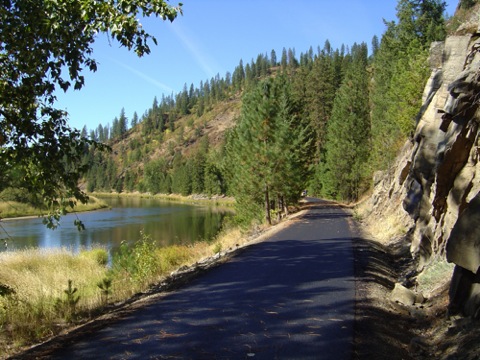
Just across the Idaho border, do not—we repeat—DO NOT let yourself drive by Trail of the Coeur d’ Alenes. There are 73 miles of smooth, paved trails—perfect for bikers of any experience level, tracing the old Union Pacific Railroad corridor along Lake Coeur d’Alene and Coeur d’Alene River. And the views are among the best on the planet. Frankly, biking with the family here is the kind of memory that everyone will always cherish.

Into Montana
Around St. Regis, you’ll have the option to take Exit 33 and sprint north onto MT-135 North if you want to detour toward Glacier National Park. Otherwise, you’ll continue on I-90 for another 400 miles southwest toward Yellowstone. At Exit 333, you can take US-89 South toward America’s first national park entrance near Gardner.
Otherwise, continue on I-90 for another 400 miles southwest toward Yellowstone. The drive across Montana earns its reputation: big sky, bigger silence, and the kind of open landscape that makes everyone put away their screens to take in the view.
Bozeman: A Night Worth Taking
Consider spending a night in Bozeman, which has grown into one of the most appealing small cities in the American West. The Museum of the Rockies is pretty dang cool, with one of the largest collections of dinosaur fossils on earth, including multiple T. rex specimens. Plan for at least 2 hours—and if your kids are into paleontology, you’ll want to stay even longer.
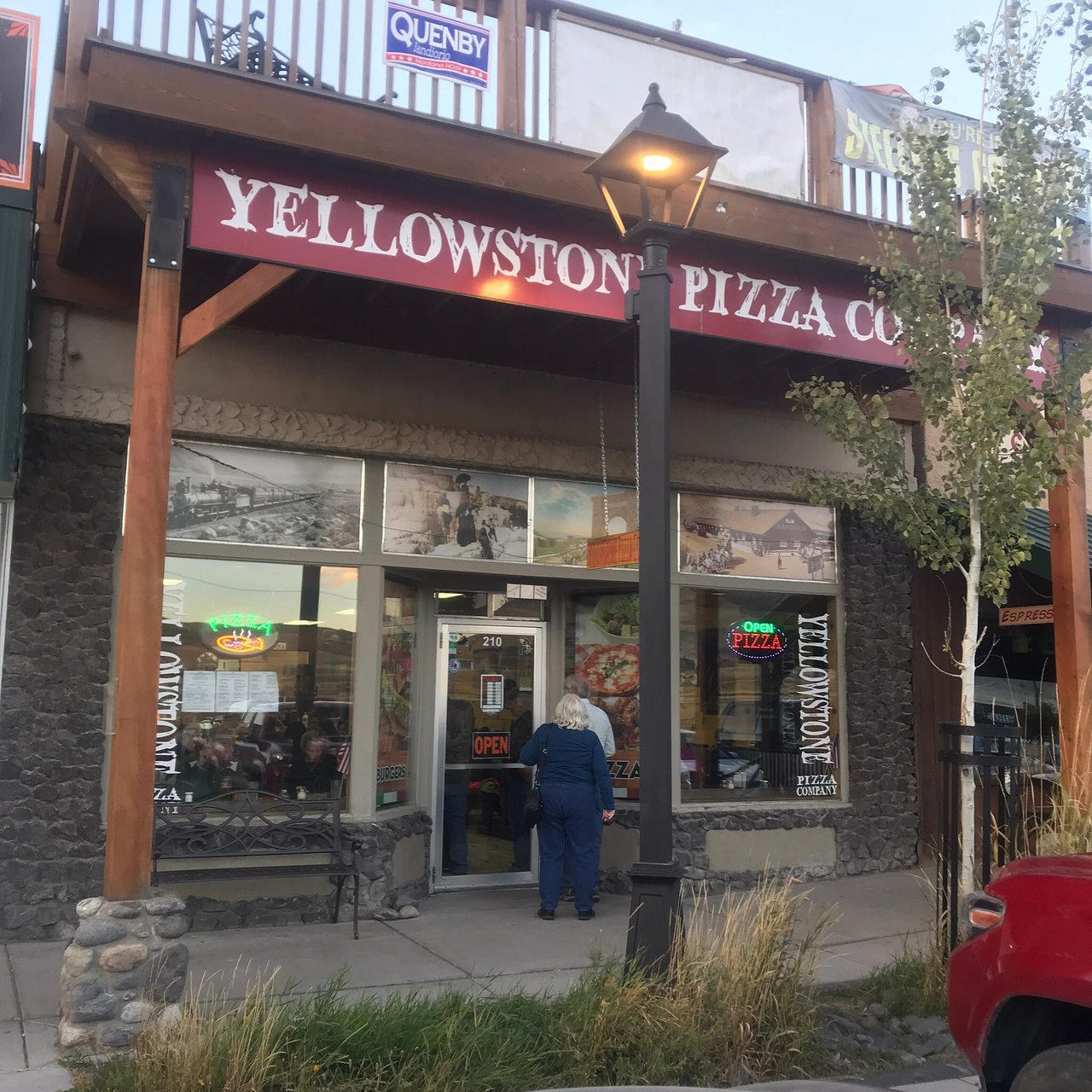
A Stone-Fired Pizza Primer
Finally arriving at Yellowstone is a big day for everyone. Before you drive through the northern entrance, make a stop for the ultimate crowd-pleaser: Pizza. No whining. No fighting. Just smiles and that mmm-mmm sound as kids eat stone-fired slices, and you tear into a special with buffalo sausage.
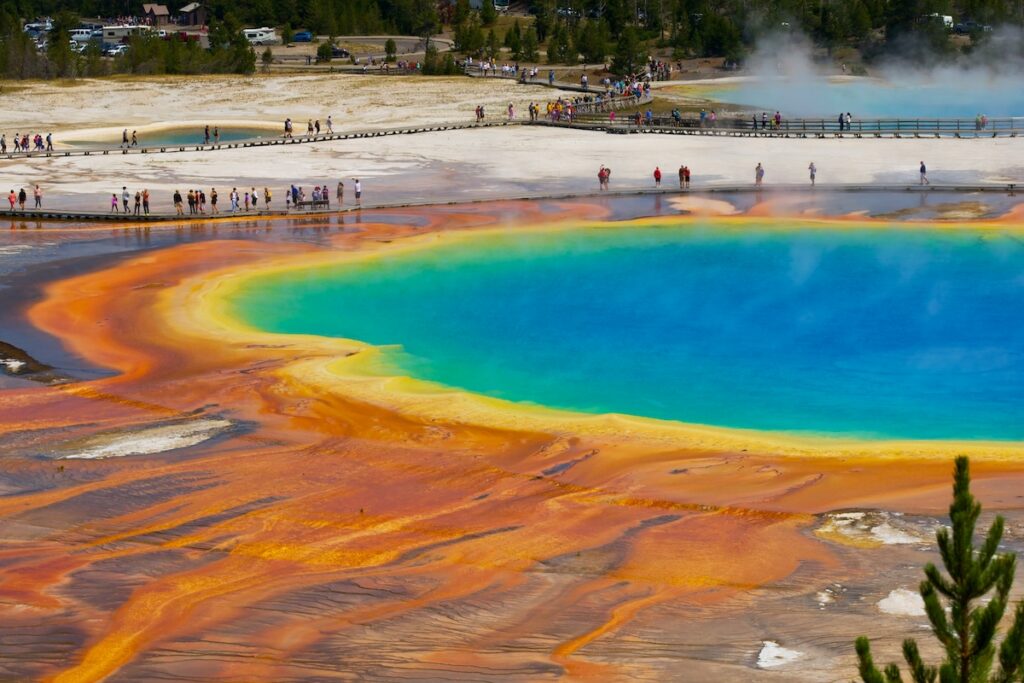
America’s First National Park
Yellowstone earns your full attention and more. There’s nowhere on earth like it—you’ll feel like you’re on another planet. Of course, Old Faithful is an obvious stop, but don’t just watch one geyser and move on. Stroll along the boardwalk loop to discover sulfur-yellow craters, turquoise thermal pools with edges in rust and orange, and steam rising from the earth everywhere you look. The Grand Prismatic Spring is one of the most visually stunning views we’ve ever experienced. Full stop.
The Lamar Valley in the park’s northeast corner is known as America’s Serengeti. If you’re there at dawn or dusk, you stand a real chance of catching wolves, bears, bison, and elk just living their lives. Bring binoculars and encourage patience for moments your entire family will recount again and again.
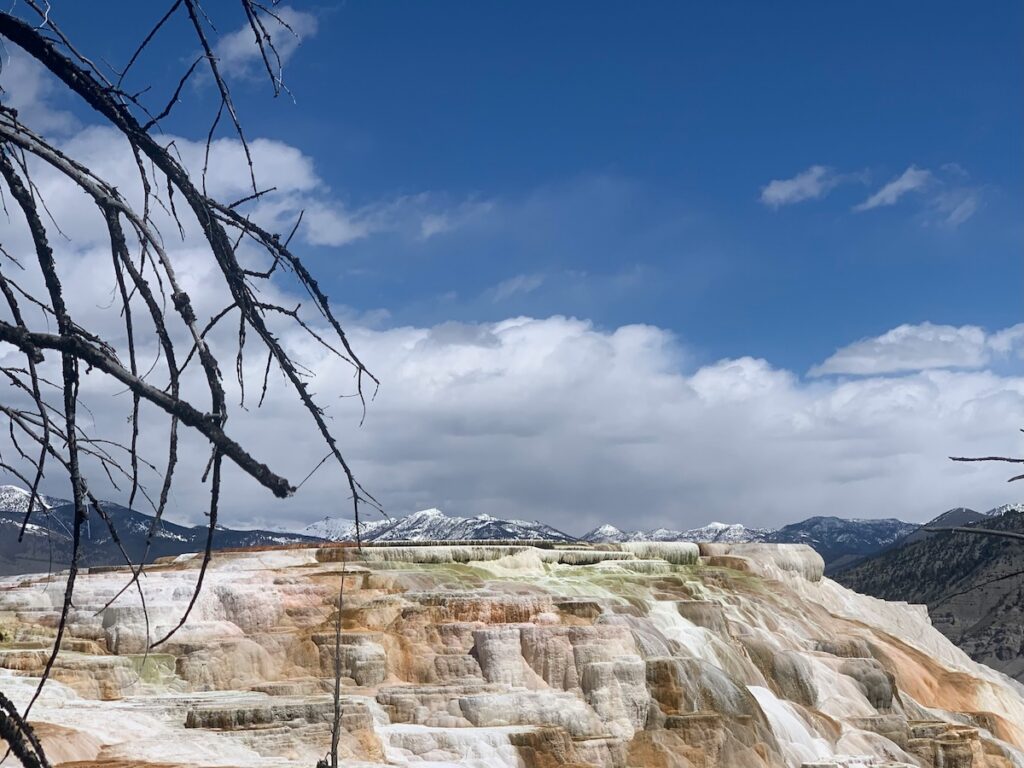
Mammoth Hot Springs, near the north entrance, offers something different—terraced cascades of steaming travertine that look like a frozen waterfall. (Tip: Refuel with the huckleberry fudge ice cream in the dining room after the walk.)
After you have seen your fill of geologic wonders or—more likely—have used your allotted time, head back north along US-89 to continue your eastward progress.
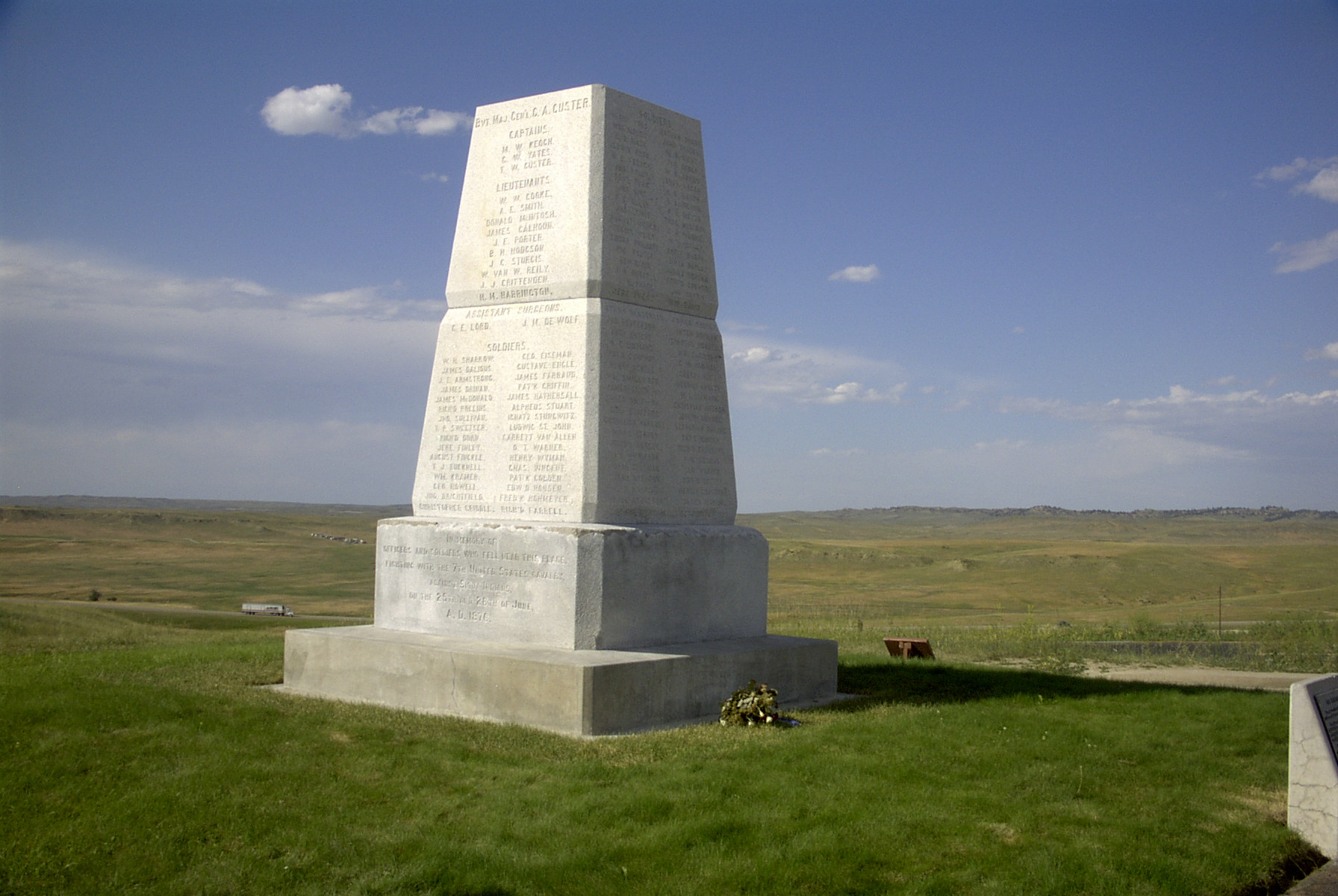
Make a Stand at Little Bighorn
Almost immediately east of Billings, the landscape will begin to transform into rolling ridges and ravines with rivers and streams, especially as you cross into the Crow Reservation where Little Bighorn Battlefield lies.
Little Bighorn is one of those places—like Gettysburg—where history comes alive. Stepping out of the vehicle, you can watch your kids’ imaginations run wild as they envision the rolling battle across the open hills, the heavy sound of hoofbeats, and the crack of rifle fire. The white marble headstones mark where soldiers fell; red granite markers indicate where Lakota and Cheyenne warriors died. Both tell the story.
For the homeschooling parent, it’s a gift-wrapped history lesson like no other—one that doesn’t flatten out the complexity of what happened there. The one-hour guided Apsaalooke Tour is well worth taking for the fuller picture.
Into Wyoming and South Dakota
Continuing on I-90, you’ll swing through the northeastern corner of Wyoming before crossing into South Dakota. The land keeps shifting—from the Montana plains into the pine-covered Black Hills rising dramatically out of the prairie, visible from miles away.
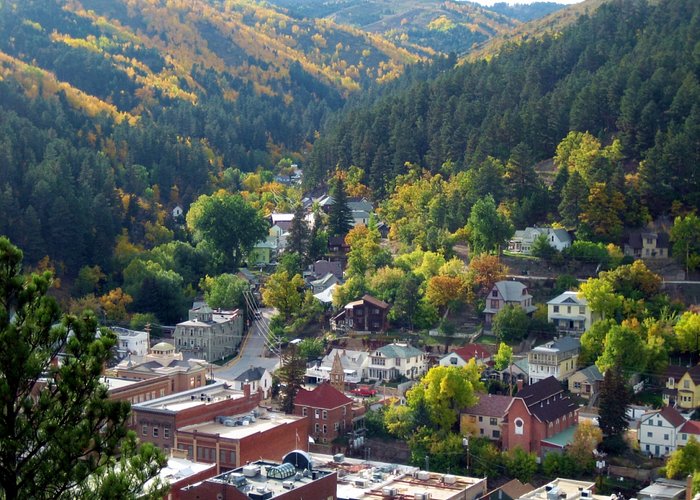
Get a Glimpse of the Old West
Deadwood is about as close as we’ve gotten to time travel. While it’s home to the graves of western legends like Wild Bill Hickock and Calamity Jane at Mount Moriah Cemetery, don’t be mistaken: Deadwood is far from a ghost town. The historic district is great fun for the whole family, the streets feel like the frontier, and when you’re ready to return to the 21st century, you can go off-roading in the Black Hills.
If you want a hike before reaching the monuments, Spearfish Canyon is a revelation—lush, green, and home to three waterfalls (Bridal Veil, Spearfish Falls, and Roughlock Falls) that most people don’t expect to find in South Dakota.
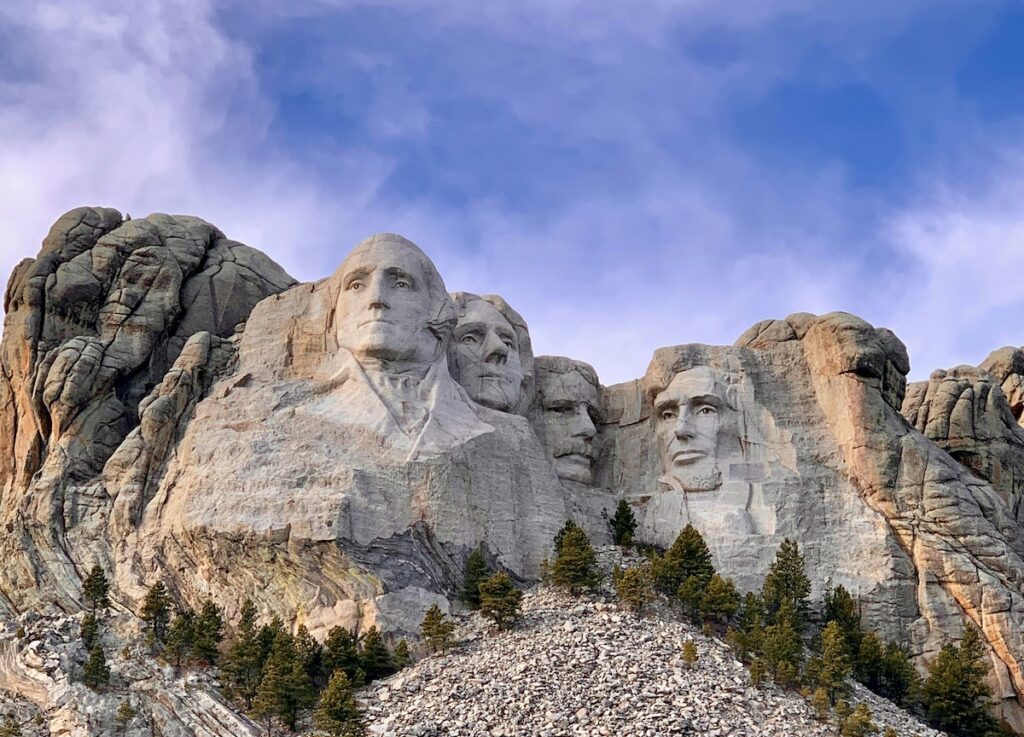
The Four Presidents
From the Black Hills, you’re within 100 miles of the magnificent stony gaze of our foremost presidents at Mount Rushmore (George Washington, Thomas Jefferson, Theodore Roosevelt, and Abraham Lincoln). The scale doesn’t fully register from photographs.
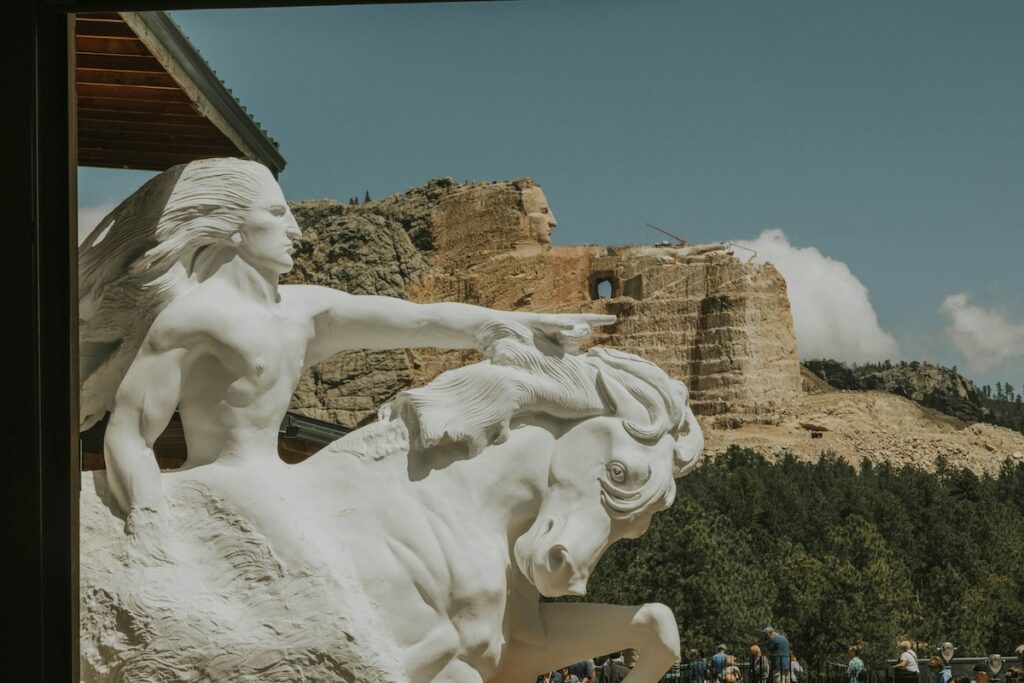
A Memorial Still Being Born
While you’re in the area, don’t miss Crazy Horse Memorial, which honors all Indigenous people of North America and has been under continuous carving since 1948. Unlike Rushmore, it isn’t yet finished, and that’s part of the appeal and the story. The completed face of Crazy Horse was unveiled in 1998, and the full monument, when done, will be the largest sculpture in the world.
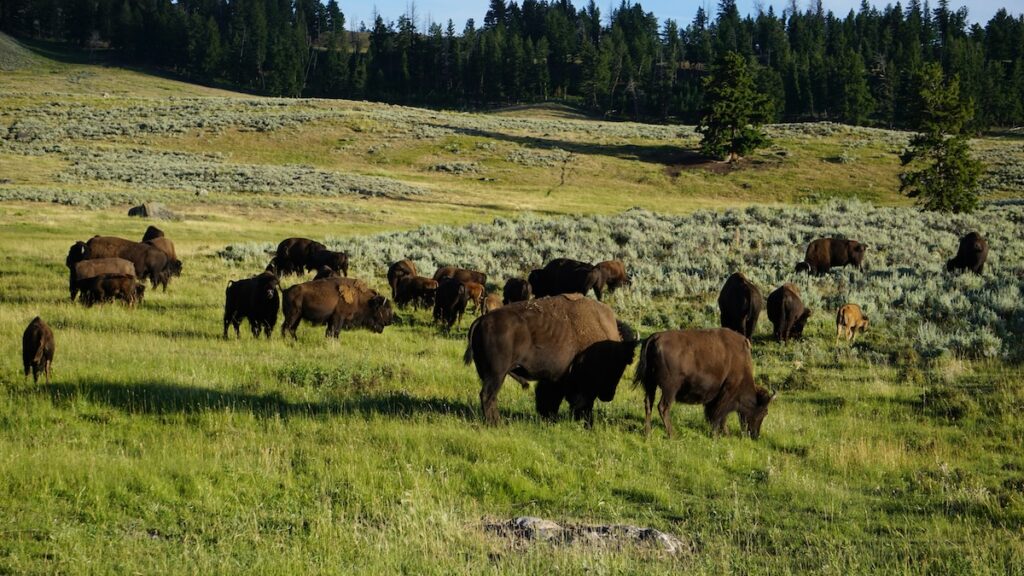
Where the Buffalo Still Roam
Custer State Park is 71,000 acres of rolling hills, granite spires, and abundant wildlife—including one of the largest free-roaming bison herds in the world with ~1,400 animals. Drive the Wildlife Loop Road at dawn or dusk, and bison may surround your vehicle. Prairie dogs pop up from their towns along the road. Elk, pronghorn, mountain goats, bighorn sheep, and wild burros all make regular appearances.
Rapid City: The End of the Road
Pull into Rapid City with a full heart and a good kind of tired. Stop at Dinosaur Park—seven life-size sculptures perched on a sandstone ridge overlooking the city. It’s free to visit and perfect for one last round of climbing before the road trip officially ends. The view from the top is a quality final panorama with the Black Hills to the west and the plains stretching east for what feels like forever.
The road west of you will have covered wilderness and waterfalls, volcanoes and valleys, battlefields and sculptures, wildflowers and wild animals. Your kids will have stood in places where the country’s story was written—and see, with their own eyes, the landscapes that belong to us all. That’s not just a vacation. It’s an education. One brought to you in the most memorable way.
Approximate total distance: Seattle to Rapid City via Yellowstone—roughly 1,500 miles. Plan for 10 – 14 days to give the major stops the time they deserve.