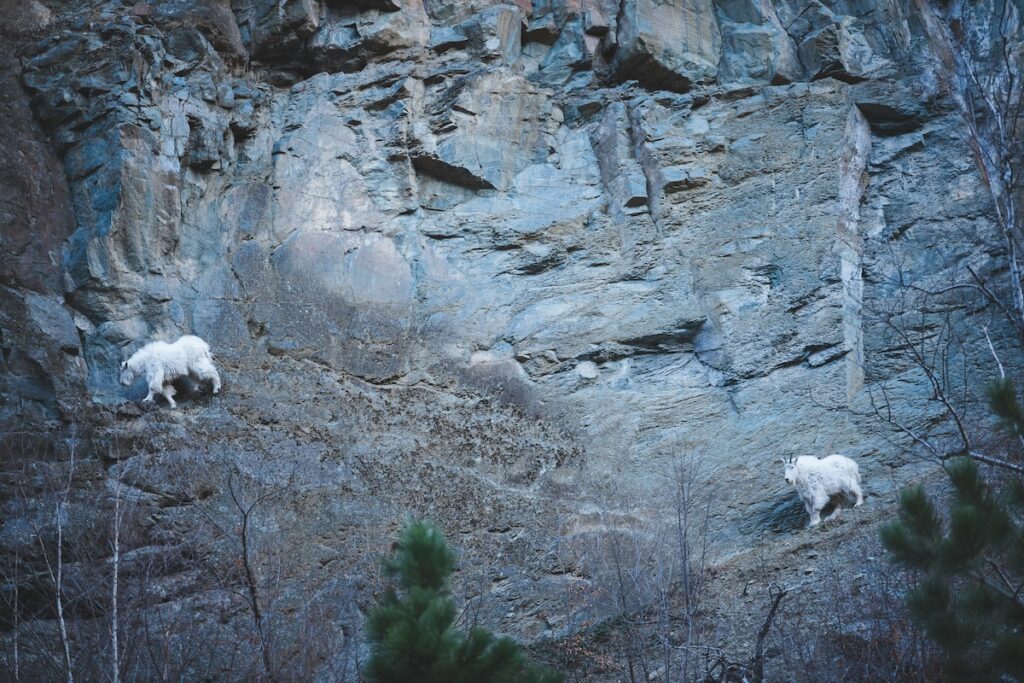
Imagine rolling down a two-lane road, through a spectacular canyon, when something catches your eye. Is that a mountain goat picking its way across a nearby cliff face? Gasp. You slow down and quickly pull over (if possible). But then, as your eyes focus, you start to wonder… is it really a mountain goat? A big horn sheep? Or was it just a trick of the light? Is it even anything worth stopping for?
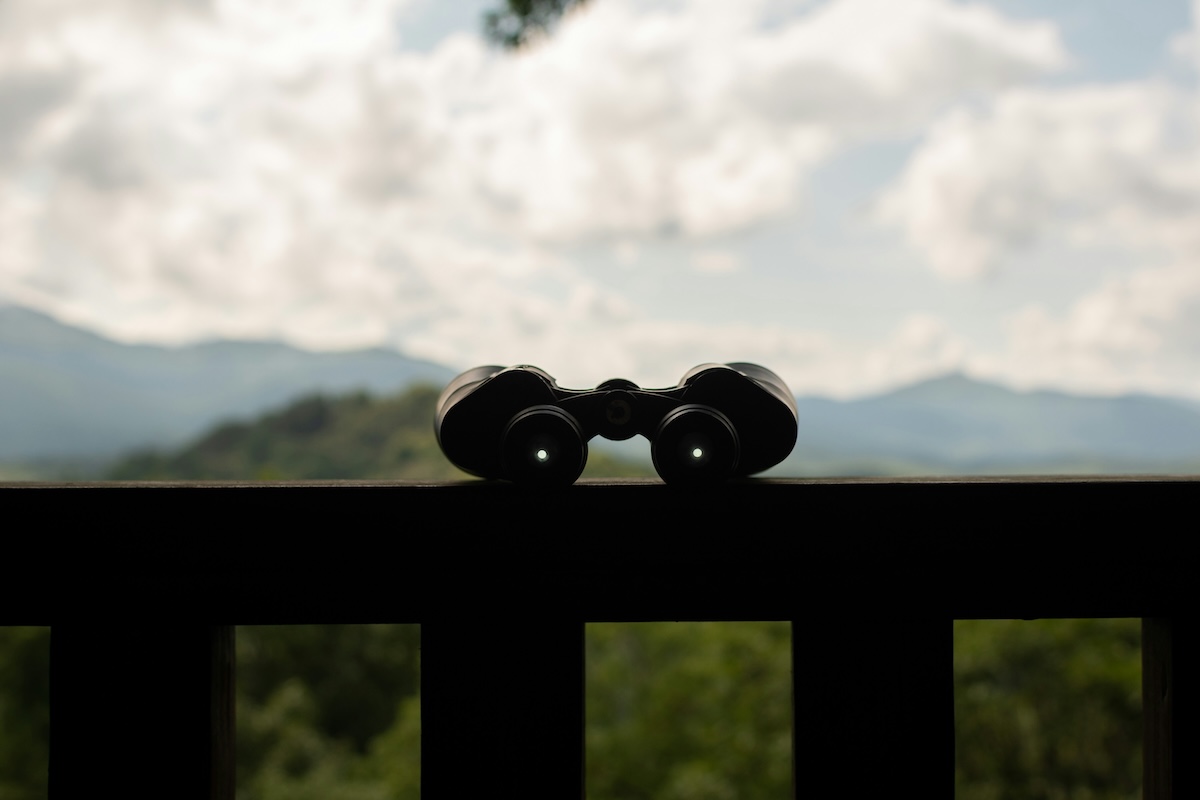
You need a closer look, and for that, you need binoculars.
The best pair of binoculars isn’t necessarily the fanciest or most expensive set (though they typically provide the clearest view). It’s the one that’s within reach when those opportunities cross the road, through the canyon, or across the dark sky.
Within reach, though, can mean different things to different travelers. Some of us want a scrappy little pair safely tucked into the glove compartment or door cubby where they’re easy to grab. Others want to invest in a glass that’s sharp enough to see how the feathers ruffle on a bird seemingly miles away. Still others are more interested in something that can pull double-duty for wildlife viewing by day and stargazing by night.
We’ve done the research for you to round up options across the spectrum—the best binoculars that are budget-friendly, lightweight and compact, and a few splurge-worthy picks for the most serious spotters among us.
Let’s get set up so we never again miss the “OMG, look at that!” moments that make the entire trip worth it.
How to Choose the Best Binoculars for RV Travel
Before you start comparing models (and price points), it helps to know what you’re actually looking at:
- What do those numbers mean? Binoculars are labeled with 2 numbers, say 8×42 or 10×25. The first is the magnification. That is, how many times closer an object appears. The second is the objective lens diameter in millimeters. It’s essentially how much light the binoculars can pull in.
A bigger lens means a brighter image, which really helps at dawn or dusk. It also usually translates to a larger size and weight, which can be less fun to lug around or make room for in a side compartment. - How will you actually use them? A casual wildlife observer may just want a small grab-and-go pair. Dedicated wildlife watching, on the other hand, calls for something that’s usually a little larger and heavier. And if stargazing is one of your favorite parts of RV life (mine too!), that changes the calculus again, as you’ll want more light-gathering power to view the dark sky.
- Where will they live? Will you keep them in a glove compartment or door pocket? Or do you want them to live in your daypack for use when you’re hiking rather than rolling down the street when you, say, need to stay focused on the drive? Or do you want them safely stored in a dedicated case in your storage bay for serious use only?
- Can they handle RV life? It’s no secret that storage compartments can run hot, cold, and humid, depending on the season and where you’re going. So, if your RVing isn’t limited to just one area or one season, waterproof and fog-proof construction isn’t just nice to have; it’s essential.
- How do they perform in low light? For many RVers, nighttime is the right time to pull out a pair of quality binoculars. For one, the wildlife tends to be the most active at dawn and dusk. And if you’re like most RVers, you’re chasing dark skies for stargazing. So, low-light performance is key. Larger object lenses (44mm and above) work best.
- Who are you traveling with? Do you each need your own set or do you share well? If you’re traveling with little ones, you may want to carry some smaller, lighter, simpler pairs that fit in their smaller hands. Most, though not all, of the best binocular picks below are for more grown-up hands.
Okay, let’s look at some of the best binoculars on the market.
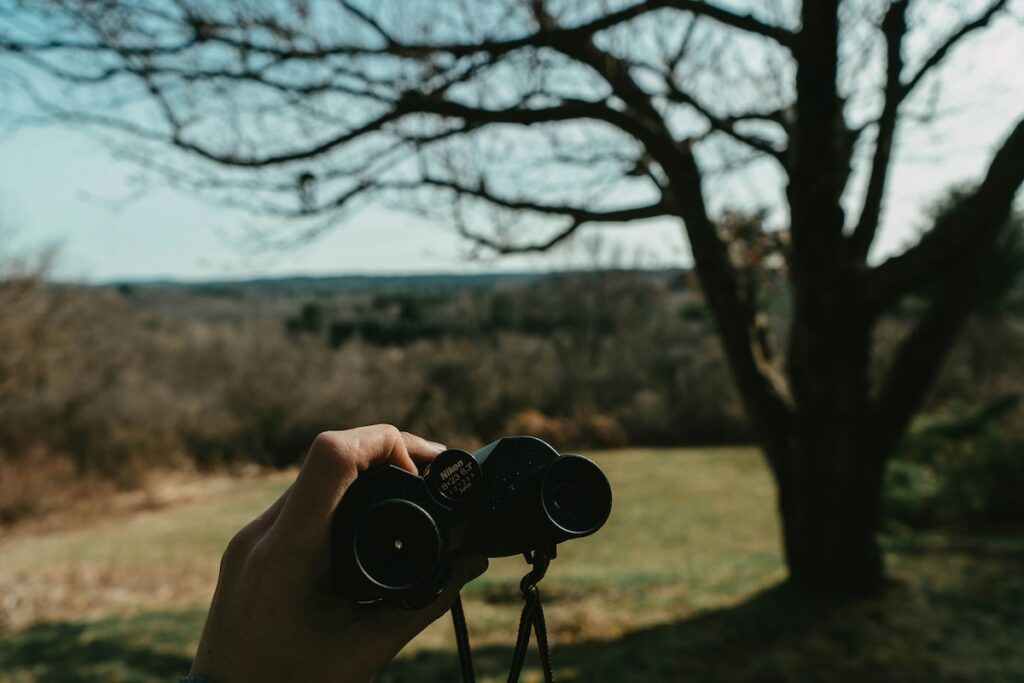
Best Budget-Friendly, Glove Compartment Binoculars
These are the “always within reach” picks because they’re affordable enough that you won’t get paranoid about where they’re tucked but good enough to actually see if it’s really a mountain goat or just a mountain-goat colored rock.
Occer 12 x 25 are proof that cheap doesn’t have to equal disappointing. Priced at just about $36, they fit easily into your pocket (and into smaller hands, so they’re kid-friendly). Plus, the fully multi-coated lenses and BAK4 prisms deliver above their weight in terms of brightness and clarity. This is a great entry point if you’re not yet sure how much use your binoculars will actually get. Just don’t expect that much from them as the light starts fading.
Weighing about as much as a deck of cards, the Nikon Aculon T02 10 x 21 slips easily into a pocket or door compartment, making it perfect for casual, spur-of-the-moment use. They’re easy to use for sightseeing, concerts, or quick pullovers. Nikon’s reputation for crisp imaging even carries into this small, affordable pair.
Bushnell H2O 8 x 25 are built for RV storage compartments. They’re waterproof and nitrogen-purged to prevent internal fogging, can handle humidity and temperature swings, and even stand up to the occasional rainy-day mishap. If, however, you wear glasses, the eye relief is a bit shallow, so they’re best when viewed with bare eyes.
Even if you’re just testing out your need for seeing far into the distance, it’s worth choosing quality glass—even on the more affordable side. More than once, we’ve heard people tell of using a cheap pair of binoculars only to be frustrated because they honestly couldn’t tell what they were looking at.
Budget binoculars can absolutely do the job. Just remember that “budget” and “bargain bin” aren’t the same. Spending a few extra dollars for real coated glass is worth the investment—even if you’re just trying out binoculars for the first time.

Best Light and Compact Binoculars
Once you’ve found binoculars do, in fact, deserve a place in your RV, you might be ready to step up your game from a pure budgetary standpoint to something that’s a bit higher quality.
Zeiss Terra ED Pocket 8 x 25 are both serious and pocketable at just 11 ounces. They use ED (extra-low-dispersion) glass, which provides sharper color, accuracy, and contrast—well beyond what you expect from a compact set. Plus, they have a hydrophobic lens coating that provides a clear view in all weather conditions and even protects against fingerprint smudges. They comfortably slip into a pocket and are a must-have for many RVers who hike, bird watch, or are just always on the lookout for wildlife.
Pentax UD 9×21 meets between 8x and 10x magnification, so they’re a solid pick if you’re debating how much zoom you actually need. Again, these are compact and light enough to keep on hand for everything from wildlife spotting to sporting events.
For those who are looking for a lighter and more compact option, another solution is worth considering: monoculars. Essentially, with just one barrel, these are only one half of binoculars, so they’re easier to use one-handed. They’re a minimal grab-and-go option. While you do give up some depth perception and field of view, they’re light and easy to stash and pull out when something catches your eye in the distance—on the road or at the campsite.
Special Mention: Image-Stabilized and Stargazing Binoculars
If you’ve ever tried to hold a steady view from inside a moving vehicle or with tired arms after a long adventure, you may want to consider image-stabilized binoculars. With internal gyroscopes or similar stabilization technology, they work to counteract shaky hands or bumpy roads (for the passenger rather than the driver, of course). That way, the image stays locked in.
Canon’s image-stabilized lineup is best known in this space. They are more expensive than a standard pair, but many argue they’re well worth it. Especially for those who head toward the less well-maintained back roads where wildlife is more likely to make an appearance.
Many of us are drawn to RVing for dark-sky views. You can find dedicated astronomy binoculars featuring large objective lenses (70 to 80mm) and higher magnifications, which allow them to gather more light.
You don’t necessarily need a separate pair to make the most of stargazing. A solid 10×50 pair from the compact or splurge categories can often do double duty, delivering the detail you’re looking for day and night.
If, however, stargazing is why you’re RVing in the first place, a dedicated astronomy pair, such as Celestron Sky Master 15×17 (with tripod adapter for a steadier view) or Celestron Nature DX ED 10×50 (a better dual-purpose pick), can be worth the extra investment.

Going for the Splurge
For most RVers, the picks above will provide a good, affordable option and great long-distance viewing. There are, however, people who take wildlife watching even more seriously. If you’re planning something like an actual safari, the difference between good and great glass can mean the difference between seeing an animal lying in the distance and catching its whiskers twitching as it catches a scent.
If nothing but the best will do, you may want to consider a splurge pair, such as:
Swarovski NL Pure 8×42/10×42, which are, by nearly every reviewer’s account, the finest binoculars money can buy right now. Field view: exceptional. Glass: Tack-sharp, edge-to-edge. Grip: non-slip and genuinely comfortable. At a price point that’s roughly $3,000, though, this isn’t the pair that’s stuffed into the average RVer’s glove compartment. It’s a dedicated investment for serious birders, hunters, and wildlife photographers who use them well and often, making them worth the investment.
Nikon Monarch HG 10×42 are frequently ranked among the best overall binoculars as they combine a surprisingly portable build (just ~a pound and a half) with top-shelf glass for high-definition viewing. They will, however, still run you just over a grand.
Leica Noctivid 8 x 42 is another top-tier option for advanced users. The optical performance rivals Swarovski, but so does the price.
If you’re serious about your binoculars but don’t want to splurge quite as much, the Vortex Viper HD 10×42 offers a middle ground, delivering excellent glass for sharper detail at a lower price (about half).

The Best Views Are the Ones You Can Easily Reach For
At the end of the day, the best binoculars aren’t necessarily the most expensive ones. They’re the ones you can easily grab when a mountain goat is spotted on a cliffside or when you’re ready to kick back in your camp chair to take in nature’s light show at the end of the day. Isn’t that, after all, what makes RVing so special? Those small moments of awe.