One Australian-born wanderer, his adventurous partner, a diesel pusher, three dogs, a cat, and a life philosophy we can all embrace
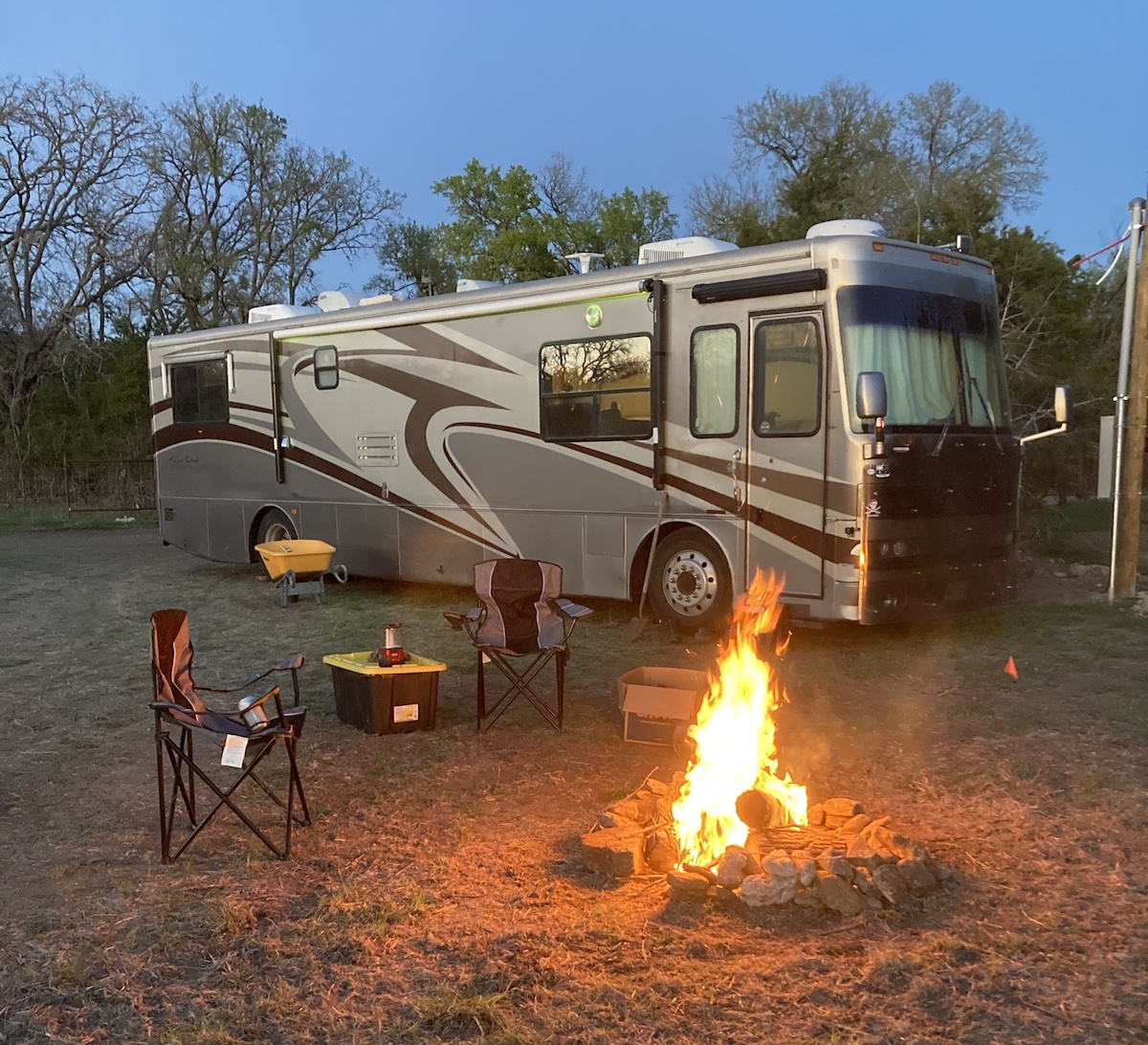
The plan wasn’t necessarily to buy a motorhome that day. Just take a look around the RV lot. But then, after wandering through rows of smaller rigs, Gary and his partner Joyce spotted a 40-foot diesel pusher sitting in the back—two slide-outs and some miles behind her. It hadn’t even been prepped for sale yet as the dealer had just taken it in.
“It was love at first drive,” says Gary, laughter in his voice. “Just couldn’t resist it.”
They didn’t test drive a smaller unit first. Didn’t rent for a weekend to see how they’d like it. Didn’t ask for time to think it over. “We were just like—we’re going to buy and go.”
That was 14 years ago. And they haven’t looked back since, crisscrossing the country wherever Joyce’s jobs as a traveling PTA take them.
Letting it All Go
Before the diesel pusher, Gary had a ten-acre farm, a collection of guitars, an impressive speaker system, welding sets, tons of tools, and all the amassed weight of a life spent accumulating things.
He sold nearly all of it.
“We just figured that if it had to go in a box, we didn’t need it,” he says simply. “They were just things you can get later on if you need to. Nothing was so sentimental that I needed to just keep it.”
He did, however, keep a well-stocked toolbox. Joyce kept their Halloween and Christmas decorations. (Joyce is, by all accounts, an enthusiastic Halloween decorator—on the camper, off the camper, and everywhere in between).
Their first trip took them to Wilmington Beach, North Carolina, where they discovered how even the best-laid plans can go off track. Even though it was late in the season, a snowstorm hit, the water lines froze, and the heat cycled on and off all night. Neither Gary nor Joyce knew how half the systems worked yet.
The next morning, they made pancakes with berries and cream. “We survived,” says Gary. “It was pretty cool. Never looked back.”
Making Friends Along the Way
One of the things Gary talks about most when describing life on the road isn’t the destinations (though he’s a pretty big fan of those as well): it’s the people. The ones you never would have met any other way. The ones who pull up right next to you at exactly the moment they need someone.
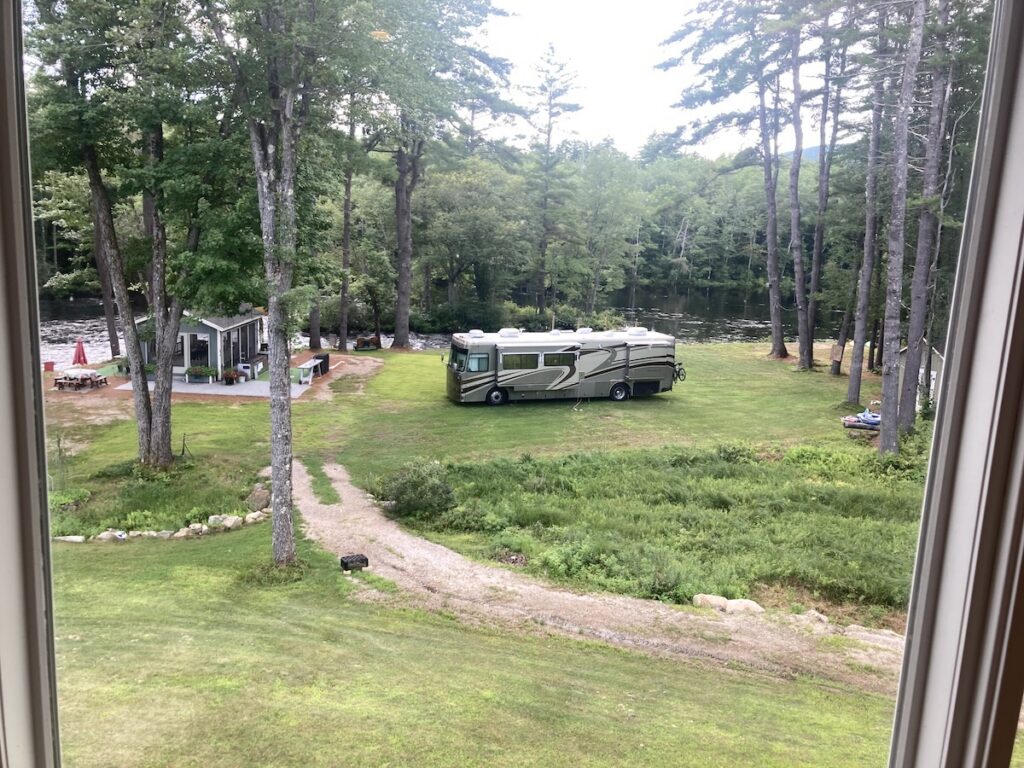
One winter, just before New Year’s, Gary and Joyce set up camp at Port Aransas, Texas—way down at the far end, where it gets windy as all heck off the Gulf. A couple from Iowa parked their fifth-wheel camper nearby. Not long after, the women came over.
She said, “I think my husband’s ill, and I don’t know what to do. I can’t drive the truck. I can’t disconnect the camper.”
Joyce didn’t hesitate for even a second. She went over, assessed the situation (she works in the medical field), and drove the woman and her husband to the hospital. It turned out to be serious—pancreatic cancer, and his liver was shutting down. Gary and Joyce stayed with her, took her back to her camper, and brought her back to the hospital to be with her husband until their kids could join and help get their parents back home.
“I think we were in the right place at the right time,” Gary says.
That kind of moment, he’ll tell you, happens more than you’d expect when you’re living the RV life. Something about being out on the road opens people up.
Another time, Joyce was chatting with the wife of an RV park owner when they realized they had a surprising connection. The woman had spent years eating ice cream at Joyce’s mom’s shop back in her hometown. Two people, thousands of miles from where their lives had intersected before, finding each other in the middle of a campground.
“It’s a really small world,” Gary says. “We’ve met heaps of people and introduced ourselves and made some good friends along the way.”
This is because Gary has a genuine interest in people and goes out of his way to talk with folks. “If I see somebody’s camper and I like something about it, I’ll ask him about it, and the conversation just flows.” And if it doesn’t, he just carries on to the next person.
When Things Break (and They Will)
Gary won’t let anyone walk into RV life with rose-colored glasses. He loves it and has spent the last 14 years championing it, but he’s also the guy who rebuilt a power steering box on a 40-foot motorhome in a parking lot in Atlanta, Georgia.
It started with a hydraulic leak. The steering was gone. They couldn’t move the rig another inch. It was after midnight, and the skies had opened up. They pulled into a parking lot and got to work. Parts shipped in. Dinner Door Dashed. And then they fixed it right there on the asphalt.
“You’ve always got to have a Plan B,” Gary explains. “You’ve always got to be thinking. Because sometimes you aren’t aware there’s anything wrong—and then suddenly, there you are.”
His advice for aspiring RVers is practical and hard-earned: carry tools, carry electrical tape and duct tape and spare wire, and carry the mental flexibility to handle whatever comes at you—even if it’s at 2 o’clock in the morning on a dark stretch of highway.
“It’s not the end of the world. Nothing like that is. But it feels like it at the time,” he laughs. “You’ve just got to suck it up, fix what you’ve got to fix, and get back on the road again.”
He and Joyce have never—not once, not through battery failures or blowouts or freezing pipes—said they wanted to quit.
“Not yet,” he says. “And in actual fact, we’re ready to start again and hit the road.”
What Nobody Talks About Enough
Ask Gary what people miss about the RV life—what doesn’t get enough attention—and his answer isn’t what you might expect.
It’s not the freedom, though there’s plenty of that. It’s not the sunsets or the open highway or even the sense of possibility at every off-ramp.
It’s the stars.
“When you’re boondocking in the middle of nowhere, with no light anywhere, you can see the stars. It’s just absolutely beautiful,” he says. “The shooting stars you can see when you’re out there. The comets. People don’t talk about it enough.”
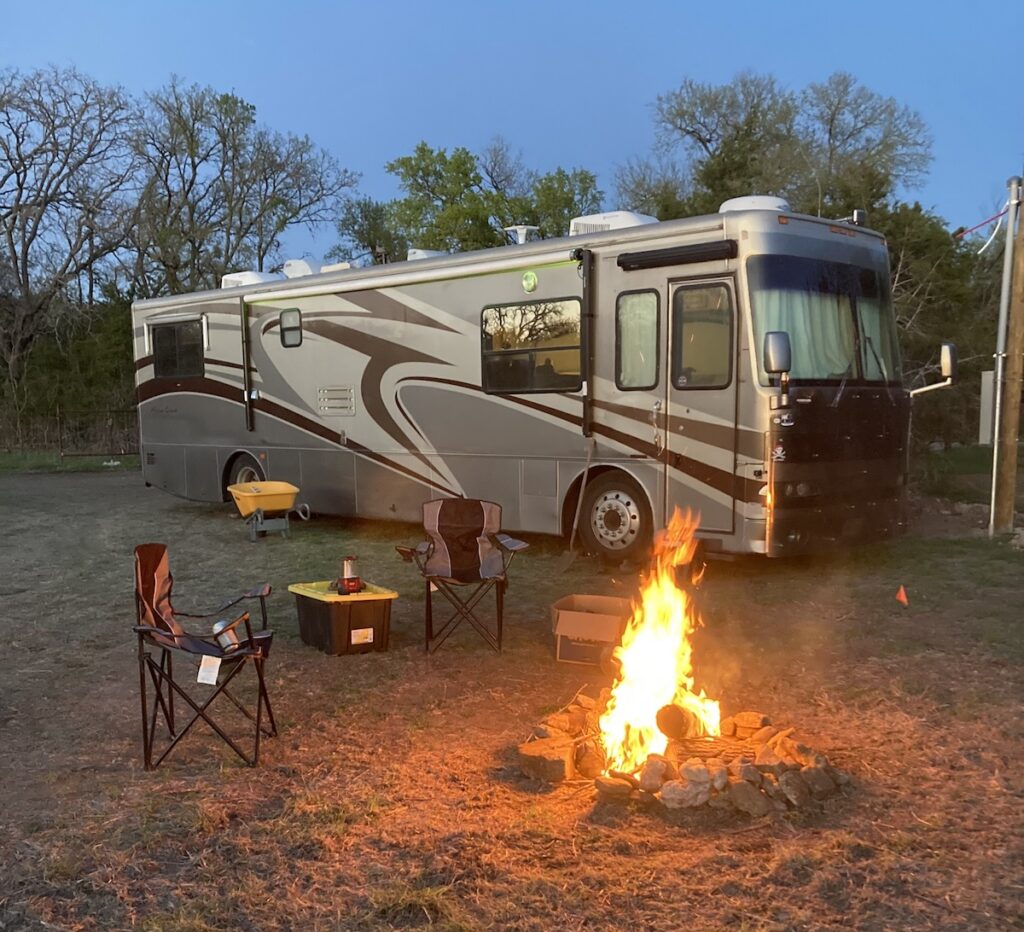
Gary has a phrase he’s fond of: nine o’clock is the camper’s midnight. Out on the road, away from the noise and screens and obligations of regular life, you start operating on nature’s schedule. You sleep when it gets dark, and if you can stay up a little past that nine o’clock pull—just sit there in your camp chair with a marshmallow roasting and your neck tipped back—you’ll see things you’d never see from a suburb or city.
There’s just something about getting out far enough that the sky stops being a backdrop and starts being something to really absorb. There’s a big, full, completely free show happening overhead every single night. No ticket required. No app needed (though he also enjoys the app on Joyce’s phone that tells you the constellations when you point it at the stars).
Gary talks the same way about cooking outside. Meals just taste better when prepared with just the sky above and the breeze passing by. It also keeps the rig smelling fresh.
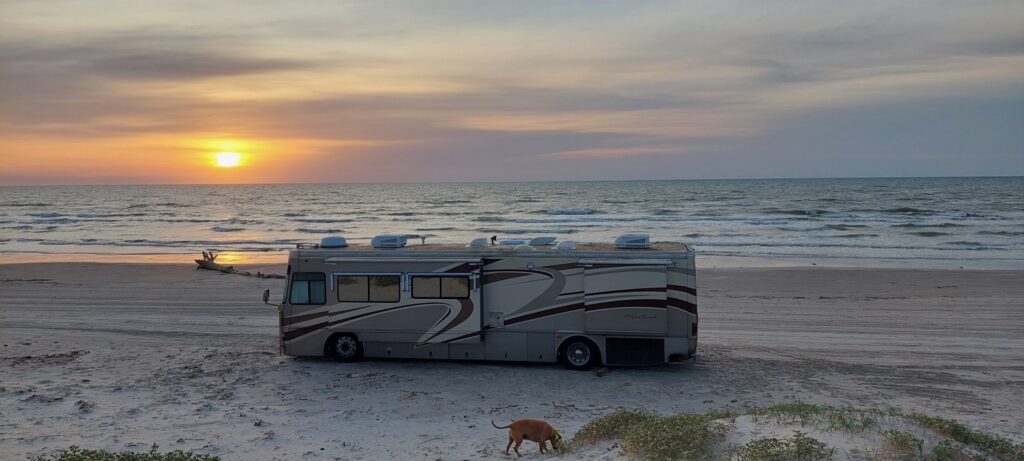
And of course, there are the experiences. Like watching dolphins surfing from the beach. Or sitting still long enough to watch the deer on the Texas ranch where he works today.
“You’ve got to stop and smell the roses,” Gary says. “People don’t do that enough. The destination is what it’s about for a lot of people—but for me, it’s the journey. Getting there is just so cool.”
So, They Built One
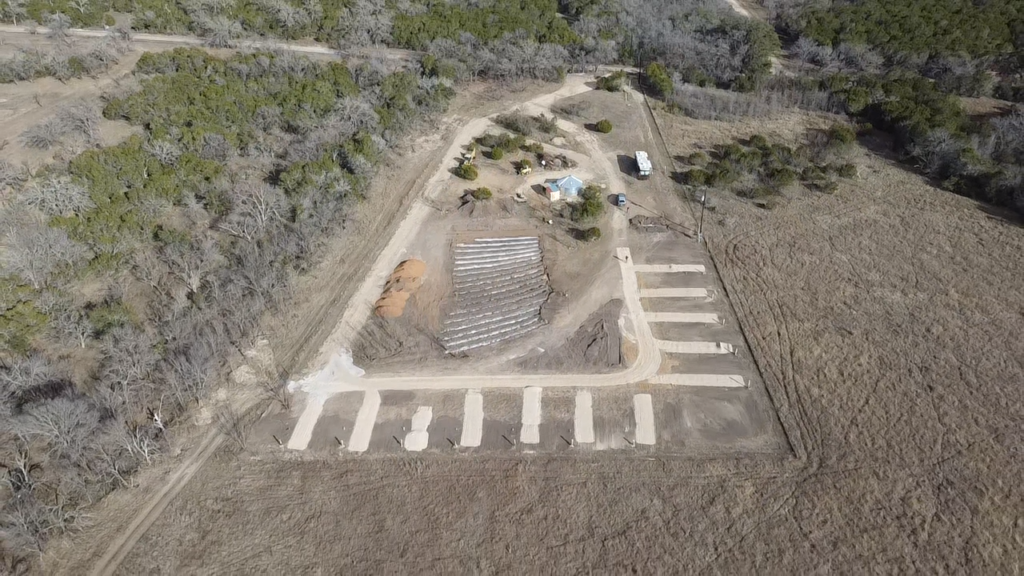
At some point along the way, Gary and Joyce stopped just loving the RV life and started wanting to give a piece of it to other people. They found three acres in Spicewood, Texas, and decided to build a campground from scratch.
Not hire someone to build a campground. Build one.
“We would park our camper over there and work on weekends,” Gary says. The two of them cleared the land, put in the infrastructure, figured out the problems as they came.
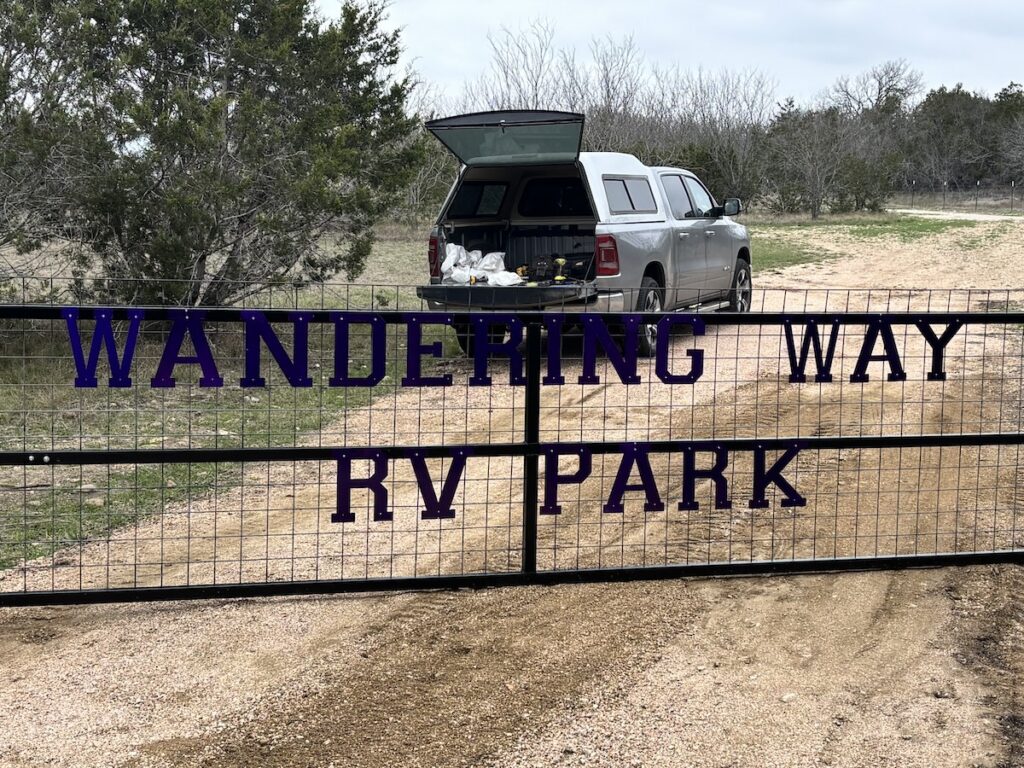
When the well gave them trouble, Gary didn’t call it someone else’s problem. He got out there and diagnosed it himself, the same way he’s approached every broken thing in 14 years of RVing—with tools in hand and the confidence that comes from having fixed, well, everything.
His work on a nearby ranch tells a similar story. When the owner got a $35,000 quote to have 14 dead trees removed and stumped, Gary looked at the dozer sitting on the property and did the math differently. He nudged each tree over one by one, cut them up with a chainsaw, and salvaged the wood—the kind that makes real furniture. He made tables out of some of it. Set the rest aside for firewood. The owner came home that Friday and handed him a $5,000 bonus check.
“I wasn’t looking at it that way,” Gary says, a little surprised even in the retelling. “I was just, ‘I can do this.’ So I did.”
That instinct, to see a problem and wade into it rather than wait for someone else, is what built the RV park. It’s also what makes him good at running it. When a guest recently came to him panicked about an electrical issue, Gary walked into their rig, took a look around, and knew immediately. Burnt insulation. Sure enough—the inverter had liquefied inside its casing. What the guests feared would cost thousands turned out to be a $139 part on Amazon. Gary handed them the tools and showed them how to install it themselves.
“Some people get into a panic,” he says. “Other people just say—we’ll fix it. It’s not a big deal.”
The park now has eight permanent residents and is nearly self-sustaining. Gary’s vision for it goes further: a 40-by-40 shop on the property where a broken-down rig can pull right in off the road, get the tools it needs, and leave better than it arrived. A place where people who know how to do things help people who don’t yet.
“I swear to god,” he says, “if people helped people more and didn’t expect anything in return, the world would be a better place.”
No argument there.
Gary’s Personal Motto
Gary got a tattoo last summer. It’s on his right arm, and if you ask him about it, he’ll tell you it’s the truest thing he knows about this life:
Attitude. The difference between an ordeal and an adventure.
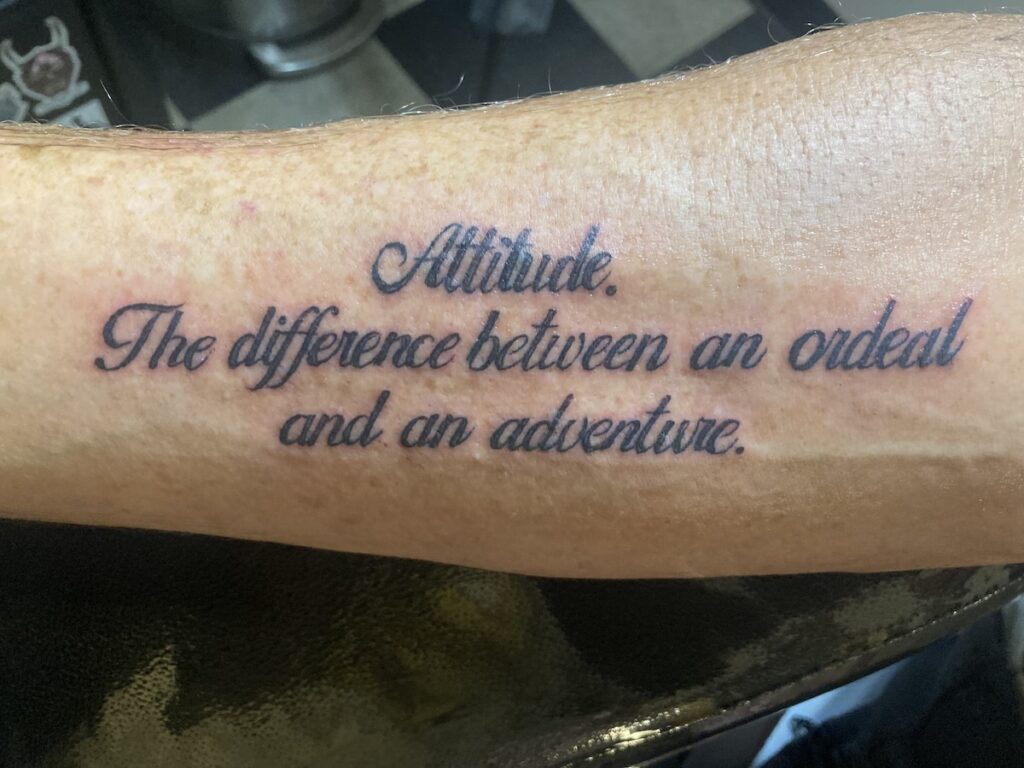
“That’s what it all comes down to,” he says. “Attitude is everything. Being grateful for what you’ve got. Adjust your attitude like you adjust the sails on your boat, and things will straighten out.”
He learned that philosophy the long way—over 14 years and hundreds of campsites. From rebuilding a steering box, from a woman from Iowa who needed help with her husband, walking through a graveyard in County Clare, Ireland, where he found headstones bearing his family name dating back to the 1700s, causing the hairs on the back of his neck to rise as he felt his ancestors nearby.
He’s watched others stay stuck. Visiting his old stomping grounds in Australia, he’s found guys he once knew standing in the same corner of the same bar they’ve been going to every Friday night for 14 years while he’s explored the world—across the United States and back again from Napa to New Hampshire to San Padre Island to North Carolina to Miami, a trip to Europe, several trips down in Costa Rica, and more. When he walked back in, they looked at him and asked if he had been on vacation.
“They’d never done anything,” he says, shaking his head. “I was like—you’ve got to keep going, guys. You’ve got to get off your asses.”
Gary is looking forward to turning 70 in four years and staying active and engaged. The RV park he and Joyce built from scratch in Spicewood, Texas, is up and running and is becoming a nice little affordable community. (Though they’re still working through some kinks, they have eight permanent residents and spaces for people who just want to travel through.) Gary and Joyce hike and run 5Ks, and Joyce just won her second bodybuilding competition in her age group and is looking forward to competing again.
Joyce continues to be the breadwinner and is planning her next 13-week medical travel stint. In fact, they’re looking at a 25-foot camper this weekend, so she can take that with her. Gary will work the ranch, keep an eye on the park, and visit Joyce often, so they can explore more great camping spots.
They’re always looking forward to what’s next. And then doing it.
“I could drop dead tomorrow, knowing I’ve had a great life,” Gary says. “I don’t want to… but if it happens, it happens.
“I grew up watching my old friends’ parents retire, and they couldn’t do anything. They couldn’t climb Mount Kosciuszko or get out and enjoy life. They spent their whole lives hating their jobs and staying for the pension or whatever. I knew I couldn’t live like that. I want to see everything while I possibly can.”
He pauses and laughs, “I wish more people would get off their asses and do it instead of talking about it.”
Do you have an RV life story to share? We’d love to hear from you!