Why Is Beef Jerky So Expensive?
Remember that beef is mostly water (around 60%), and when beef is dried for jerky, most of that weight is lost (evaporated). Surprisingly, it can take around 2.5 pounds of meat for a single pound of jerky. So, make sure you account for that as you make your own. It’s still less costly, though, to make your own as you won’t add the costly chemicals and preservatives often used for commercial production. You can also minimize waste, which can add up to big savings. Often, you can make enough homemade jerky for your entire family (or your entire trip if you’re on the road solo) for around the same cost as a single-serving bag of store-bought jerky. Plus, this beef jerky easy recipe tastes so much better. Even though it can take some time and effort, it’s well worth it!Equipment Needed to Make Easy Beef Jerky Recipes
Fortunately, you don’t need any special equipment to make your own beef jerky. All that’s required is:- Patience (it does take time)
- A sharp knife
- Baking sheets
- Wire racks
- And a standard oven (or alternatively, a dehydrator)
Easy Beef Jerky Marinade
Depending on your taste preferences, there are many delicious easy beef jerky marinades. One of our favorites is made with:- ¼ cup soy sauce
- 2 Tbsp Worcestershire sauce
- 2 Tbsp brown sugar
- 2 tsp salt
- 1 tsp garlic powder
- 1 tsp onion powder
- 1 tsp smoked paprika
- 1 tsp freshly ground pepper
- 2 to 2 ½ pounds of beef. Choose a lean cut like flank, sirloin, eye of round, or London broil, which keep longer than fattier cuts.
- Cooking spray
Beef Jerky Easy Recipe Directions
- Combine all of the easy beef jerky marinade ingredients in a bowl or resealable plastic bag. Stir to combine, close, and set aside.
- Take out a mostly thawed cut of meat. If it’s fresh or already thawed, place it in the freezer for 10 to 60 minutes. This will make it easier to handle and cut.
- Cut the beef into strips that are around 1/8- to 1/4-inch thick, trimming off any excess fat or sinew (the fibrous tissue) as you cut. If your slices are thicker than you like, you can also pound the meat with a mallet to flatten.
- Place the meat into the marinade and tightly seal the bag or container.
- Shake the meat with marinade container well to make sure all the strips are well covered.
- Place the meat into the refrigerator to marinate for 6 to 36 hours. After the first couple of hours, give it a good shake, and then shake it again the next day or before moving onto the next step. (If you do allow it to marinate longer, give the meat a shake every so often to ensure it stays evenly coated.)
- Now that the meat is marinated, set the oven to the lowest temperature (typically 150 to 175 degrees F).
- Line a rimmed baking sheet with aluminum foil to catch any drips for easier cleanup. Then place a wire cooling rack on the sheet.
- Evenly coat the wire rack with cooking spray.
- Remove the meat from the bowl, gently shaking off any excess marinade. Arrange the jerky strips in a single layer close together but with no overlapping. You may need more than one pan.
- Then place the jerky in the oven. However, you’ll want to crack open the door about an inch. This allows the moisture to escape, so the meat can dehydrate. If the door won’t stay propped open, you may use a wooden spoon or another utensil that won’t get damaged in the door to keep it slightly open.
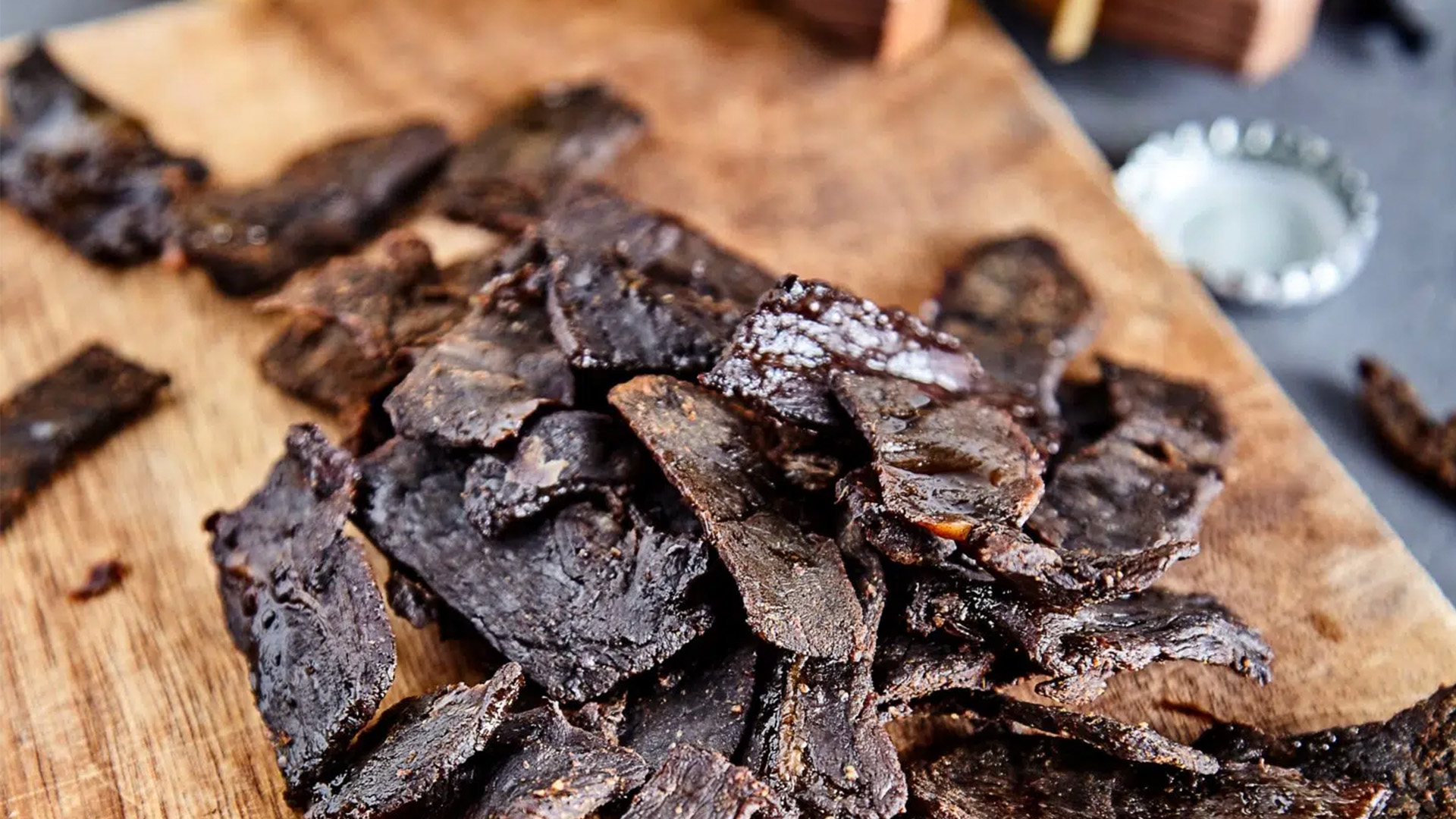
- Allow the jerky to dehydrate for three hours. Then turn the meat and rotate the pan. Place back in the oven to cook for another three hours. During the last hour, check the jerky a few times to determine how well done, and remove it when it reaches your preferred texture—it should feel dry to the touch and have a leathery appearance. If you like it crispier and drier, it will stay in the oven longer. Depending on the oven and your preferred texture, your jerky may take between 6 and 10 hours.
- Remove and enjoy right away. Or, allow it to cool completely before storing it in a tightly sealed (airtight) bag or container in a cool, dry place for three or more weeks. Jerky can also be stored in the refrigerator or freezer for even longer—up to 4 months in the fridge and 8 months in the freezer.