
Updated from April 20, 2025
As winter approaches and temperatures drop, RV enthusiasts start talking about “the pink stuff”—a nickname for RV antifreeze. The key to protecting your rig during cold-weather storage. (I know—we’re not ready for the end of the season either!)
If you’re wondering about RV antifreeze ingredients and how to use them (perhaps because you’re new to RVing or always left it to someone else), you’re in the right place. This is an essential step for safeguarding your RV’s plumbing system from freezing, which can cause costly damage, including burst pipes or cracked fittings.
RV antifreeze (unlike automotive antifreeze) is designed not only to prevent freezing but also to be safe for your freshwater system, making it a must-have for winterizing.
In this guide, we’ll look at the most common types of RV antifreeze and how to use them effectively to keep your RV ready for spring adventures.
What Is RV Antifreeze?
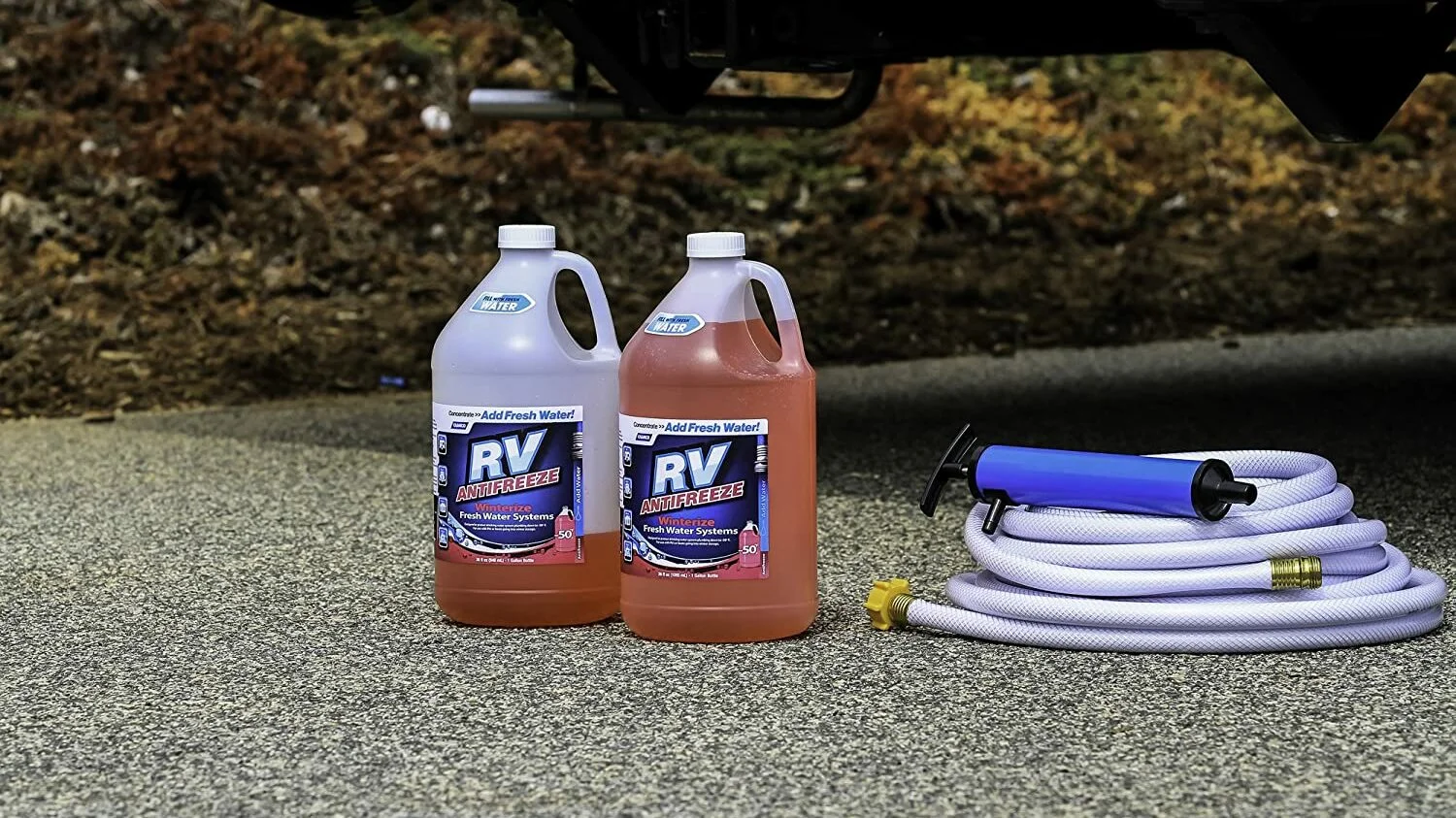
RV antifreeze, often called “the pink stuff” for its bright pink color, is a specialized, nontoxic solution designed to protect your RV’s plumbing during freezing temperatures.
By lowering the freezing point of any residual water in pipes, tanks, and fittings, it prevents expansion that could cause components to crack or burst.
What’s in it? Most solutions use ethanol or propylene glycol as the base and are formulated to be safe for your RV’s freshwater system.
RV antifreeze provides comprehensive protection, especially in hard-to-drain areas like P-traps or water heaters. It’s a critical winterizing step that can save you from expensive (and unnecessary) repairs when spring rolls around.
Why Use Non-Toxic RV Antifreeze?
Non-toxic RV antifreeze is a lifesaver for your RV’s plumbing system. Essential, really. Here’s why:
- It Prevents Freezing Damage: By lowering the freezing point, it stops residual water from expanding and cracking pipes, pumps, or tanks.
- It Protects Components: Propylene glycol-based formulas lubricate seals in faucets, toilets, and valves, extending their lifespan.
- Safe for Freshwater Systems: Unlike automotive antifreeze, it won’t contaminate potable water lines—just make sure it’s used as directed.
- Versatile Use: It protects P-traps, gray and black tanks, and water heaters, ensuring your entire system is winter-ready.
Without antifreeze, even a small amount of trapped water can cause leaks or burst pipes, leading to costly repairs that could delay your spring camping plans. And no one wants that!
RV Antifreeze vs. Automotive Antifreeze
While both RV and automotive antifreeze prevent freezing, they’re not interchangeable. Not at all! Automotive antifreeze is formulated for engine cooling systems and contains toxic chemicals, like ethylene glycol, which can contaminate potable water sources. Even a small amount is dangerous, so NEVER use it in your RV’s plumbing.
RV antifreeze, by contrast, is nontoxic and safe for freshwater systems when used as directed. RV antifreeze ingredients, typically ethanol or propylene glycol, are chosen for safety, though it’s not meant for drinking and should be flushed out well before camping season.
Be especially cautious with pets, as some formulas can attract cats and dogs, potentially causing health issues if ingested.
Understanding RV Antifreeze Ingredients
RV antifreeze boils down to two primary ingredients: ethanol or propylene glycol. Both work by lowering the freezing point of water, and most propylene glycol formulas carry a -50°F rating. That number is the burst-protection point manufacturers test to, not the temperature the fluid freezes at. (It typically turns to slush somewhere in the teens.) Propylene glycol also raises the boiling point, offering extra protection for both temperature extremes.
- Ethanol: A simple alcohol that, while cost-effective and potentially enough for milder climates, is flammable, tends to dry out rubber seals over time, and leaves more of an odor and taste.
- Propylene Glycol: A diol (that is, it has two alcohol groups instead of one) that’s non-flammable, lubricates seals, and leaves less taste or odor in the system. Many RVers have also found it just works better than ethanol.
You can find blends that combine both for “balanced performance.” That said, propylene glycol is the most popular due to its safety and versatility.
No matter what you go with, always choose pure, virgin products to avoid contaminants in recycled antifreeze, which may include harmful chemicals from industrial sources. This is where your drinking water lives, after all.
How to Choose the Right RV Antifreeze
Selecting the best RV antifreeze depends on your RV’s needs and local climate. Here are key factors to consider:
- Climate: In milder regions, ethanol-based antifreeze may suffice. However, for sub-zero temperatures, propylene glycol—with its -50°F burst protection rating—is the smart choice.
- Plumbing System: If your RV has complex plumbing or sensitive seals, choose propylene glycol for its lubricating properties.
- Purity: Avoid recycled propylene glycol products, which may contain contaminants. Look for trusted brands like:
- Pet Safety: If you RV with pets around, prioritize propylene glycol and store it securely to prevent accidental ingestion.
- Budget: Ethanol is cheaper but also less versatile. Propylene glycol costs more but offers better protection and ease of flushing—which makes it a better value.
Alternatively, you can blow out all of the water with compressed air and add a small amount of antifreeze to P-traps for minimal use. Check your RV manual for manufacturer recommendations.
Step-by-Step Guide to Winterizing with RV Antifreeze
Winterizing your RV with antifreeze is straightforward. Follow these steps:
- Drain the System: Empty the freshwater, gray, and black tanks at an approved dump station. Open all faucets and low-point drains to remove the water.
- Bypass the Water Heater: Use the bypass valve to prevent filling the heater with antifreeze—it’s unnecessary and wastes product.
- Add Antifreeze: Pour RV antifreeze into the freshwater inlet using a winterizing kit or hand pump. Run each faucet, shower, and toilet until you can see the pink antifreeze flowing consistently.
- Protect P-Traps: Pour a cup of antifreeze into the sink and shower drains to prevent freezing in traps.
- Check Tanks: Add a gallon to gray and black tanks if camping in cold weather to prevent waste from freezing.
- Secure the System: Close all valves and store your RV in a dry, sheltered location if possible.
You’ll typically need 2 – 4 gallons of antifreeze, depending on your RV’s size. Always use nontoxic RV antifreeze for safety and follow the specific instructions from your manufacturer.
Common Mistakes to Avoid When Winterizing
Winterizing is simple, but even small errors can lead to big problems. So, here’s what you’ll want to watch for:
- Skipping the Drain: Failing to fully drain water leaves pipes vulnerable, even with antifreeze.
- Using Automotive Antifreeze: It’s toxic and can ruin your freshwater system—always stick to RV-specific products.
- Forgetting P-Traps: Trapped water in drains can freeze and crack pipes.
- Not Flushing in Spring: Residual antifreeze can affect the odor and taste of water. Remember to flush the system thoroughly with clean water before you head out for your first camping trip of the season.
- Overusing Antifreeze: Adding too much to tanks or heaters wastes product (and $$$)—follow your RV’s guidelines.
- Ignoring Pets: Keep antifreeze out of reach to prevent accidental poisoning.
By avoiding these pitfalls, you’ll help ensure your RV stays protected and ready for the road when you are.
Pet Safety Tips for RV Antifreeze
RV antifreeze ingredients like propylene glycol can attract pets due to their sweet smell and taste. Unfortunately, if ingested, it can pose risks like anemia or organ damage, especially in cats. Keep your furry friends safe with these tips:
- Store Securely: Keep antifreeze jugs in a locked cabinet or high shelf when not in use.
- Work in a Pet-Free Zone: Winterize your RV in an area where pets can’t wander. A closed garage works well, or you can lock up your pets before you get started.
- Clean Up Spills Immediately: Wipe up any drips or puddles to eliminate temptation or accidental ingestion.
- Monitor Behavior: Watch for signs of ingestion, like lethargy or vomiting, and contact a vet if needed.
- Flush Thoroughly: Ensure all antifreeze is removed from the system before pets drink the RV water.
Taking these precautions lets you winterize worry-free while keeping your RV pets healthy.
Protecting Your RV for Winter
Winterizing with RV antifreeze is a small effort that pays off big, saving you from the headache of burst pipes or damaged pumps. Understanding the types of RV antifreeze and their ingredients helps you make the right call for your rig. For most RVers, propylene glycol-based antifreeze offers the best mix of safety, performance, and ease of use, especially in freezing climates.
When spring arrives, dewinterize by flushing the system with clean water and disposing of antifreeze at an approved dump station to protect the environment. Not sure where to start? Visit a Camping World Service Center or consult your RV manual for tailored advice. With the right antifreeze and a few simple steps, your RV will be ready to hit the road as soon as the snow melts.