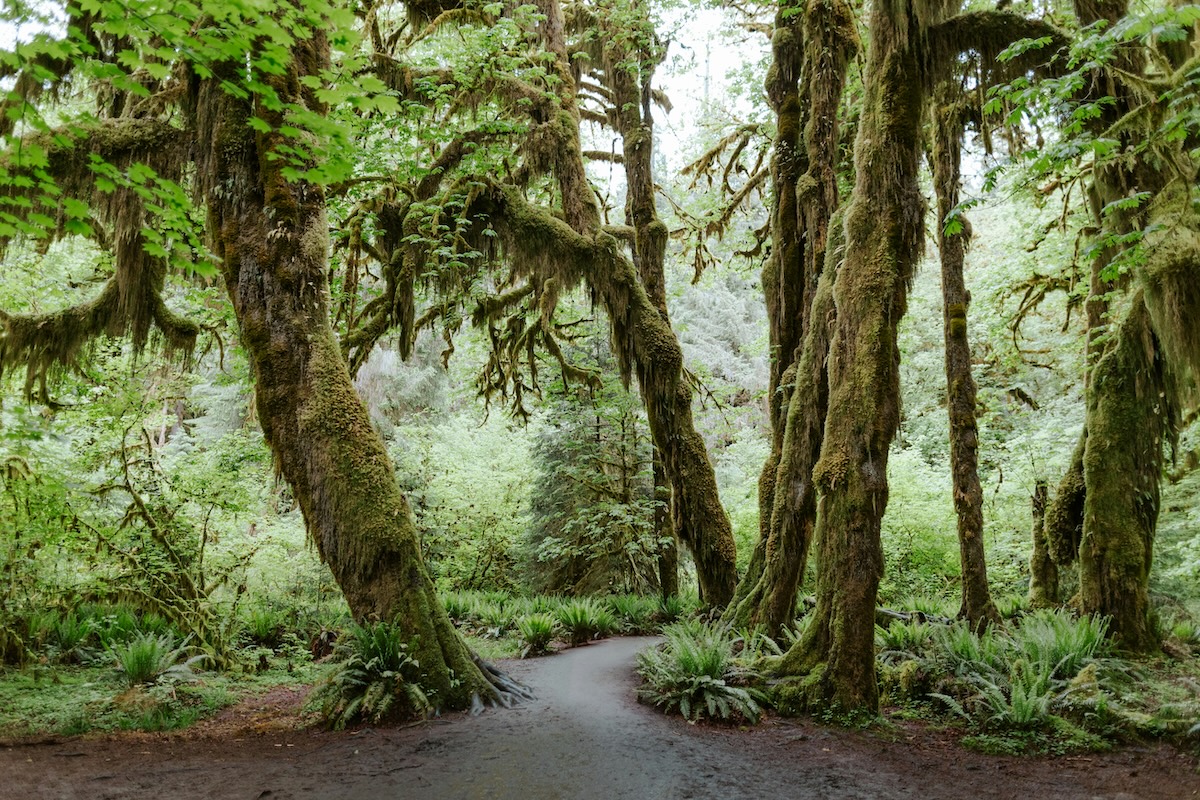
Chances are pretty good that you’ve seen photos of the Hall of Mosses (like the one above) and been captured by the pure magic of the place long before you started to map out how to get there. The grove of ancient big-leaf maples, draped canopy to ground in club moss, has been photographed, pinned, and shared so many times it might as well be shorthand for the entire Pacific Northwest rainforest experience. It truly deserves the reputation. Walking through the forest feels almost like stepping into a different world—or at least a different geological era.
What you can’t tell from those astounding photos, though, is that the Hall of Mosses is but a 0.8-mile trek. It takes just about 20 minutes to walk the entire trail—as long as you aren’t stopping every 10 feet to take another picture. And to be honest, that’s how most people hike it.
So, the Hall of Mosses isn’t really a trip on its own. A highlight, to be sure, but it’s more like a quality stop on a more robust itinerary rather than the complete purpose. That’s especially true if you show up in the middle of July or August, expecting to spend days engulfed in the magical forest. It’s more like a quick and easy in-and-out. (We’ll just grab some photos and be on our way.) But if timed poorly, you’ll spend more time waiting in a line of cars at the entrance gate than you’ll spend actually wandering through the forest.
If you’d like a different playbook to really make the most of the trip to the area (and want to avoid burning half a day in a parking queue), that’s what we’re here for. Not only will you discover the best places to camp your rig, but we’ll share a quieter alternative if crowds aren’t your thing (shhh…), along with some other highlights that make this one trip that’s well worth a longer drive.
The Olympic Peninsula offers beaches with sea stacks, hot springs, alpine ridges, and a fandom detour. By the end, you’ll have a full experience mapped out and ready to explore.
Hall of Mosses RV Camping & Parking Guide
Starting at the Hoh (pronounced “Hoe”) Rain Forest Visitor Center, the Hall of Mosses trail quickly takes you back in time under a canopy of big-leaf maples draped in club moss. The hike itself is considered easy as it’s just a 0.8-mile, mostly flat (100 feet of elevation gain) loop over compacted gravel. If you’ve got younger kiddos with you, it’s suitable for strollers as long as it’s dry.
If you’d prefer to put more miles on, the Spruce Nature Trail shares the same trailhead and adds another 1.2 miles along Taft Creek and the Hoh River with a wider mix of old and new growth. And if you really want some adventure, you can hit the Hoh River Trail for as long as you want to go.
As usual, a bit of preparation will make the trip much more enjoyable.
The parking situation, for instance, is all too real. During peak summer months (June through September), you can expect a one- to two-hour wait at the park entrance if you arrive after 9 a.m. and before 4 p.m. Make no mistake, this isn’t the worst case; it’s the norm. Early or late arrivals, at least at the time of this writing, usually walk (or drive) right on in, so it’s best to arrive before 9 a.m. or after 4 p.m. unless you enjoy waiting in a line with your engine idling. (Even with the best playlist, this isn’t the greatest way to spend your vacay.)
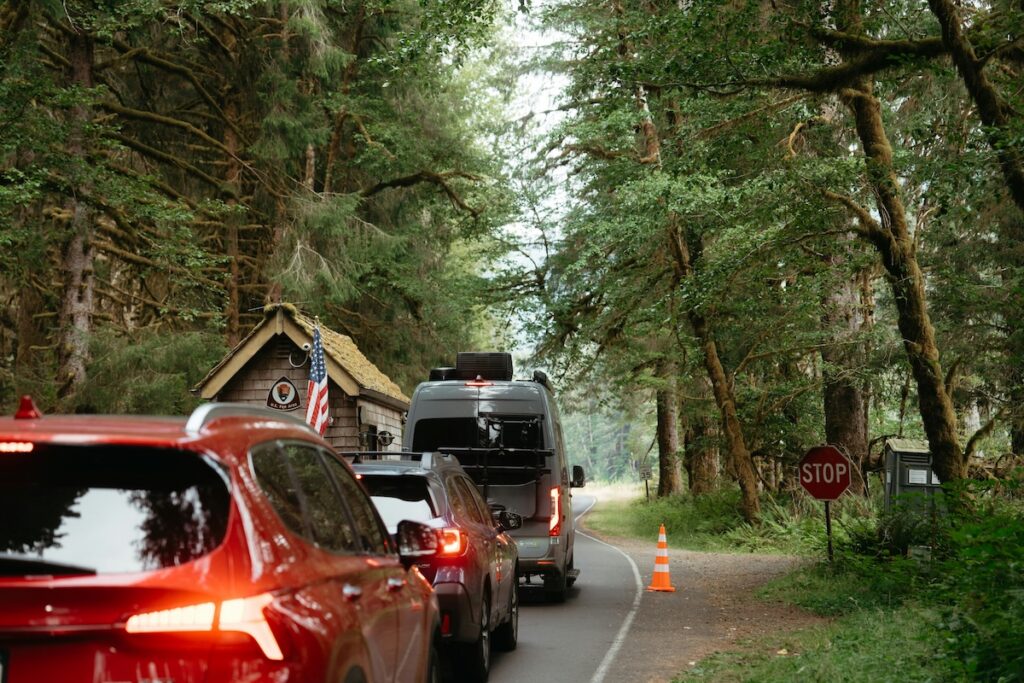
Another consideration: your rig. Unless you’re in a camper van, it can be a tight squeeze—and if you have a bigger rig, you might need to unhitch and take your tow vehicle. The roads into the Hoh Campground are narrow. The turns are tight. And the branches are low. So, maneuvering a larger RV or trailer can be difficult at best.
Before you book, carefully read the campsite measurements. Once you’re there, the park won’t rearrange your accommodations just because your rig doesn’t fit. And even if you can fit, it’s worth knowing that there are no hookups. The dump station has been closed indefinitely, and the nearest one is 23 miles to the north at Bogachiel State Park. So be prepared for dry camping.
Many RVers see Hoh as more of a day trip from a basecamp that has hookups. (More on that shortly.)
If you’re going during the summer and do want to camp at the Hoh Campground, you’ll want to book well in advance. Reservations from mid-June through early September are released on a staggered schedule by loop. The A loop opens 6 months out, C loop 2 weeks out, and B loop just 4 days out. If you miss the window, it’s first-come, first-served. In addition, some of the sites are closed seasonally and during severe weather.
Again, the Hall of Mosses earns its reputation. It’s just worth knowing if gate-lines, dry camping, and tight roads are deal-breakers—especially for a 20-minute walk.
There is, however, another alternative if you want a similar feel of standing beneath an ancient rainforest—without all the crowds.
Quinault Rainforest
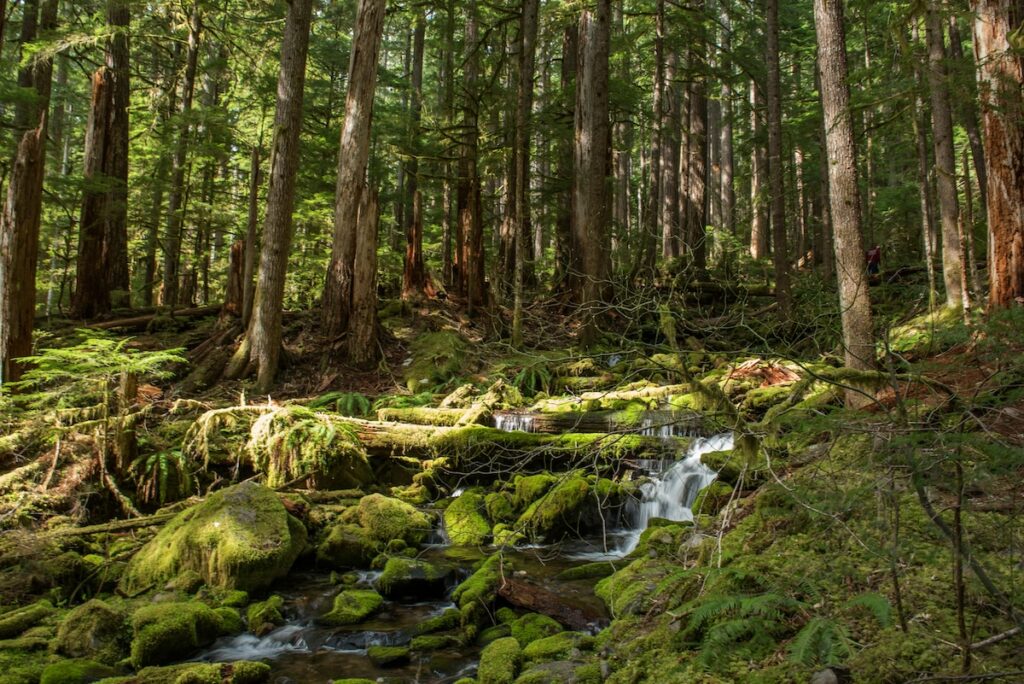
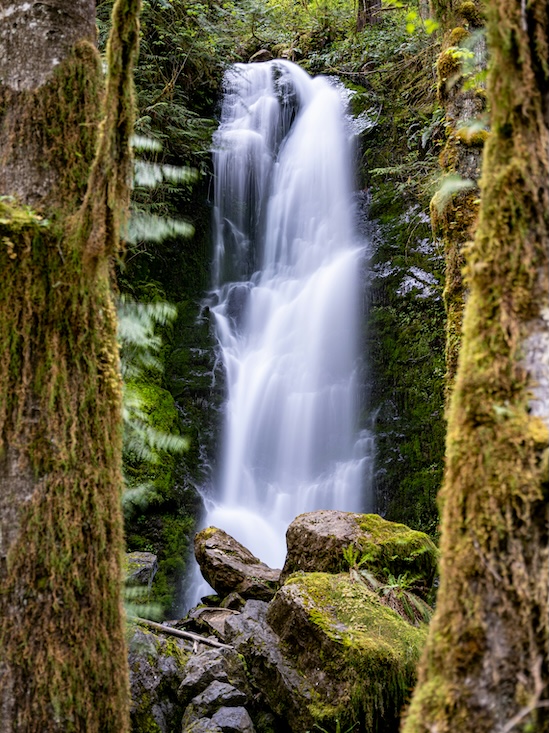
Less than two hours away from the gates to Hall of Mosses lies the Quinault Rainforest—nicknamed the “Valley of the Rain Forest Giants.” Visitors suggest the experience is nearly identical, with the towering old-growth Sitka spruce, Douglas fir, and western hemlock rising above a forest floor buried in moss and ferns.
In addition, some of the largest trees of their species anywhere in the world grow in this forest. While the scale and atmosphere rival Hoh’s, almost none of the crowds do. (So, please, let’s keep this between us.)
The Maple Glade Rain Forest Trail and Big Tree Trail, likewise, offer lower-effort, high-reward hiking as they are flat, short, and family-friendly. Add on the Kestner Homestead Trail if you want a bit more history. If you string together a couple of the hikes, you can enjoy a full morning immersed in the rainforest. Without ever standing (or idling) in line to get in.
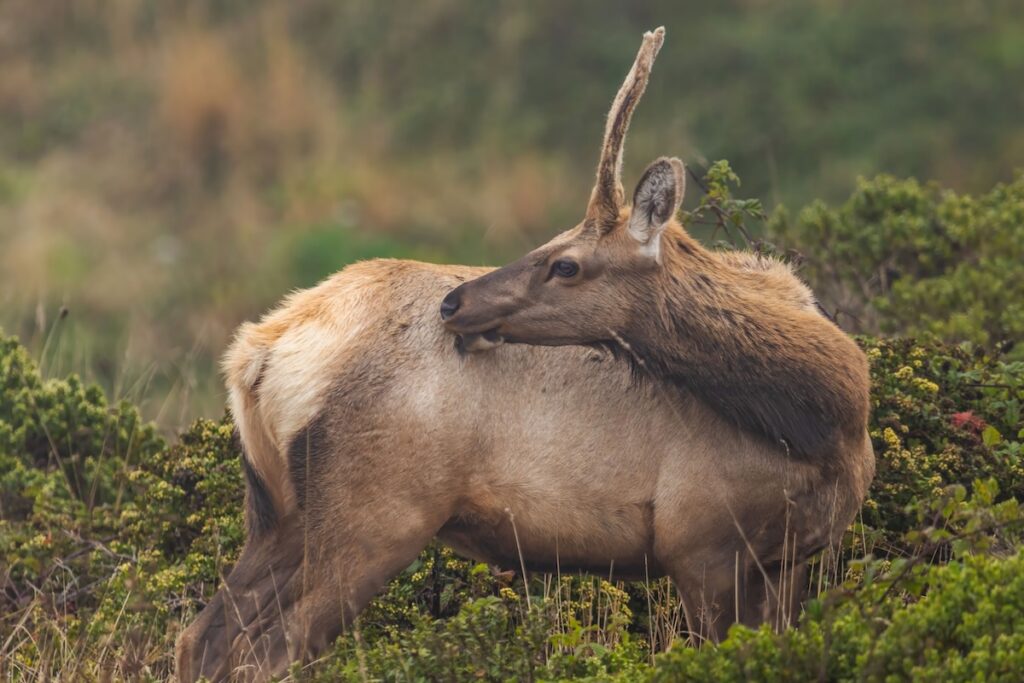
Keep an eye out for wildlife while you’re in the area. Roosevelt elk and river otters turn up regularly. And if you’re patient, it’s not unheard of to catch a glimpse of a black bear.
Where to Camp at Quinault Rainforest
Falls Creek Campground sits right on Lake Quinault and provides a scenic home base. This campground caters to smaller rigs—capped at 16 feet—and tents. You won’t be able to pull in with a big Class A.
If you are driving something larger, Rain Forest Village Resort, also on the lake, offers full hookups (water and 30-amp electric). As a bonus, it’s a shortish (1.1-mile) lakeside hike from the historic Lake Quinault Lodge. If you want to get out on the lake, you can take a boat tour or rent a kayak (if you don’t bring your own).
Another basecamp option is the Forks. It’s a natural hub for the full loop. It’s close to the Hoh Rainforest, the coast, and Sol Duc—never more than an hour from any of it. Plus, you’ll have easy access to grocery stores and fuel for restocking.
Forks 101 RV park not only offers full hookups—33 full hookup sites, 20/30/50-amp service with room for rigs up to 45 feet, it’s also within walking distance to town and has a laundry facility on-site. Forks is one of the rainiest towns in the U.S., getting about 120 inches of rain per year. So that perk is nice for washing off some of the mud if you need to.
Olympic Adventure Campground is another solid full-hookup option, especially for those who prefer more scenery over a little convenience.
Bogachiel State Park sits along the Bogachiel River—a true rainforest-valley setting—with partial hookups. Do, however, be prepared for some road noise, including logging trucks, as Highway 101 runs close by.
Fork For Twilight Fans
I have a small confession. I’ve never read a single page of any of the Twilight books. I haven’t seen the Twilight movies either, though I am a fan of Robert Pattinson’s performances. I know—it’s admittedly a gap in my pop culture education. I did, however, have a co-worker who was completely, unapologetically obsessed with the saga. And if she’s reading this, she knows why I’ve included this.
Forks is the real-world setting of the Twilight saga, and the town seems to have embraced it fully. You’ll find a small Twilight-themed display in the visitor center where the “official” fan tour starts, be able to view costumes and props from the movie at the Rainforest Arts Center, plus, Forks High School is right there for anyone who wants a photo. If you’re traveling with someone who did read every page and/or watch every movie, this is a fun, easy-going stop that could make their day.
More to Explore While You’re Out There
There’s plenty more to fill your days without straying too far from your basecamp—no matter where you decide to stay.
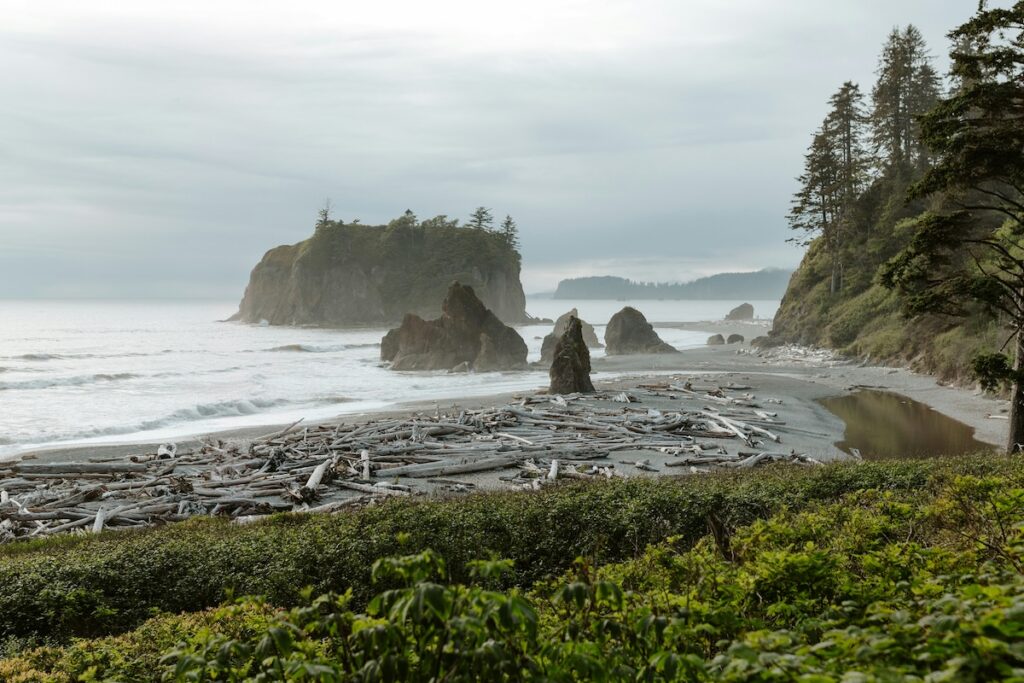
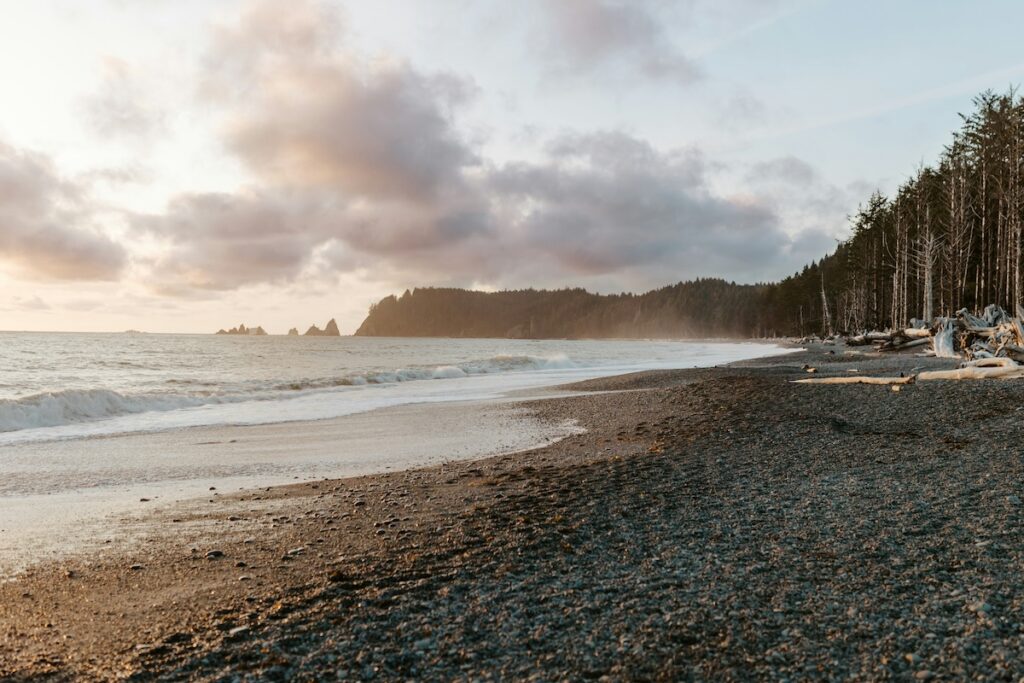
The coast, for example, is an airy change from the rainforest. Driftwood the size of small boats frames endless waves. Sea stacks rise straight out of the surf. And the whole earth seems to open up to new opportunities.
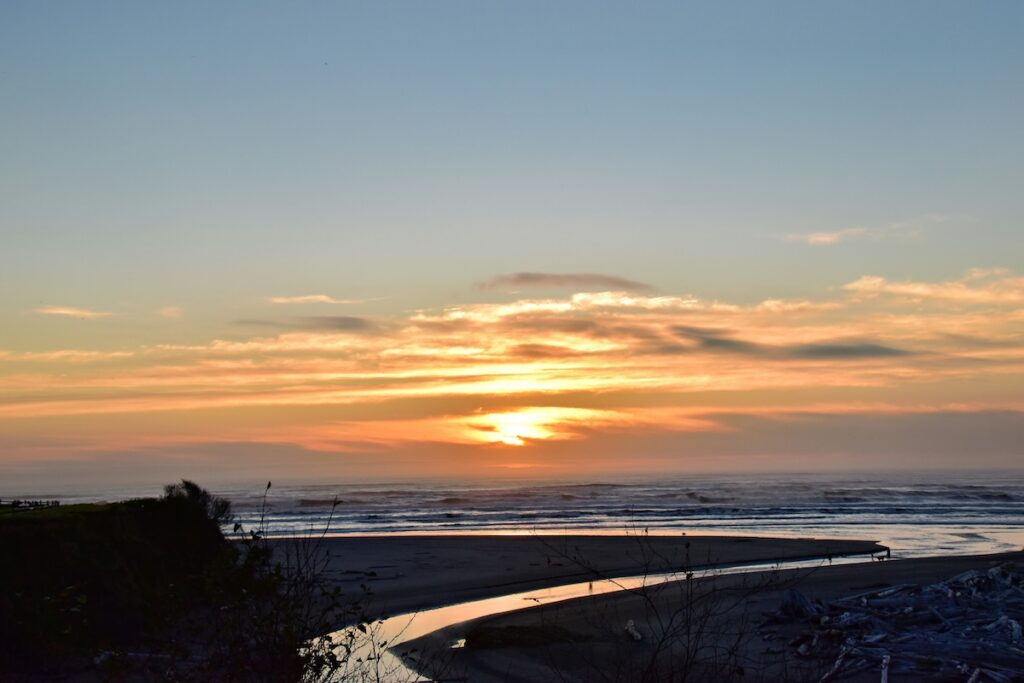
Kalaloch, Rialto Beach, and La Push are other worthy stops if you just can’t get enough of the open ocean with dramatic driftwood and sea stack scenery. And if you time it right and get lucky, you may even spot whales or seals offshore.
For those traveling with canine companions, these beaches are dog-friendly. It’s a great way to help them expend some energy for a more relaxing evening at camp.
Do, however, be prepared with a cooler and water—services are sparse out here and coffee stands are few and far between.
Sol Duc and Lake Crescent provide another change of scenery. Sol Duc Falls is a pretty easy, well-marked 1.6-mile hike through old-growth forest that takes you to a striking three-way waterfall. After a long day of hiking, Sol Duc Hot Springs are an inviting place to soak away any road-weary aches and worries.
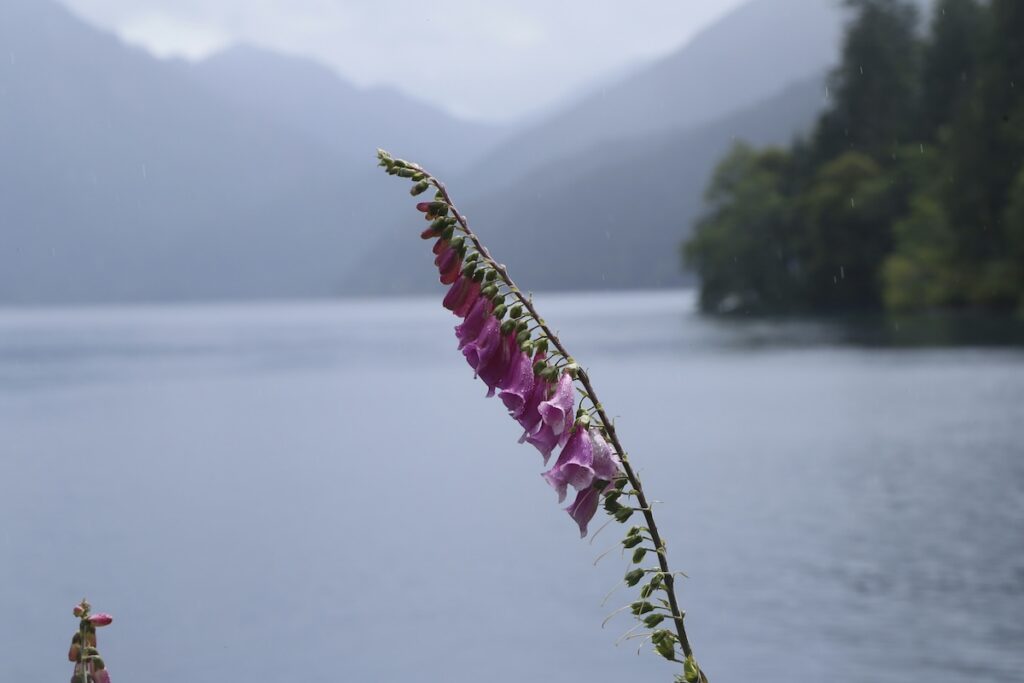
Lake Crescent is close by with water that’s so clear and deep blue, it looks more like an alpine lake than the Pacific Northwest. A short hike (Marymere Falls is an easy add-on) or a slow paddle are both great options.
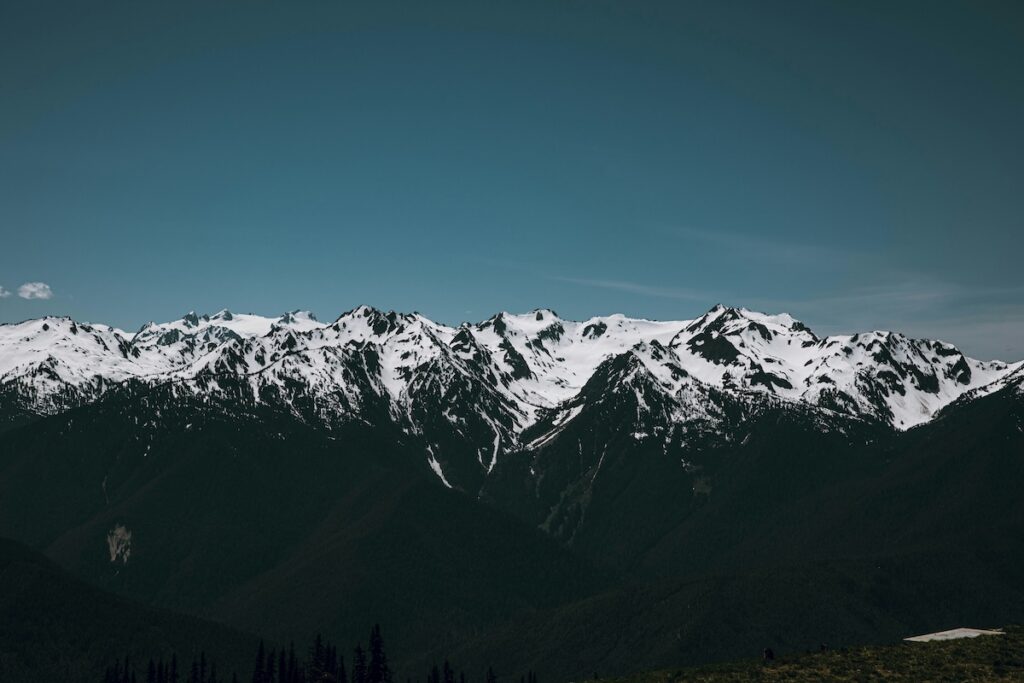
And if you have one more day and want something entirely different, Hurricane Ridge allows you to explore alpine meadows and wide-ranging mountain views of the entire Olympic Range. Keep your eyes out for mountain goats, deer, and other wildlife.
Worth the Detour
The Hall of Mosses may get all the fanfare, but it’s really just the opening act. Between the quieter old growth at Quinault, a basecamp in Forks, a little Twilight nostalgia (if that’s your thing), plus a coastline and hot springs all within easy reach, this corner of the Olympic Peninsula offers way more than a 20-minute walk after an extended idle.