Four tips to make common sense your snake repellent
AT SOME POINT IN THE GREAT OUTDOORS, it’s going to happen: You’re going to see a snake. As a camper, you know that encountering one of these nope ropes is a natural (if unwelcome) occurrence, especially when you’re boondocking. But seeing a snake is one thing. Having it in your campsite? That’s another.Here are a few things you can do to improve your odds for a snake-free site.
Make Cold Weather Your Friend
With the arrival of winter, many warm-blooded critters take the winter off to hibernate. Snakes don’t hibernate exactly (it’s called brumation), but they do become less active. By boondocking in the winter months, you decrease the odds of a serpentine encounter. Even so, keep a sharp eye out when gathering wood for your campfire.
Don’t Rely on Snake Repellants
There’s an ongoing debate on whether snake repellents work or not. (We suspect they don’t.) Some are anecdotal: A snake won’t cross a rope on the ground because they think it’s another snake. (No idea if that’s true.) Other snake repellents have chemicals that aren’t very nature-friendly or people-friendly. The truth is being our loud, clumsy selves may be the best repellent.
Set Up Camp in an Open Clearing
Snakes like to hide in dense foliage, scrub brush, rock piles, and areas with lots of ground cover. So, the simplest way to avoid snakes is to set up camp in an open clearing. Most premade campsites will do just fine. If you are out forging your own trail (awesome and highly recommended), avoid rock caverns and thick underbrush where snakes like to coil up.
Button-Up Your Rations
The best way to avoid snakes is to ensure that all food and drinks are put up and secure. While leaving food out will not directly attract snakes, it will attract their prey (aka vermin)—and that will garner some slimy slithery attention. Storing your food inside the RV and away from open areas helps. Remember, even if your food has a lid on it, it will be detected. So play it safe.
Your Do Not Handle Guide
►Steer clear of these four venomous species, regardless of your snake-competence level.
Copperheads
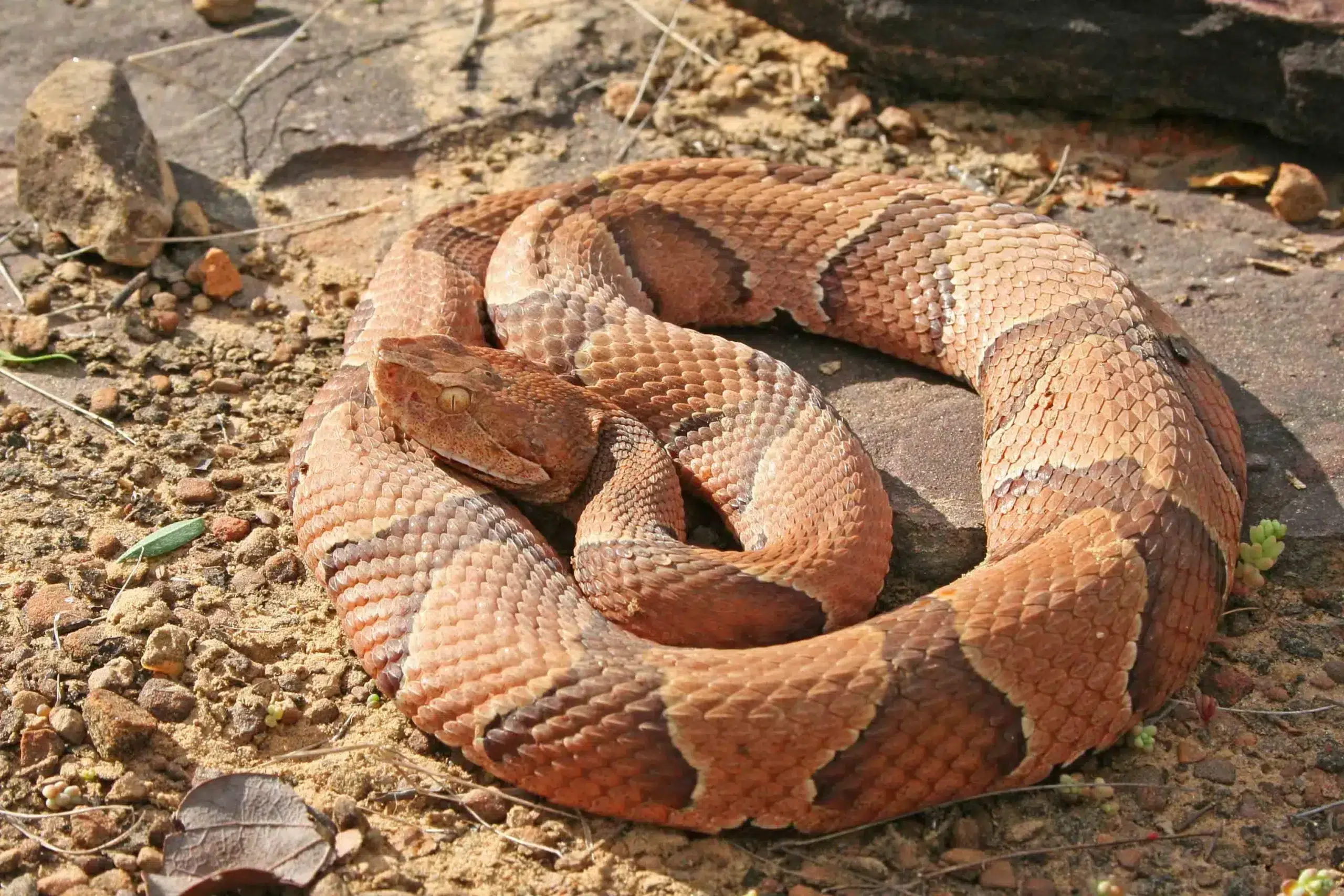
Range: Texas to Massachusetts Hour-glass-shaped crossband patterns. Bites painful but rarely life-threatening
Coral Snakes
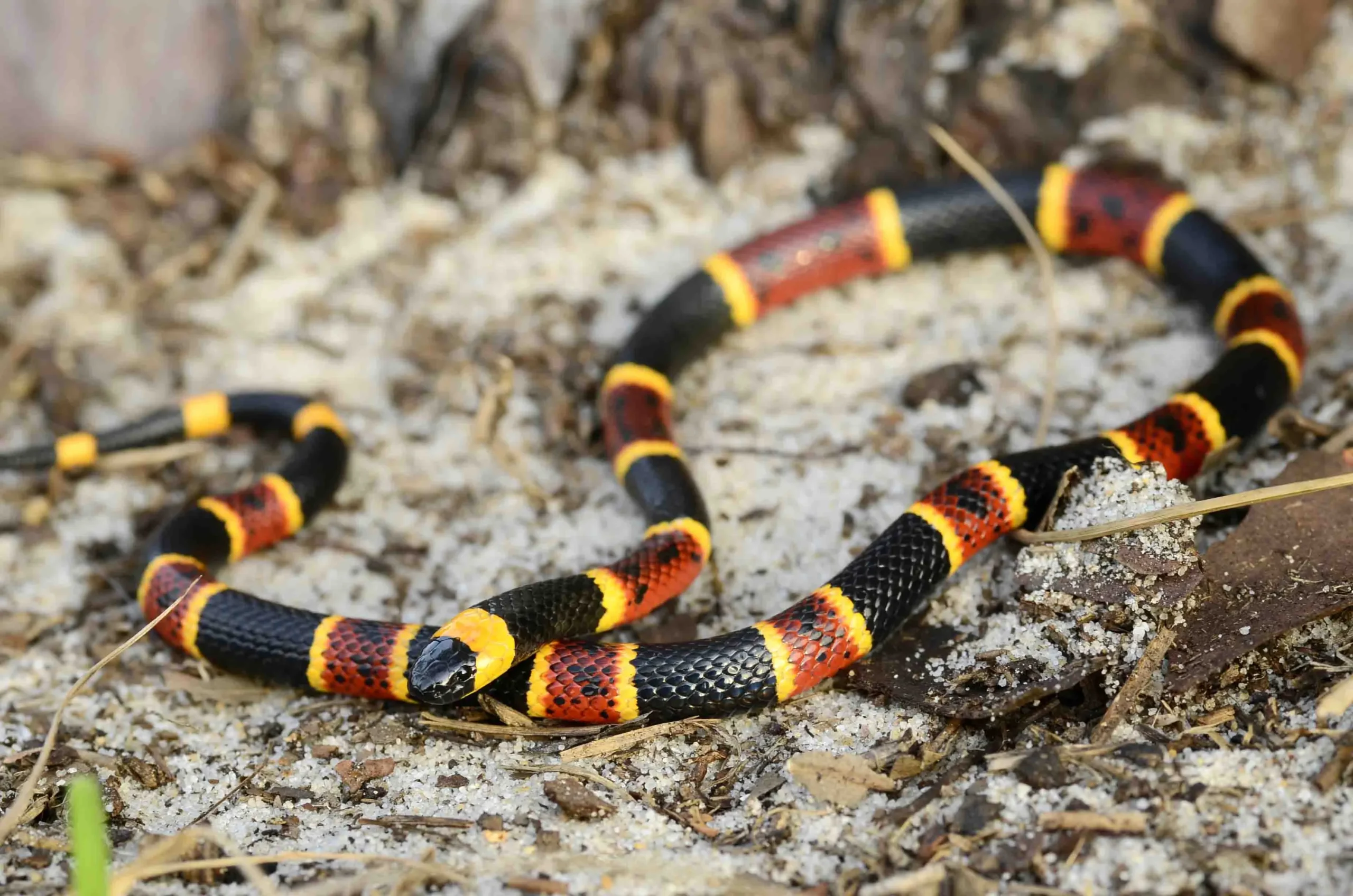
Range: Arizona to North Carolina Best identified with the rhyme, “Red-on-yellow kills a fellow.” Highly venomous.
Cottonmouths
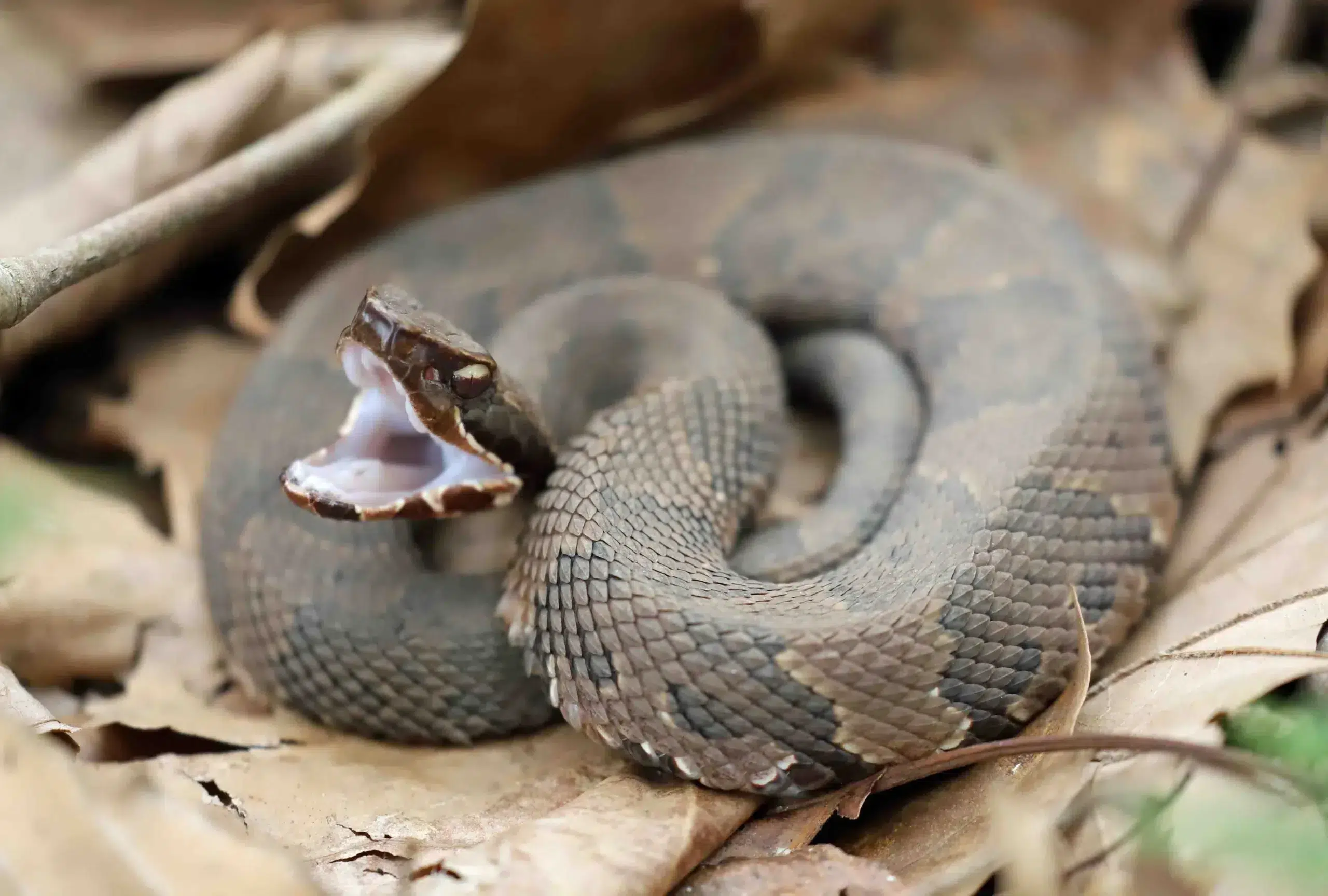
Range: Texas to Virginia Keeps head clearly above water while swimming. Bites can be fatal.
Rattlesnakes
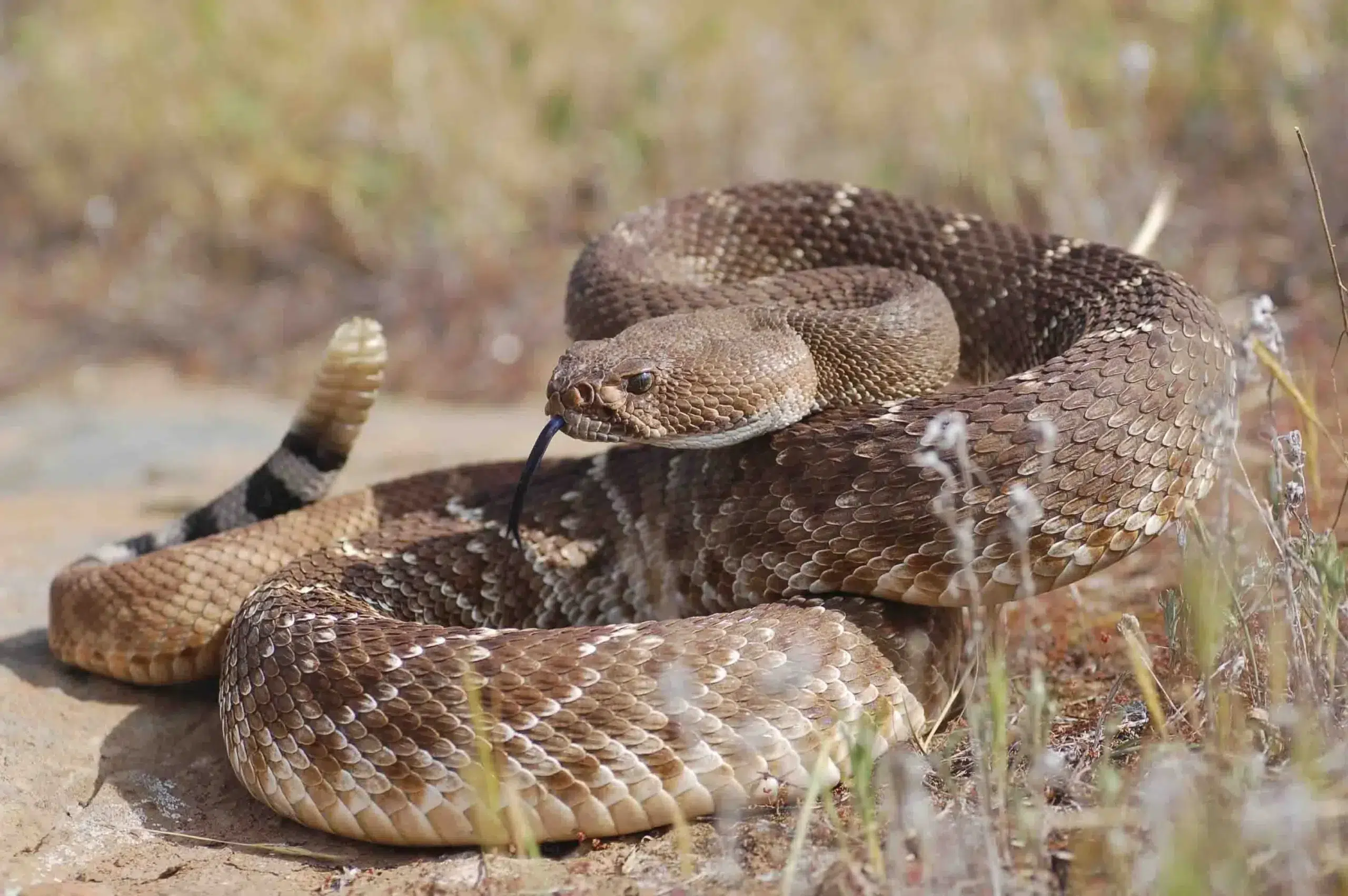
Range: Coast to Snake-Infested Coast Easily identified by the rattle on the tip of the tail. Most dangerous snake in America.